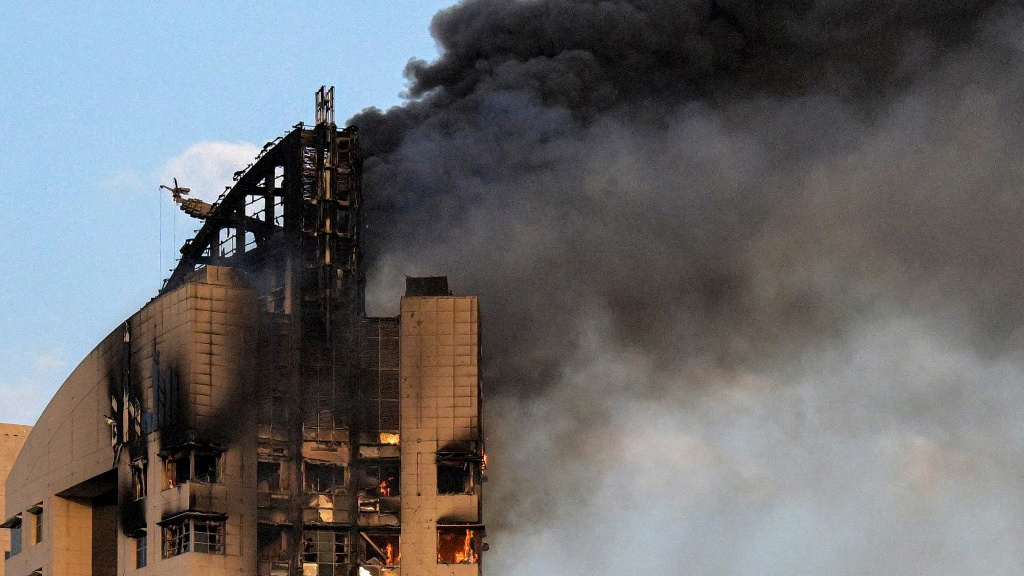
The Gulf region is witnessing escalating tensions between Iran, Israel, and the United States, threatening regional stability and pushing it to the brink of a wider conflict. This struggle is not merely a military confrontation but a test of the entire international system, highlighting the risks faced by the member states of the Gulf Cooperation Council.
The direct security risks facing Gulf countries are compounded by the real issue of lost strategic opportunities. The current conflict represents an irreparable loss in a historical window to transform the region into a permanent hub for global infrastructure, finance, and technology.
Details of the Incident
When Iran launched its retaliatory strikes, its ambassador to the United Nations, Amir Saeed Iravani, stated that his country was responding to a war against the very United Nations Charter. This statement highlights the violations occurring within the international system, where attacks on diplomatic premises constitute a blatant violation of state sovereignty.
During an emergency session of the United Nations Security Council, Secretary-General Antonio Guterres called for de-escalation, but his words fell on deaf ears amid the ongoing explosions. Positions were divided between the United States and Israel, which viewed their actions as existential necessities, and Russia and China, which condemned the violations of sovereignty.
Background & Context
Historically, the Gulf region has undergone significant transformations, with countries like the United Arab Emirates, Saudi Arabia, and Qatar emerging as global financial and logistical centers. These countries have invested billions of dollars in building modern infrastructure, making them preferred destinations for global investment.
However, the current conflict threatens these achievements, putting significant investments at risk. Major technology companies like Microsoft and Amazon have placed substantial bets on the region's stability, but military escalation jeopardizes these stakes.
Impact & Consequences
The continuation of military conflict in the Gulf not only threatens oil tankers but also jeopardizes significant investments in digital infrastructure. Data centers require uninterrupted power and secure supply chains, which are now under threat given the current circumstances.
Moreover, rising shipping costs and the imposition of 'war risk' fees by major shipping companies indicate that the region is no longer considered a safe destination for investors. The Gulf Federation of Chambers of Commerce has already documented severe disruptions in trade movement.
Regional Significance
Other Arab countries are also affected by the conflict in the Gulf, as instability could lead to economic and political repercussions throughout the region. The conflict between Iran, the United States, and Israel places Arab nations in a difficult position as they strive to maintain relations with all parties.
In conclusion, the current situation requires all stakeholders, including Washington, Tehran, Tel Aviv, and Gulf states, to recognize what is at stake. A war with Iran is not a war anyone can win; rather, it is a war that guarantees the Gulf's loss of its future.