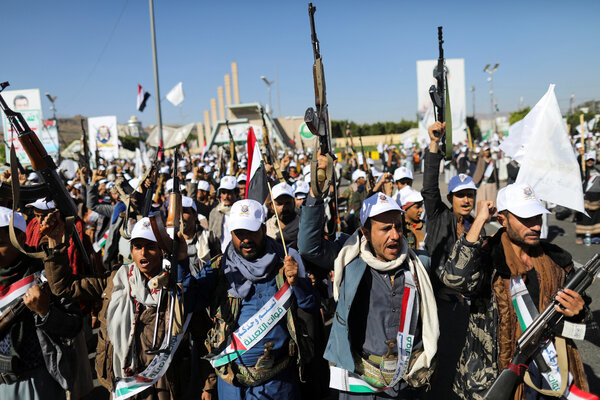
The conflict in the Middle East has entered its fifth week, with Israel launching airstrikes on the Iranian capital, Tehran, while Saudi forces managed to intercept around ten drones launched from Yemen after the Houthis joined the fighting. These events come at a sensitive time, as fears of a larger escalation in the region increase, threatening regional security and stability.
These developments coincide with rising tensions among regional powers, as the Iran-backed Houthis seek to expand their military operations in the area. Reports indicate that the Houthis have intensified their military activity, raising concerns among neighboring countries and exacerbating the ongoing conflict.
Details of the Event
In recent days, Israel has carried out airstrikes on targets in Tehran, targeting sites believed to be linked to the Iranian nuclear program. These strikes are part of an Israeli policy aimed at preventing Iran from enhancing its military capabilities in the region. In response, the Houthis launched drones towards Saudi territory, prompting Saudi forces to take urgent measures to intercept these aircraft.
Reports suggest that the Houthis have received increasing military support from Iran, reflecting a shift in the dynamics of the conflict in the region. This support may include drone technology and advanced weaponry, enhancing the Houthis' ability to conduct complex military operations.
Background & Context
The conflict in Yemen dates back to 2014 when the Houthis seized control of the capital, Sana'a, leading to a Saudi-led military intervention in 2015. Since then, the country has witnessed a bloody conflict resulting in a crippling humanitarian crisis, with millions suffering from food and medicine shortages. At the same time, Iran seeks to expand its influence in the region by supporting the Houthis, complicating the conflict further.
Over the years, there have been multiple attempts to reach a peace agreement, but these have often failed due to political and military complexities. With the Houthis now more visibly engaged in the fighting, the prospects for peace seem to be diminishing further.
Impact & Consequences
Analyses indicate that rising tensions in the region could lead to serious repercussions for regional security. As military operations increase, neighboring countries may face more attacks, heightening instability. Additionally, the ongoing conflict could negatively impact the regional economy, affecting trade and oil movements in the area.
Moreover, the escalation of the conflict could increase tensions between major powers, such as the United States and Russia, potentially dragging the region into a broader conflict. This scenario could have far-reaching implications for global security.
Regional Significance
The current events are particularly significant for Arab countries, reflecting the security challenges they face. As tensions rise, Arab nations may find themselves compelled to reassess their security and defense strategies. The humanitarian crises in Yemen may continue to affect relations between Arab countries and the international community.
Ultimately, there remains hope that the involved parties can reach peaceful solutions, but with violence escalating, the path to peace appears long and arduous.