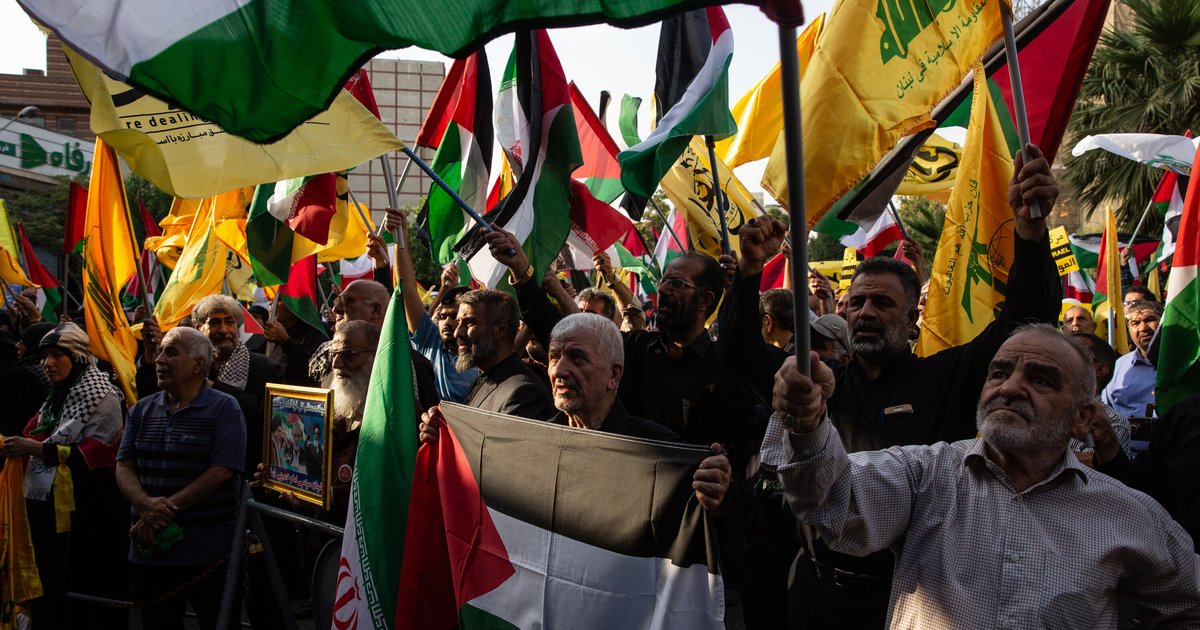
Tensions in the Middle East are escalating, particularly after the recent events known as the Al-Aqsa Flood. These events may serve as a new pretext for intensifying conflict, not only against Iran but also against other countries in the region, as part of a long-term plan aimed at achieving Israeli hegemony.
Since its establishment, Israel has sought to expand its influence in the region, evident in its military and political strategies. The war against Iran is not just a fleeting conflict; it is part of a broader vision aimed at realizing the dream of a Greater Israel, a vision that many Israeli leaders aspire to.
Details of the Incident
The Al-Aqsa Flood incident, which occurred recently, acted as a spark that could ignite the conflict in the region. These events coincided with rising tensions between Israel and Iran, with Tel Aviv accusing Tehran of supporting armed groups in the area, further escalating the conflict.
Historically, Israel has made multiple attempts to expand its influence, whether through direct wars or by supporting its allies in the region. This strategy always requires strong justifications, which the recent events have provided.
Background & Context
For decades, there have been attempts to achieve Israeli dominance in the Middle East, where the region has witnessed numerous wars and conflicts. The war on Lebanon in 2006 and the ongoing conflict in Syria are examples of how Israel seeks to expand its influence.
Iran, for its part, views this strategy as an existential threat, prompting it to bolster its military capabilities and support armed groups in the region, such as Hezbollah in Lebanon and Hamas in Gaza. This ongoing conflict between Iran and Israel creates a tense environment that could lead to an escalation of hostilities at any moment.
Impact & Consequences
If war breaks out, the consequences will be catastrophic for the entire region. It will affect regional security, potentially lead to mass displacement of populations, and increase casualty figures. Additionally, this war may provoke international interventions, complicating the situation further.
The economic impact will also be significant, as global markets will be affected by rising oil and gas prices, potentially leading to economic crises in many countries. This situation could create instability in the region, negatively impacting neighboring countries.
Regional Significance
Syria is considered the weakest link in this conflict, suffering from the effects of a civil war that has lasted for years. Any new escalation could exacerbate the humanitarian situation in the country, increasing the suffering of the Syrian people, who are already grappling with economic and humanitarian crises.
Other Arab countries may also find themselves in a difficult position, as they will have to take decisive stances regarding the conflict. This could lead to internal divisions and increase tensions between Arab states and Iran.
In conclusion, the region appears to be heading towards a new phase of tensions, with rising risks of a comprehensive war. It is crucial to exert diplomatic efforts to avoid this catastrophic scenario.