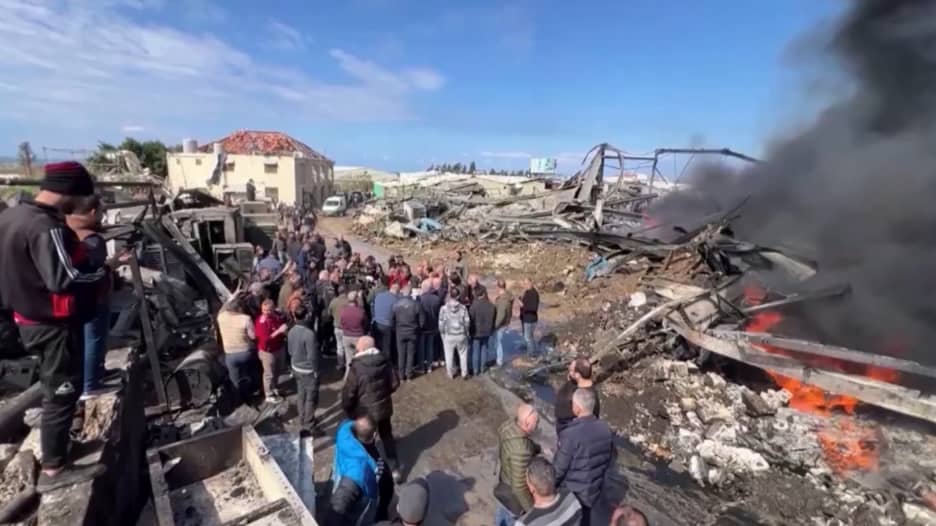
A state of increasing tension prevails in the Arabian Gulf, as the United States and Iran struggle to begin negotiations aimed at ending a conflict that has lasted for nearly four weeks. In this context, Israel has launched new strikes on Iranian targets, further escalating tensions in the region.
On Thursday, reports indicated more drone and missile attacks targeting U.S. allies in the Gulf, reflecting the intensifying conflict between major powers in the region. These events come at a sensitive time, as the international community seeks diplomatic solutions to end the dispute.
Details of the Event
Reports indicate that the Israeli strikes targeted Iranian military sites, leading to strong reactions from Tehran. Military sources confirmed that these operations are part of an Israeli strategy aimed at undermining Iranian influence in the region, especially amid rising tensions surrounding Iran's nuclear program.
Despite international pressure, Iran continues to develop its nuclear program, raising concerns among Western nations. Meanwhile, the United States continues to support its allies in the region, complicating the situation further.
Background & Context
Historically, relations between the United States and Iran have been tense since the Islamic Revolution in 1979. Recent years have seen an escalation in tensions, particularly following the U.S. withdrawal from the Iranian nuclear deal in 2018. Since then, Washington has imposed strict economic sanctions on Tehran, exacerbating the economic and social conditions in Iran.
In recent years, Israel has increased its military operations against Iranian targets in Syria and Iraq, viewing Iran as an existential threat. These military operations are part of an Israeli policy aimed at preventing Iran from bolstering its military presence in the region.
Impact & Consequences
Recent events underscore that the conflict in the Arabian Gulf could escalate to new levels of violence, threatening the stability of the entire region. Should military pressures continue, we may witness an escalation in Iranian responses, potentially leading to a comprehensive military escalation.
Furthermore, the ongoing conflict could negatively impact the global economy, especially given the heavy reliance on oil and gas from the Gulf region. Any escalation in military actions could lead to rising oil prices, which would reflect on the global economy.
Regional Significance
Neighboring Arab countries, such as Iraq and Syria, are among the most affected by the tensions between the United States and Iran. The conflict could exacerbate security and economic conditions in these countries, increasing the suffering of their populations.
Moreover, any military escalation could open the floodgates for refugees into neighboring Arab countries, increasing the burdens on these nations. Therefore, regional stability requires diligent diplomatic efforts from all parties involved.