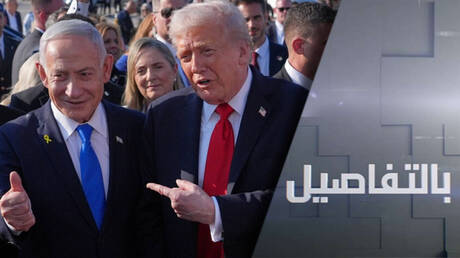
Concerns are rising over escalating tensions between the United States and Israel on one side and Iran on the other. Former President Donald Trump and Israeli Prime Minister Benjamin Netanyahu are taking provocative steps against Tehran, raising questions about the possibility of halting this potential war.
Amid ongoing tensions, observers have noted that Trump and Netanyahu may be heading towards military escalation against Iran, especially following their recent statements. Trump emphasized the need for strict measures against what he termed the "Iranian threat," while Netanyahu called for enhancing security cooperation between his country and the United States to confront this threat.
Details of the Event
Recently, relations between the United States and Iran have seen increasing tension, with Washington accusing Tehran of engaging in activities that threaten regional security. On the other hand, Israel is seeking to bolster its military position in the region, increasing the likelihood of armed conflict. Reports have indicated that Trump and Netanyahu are exchanging views on new strategies to confront Iran, raising concerns in international circles.
Furthermore, the hostile statements from both sides indicate a clear intention to escalate the situation, with Trump calling for new sanctions on Iran, while Netanyahu stressed the need to prepare for any potential attack. These statements come at a sensitive time, as Iran seeks to enhance its influence in the region, complicating the security landscape further.
Background & Context
Historically, relations between Iran and the United States have been tense since the Islamic Revolution in 1979, leading to several conflicts in the region. In recent years, tensions have significantly increased, especially after the United States withdrew from the Iranian nuclear deal in 2018. This withdrawal led to heightened tensions between Iran and Western countries, making the region more fragile.
Israel, for its part, views Iran as an existential threat, seeking to prevent Tehran from developing its nuclear program. Israel has conducted several military operations against Iranian targets in Syria, reflecting its strategy to counter Iranian influence in the region. This historical background illustrates the complexity of relations among the involved parties and increases the likelihood of escalating tensions.
Impact & Consequences
If tensions continue to escalate, they could lead to armed conflict in the region, which would have wide-ranging effects on regional and international security. Any military confrontation is likely to exacerbate humanitarian crises in neighboring countries such as Iraq and Syria, which are already suffering from internal conflicts.
Moreover, any military escalation could impact global oil prices, as Iran is one of the major oil-exporting countries. Any threat to close the Strait of Hormuz, through which approximately 20% of global oil trade passes, could lead to a significant price increase, affecting the global economy.
Regional Significance
The Arab countries neighboring Iran find themselves in a sensitive position, as they may be directly affected by any military escalation. Countries like Iraq, Syria, and Lebanon may face negative repercussions, as humanitarian crises could worsen and internal conflicts intensify.
Additionally, other Arab countries may find themselves compelled to take strong stances, potentially leading to internal divisions. In this context, Arab nations must be cautious in dealing with these tensions and strive to enhance dialogue and regional cooperation to avoid any escalation that could lead to widespread conflict.
In conclusion, questions remain open about how events in the region will unfold. Will international efforts succeed in containing tensions between Trump and Netanyahu on one side and Iran on the other? Or will the region enter a new spiral of conflicts?