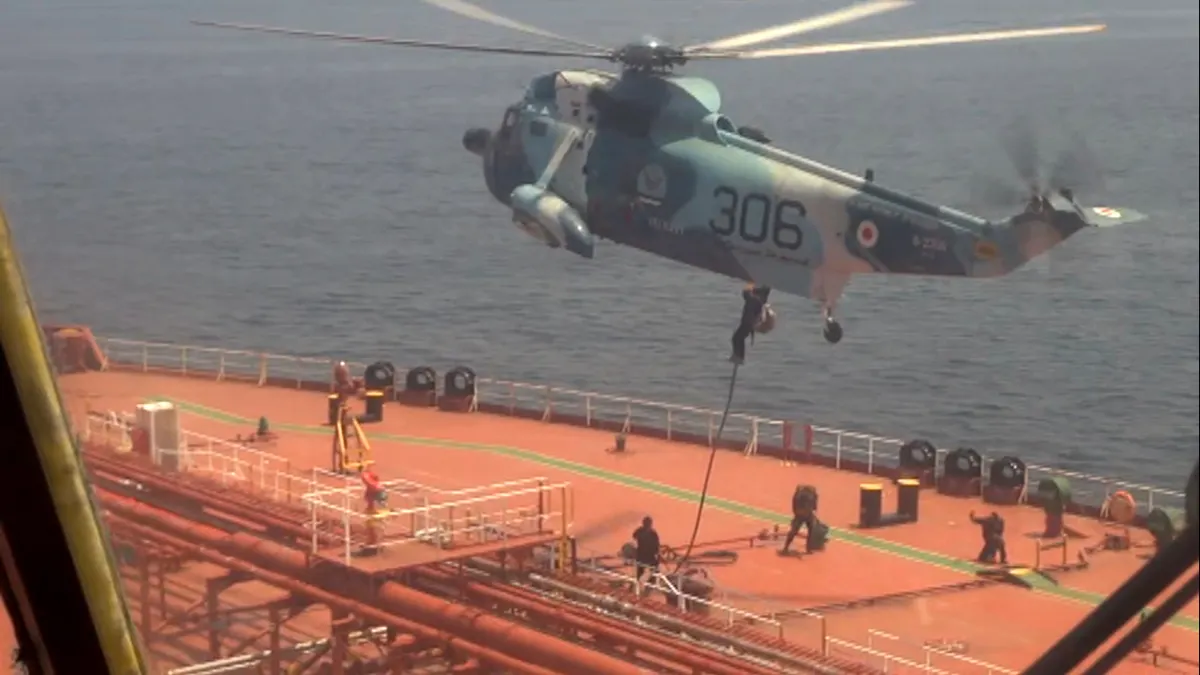
In a new escalation of tensions between the United States and Iran, former President Donald Trump has threatened Iran again, while a Kuwaiti ship was attacked in Dubai port. This development comes on the thirty-second day of rising conflict in the region, increasing concerns about regional stability.
The attack on the Kuwaiti ship, which occurred earlier this week, has sparked varied reactions from officials in Kuwait, who emphasized the need to take measures to protect their maritime interests. At the same time, Trump continued to issue threats to Iran, reflecting the ongoing tensions between the two countries.
Details of the Incident
The attack targeting the Kuwaiti ship in Dubai port has not been fully detailed, but initial reports suggest that the attack may be a result of escalating hostilities between Iran and Gulf states. Maritime sources confirmed that the ship was in a normal position before the attack, raising concerns about navigation safety in the region.
On the other hand, Trump threatened Iran again via social media platforms, asserting that the United States would not tolerate any threats to its interests or those of its allies in the region. These statements come at a sensitive time as fears of escalating military conflict in the area grow.
Background & Context
Historically, relations between the United States and Iran have seen increasing tensions since the U.S. withdrawal from the nuclear deal in 2018. This withdrawal led to the imposition of severe economic sanctions on Iran, affecting its economy and escalating tensions in the region. Recent events, including attacks on commercial ships in Gulf waters, reflect the rising conflict between regional and international powers.
Kuwait is part of the Gulf coalition that seeks to maintain security and stability in the region and has faced increasing pressures due to tensions between Iran and Western countries. This situation places Kuwait in a sensitive position, as it must balance its relations with major powers while safeguarding its national security.
Impact & Consequences
The current escalation could have serious repercussions for regional security, potentially causing increased tensions between Iran and Gulf states, which could lead to possible military escalation. Additionally, the mutual threats between the United States and Iran may impact global markets, particularly in the oil sector, as the region is one of the world's most important oil-producing areas.
Furthermore, the continuation of these tensions may affect peace and stability efforts in the region, as many countries seek to achieve political agreements to resolve existing conflicts. Any military escalation could plunge the region back into a cycle of violence, affecting the lives of millions.
Regional Significance
The current events are particularly significant for Arab countries, as any escalation in the conflict between the United States and Iran could directly impact security and stability in the region. Arab countries, especially those close to the Gulf, are closely monitoring the situation, as any escalation could lead to serious economic and security repercussions.
Under these circumstances, Arab countries must enhance their security and economic cooperation to face potential challenges. Diplomatic dialogue remains the best option to avoid military escalation and maintain stability in the region.