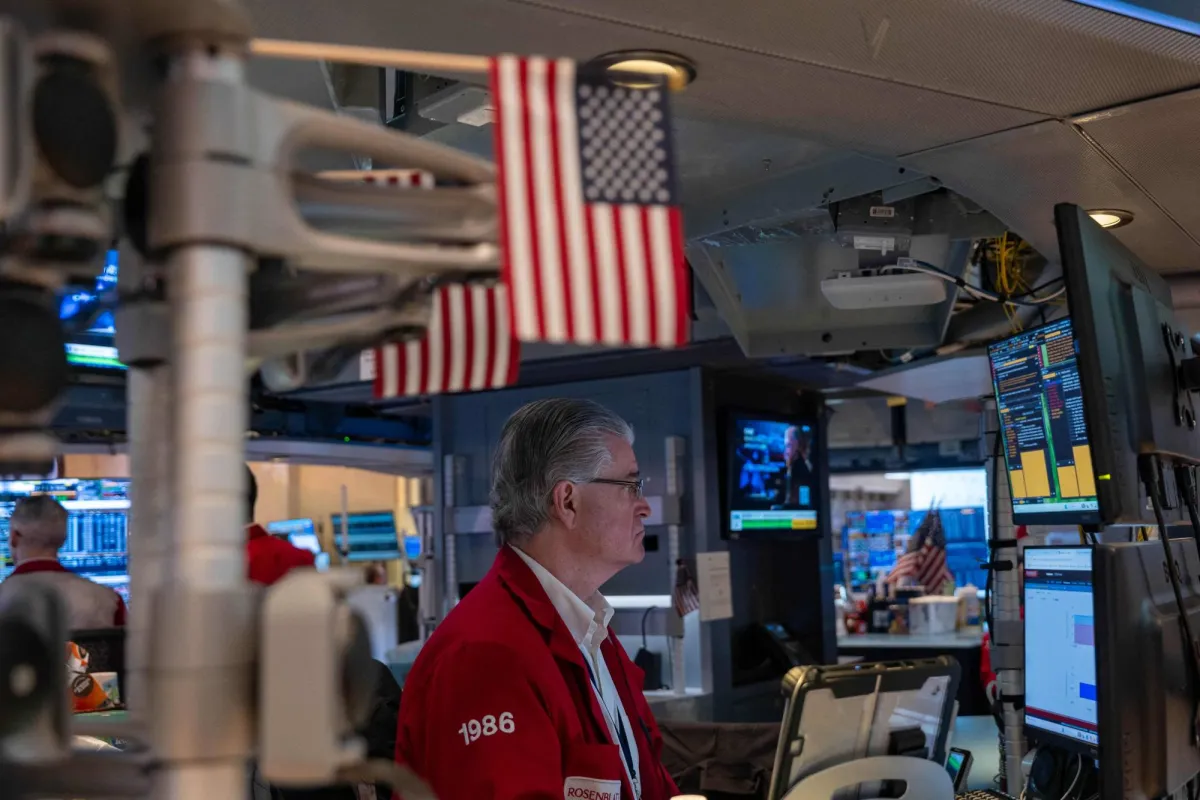
U.S. President Donald Trump's threats to bomb Iran "until they return to the Stone Age" have sparked concern in global financial markets, as the conflict between the United States and Iran enters its fifth week. These statements have deteriorated investor hopes for a quick resolution to the conflict, increasing inflationary pressures and affecting oil supplies.
Global markets fell on Thursday, with stocks and bonds dropping, while oil prices rose and the dollar strengthened, after Trump's comments dashed expectations for a near-term clarity on the conflict's resolution in the Middle East, according to Reuters.
Details of the Event
Trump indicated that the U.S. military has "almost achieved its goals in Iran," without providing a clear timeline for ending operations, asserting that military strikes will continue over the next two to three weeks. These statements did not alleviate investor concerns about the outlook of the conflict, as Mike Holahan, director of Electus Financial in Oakland, stated: "The speech did not bring any significant new information, except for the confirmation of continued bombings in the upcoming weeks." He added that this prolongs the crisis and raises questions about its impact on energy supply chains.
Investors had pinned their hopes on a near-term de-escalation following previous comments from Trump, which had supported stocks and weakened the dollar. However, his latest speech reestablished the scenario of a prolonged war, prompting traders to reduce risk positions ahead of a long weekend.
Background & Context
Oil supplies and their impact on inflation remain a major concern for markets, especially amid the uncertainty surrounding the potential reopening of the Strait of Hormuz, a vital corridor for global energy supplies. Its disruption has led to one of the most severe energy shocks in history. The price of Brent crude for June delivery surged by approximately 5% to reach $106.16 per barrel following Trump's remarks.
Matt Simpson, chief market analyst at Stonex, stated: "In the absence of any plans to reopen the Strait of Hormuz, oil prices will remain high for an indefinite period," warning of a new inflationary wave that could pressure the global economy. Analysts believe that ongoing disruptions in energy supplies may heighten fears of stagflation, a combination of slowing growth and rising inflation, which had already shaken markets in March.
Impact & Consequences
Toshihiro Asada, a board member of the Bank of Japan, warned that his country may face this scenario due to the war's repercussions, noting the difficulty of addressing it through traditional monetary policy tools. Russell Chisler, head of investments at VanEck, remarked: "The question on investors' minds is: When will this conflict end? This uncertainty is what fuels volatility." He added that markets are heading towards a stagflation environment with slowing growth and rising inflation expectations.
U.S. Treasury yields rose during Asian trading, with the yield on 10-year bonds increasing by 5 basis points to 4.376%, amid fears that high inflation could limit opportunities for monetary easing. Markets are expected to remain highly volatile in the coming period, as investors await developments in the conflict over the next few weeks.
Regional Significance
Attention is turning to the impact of these developments on the Arab region, where high oil prices remain a concern for oil-importing countries. Moreover, the continuation of the conflict may increase geopolitical tensions in the region, affecting economic stability. Under these circumstances, optimism for a near-end to the war remains limited, given the multiple parties involved, which include not only the United States but also Israel and Iran, complicating the path to a swift settlement.
In conclusion, markets remain in a state of cautious anticipation, with analysts expecting the dollar to remain strong and oil prices to rise in the short term, amid growing demand for safe assets.