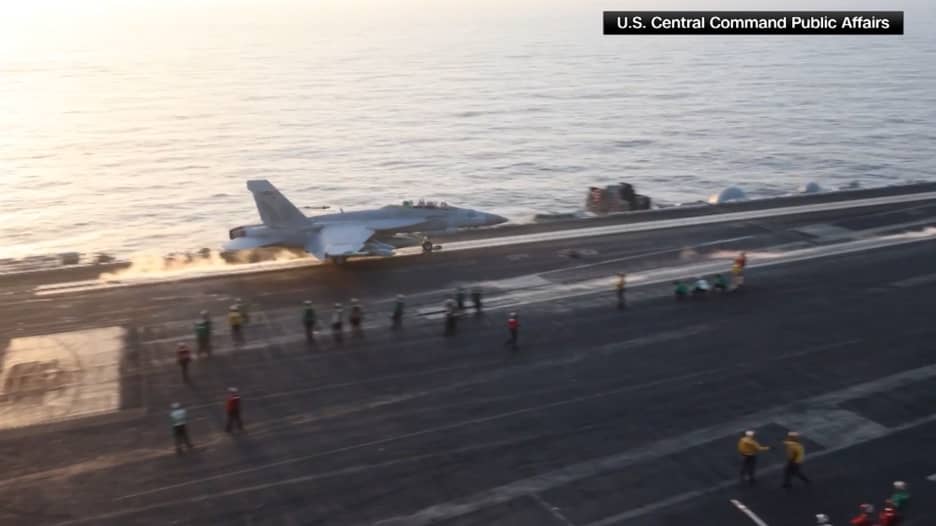
On the twenty-seventh day of the US-Israeli war against Iran, the intensity of threats between both sides has escalated, reflecting a deterioration of conditions in the region. Despite US Secretary of State Marco Rubio announcing progress in message exchanges with Iran, negotiations continue to face significant difficulties.
The mutual threats between Washington and Tehran reflect a state of increasing polarization, with US President Donald Trump warning that Iran will face its "worst nightmares" if it continues to escalate tensions. In response, reports indicate that Tehran has prepared one million fighters in anticipation of what it describes as a "suicidal war," further heightening concerns in international circles.
Details of the Situation
Trump's recent statements came at a sensitive time, as fears grow regarding the escalation of military conflict in the region. He indicated that the United States would not hesitate to take stringent measures if Iran continues to threaten its interests. At the same time, Tehran has confirmed its readiness to confront any escalation from the United States and its allies, reflecting its preparedness for a potential military confrontation.
Despite the tensions, the US Secretary of State announced that there has been progress in negotiations, with messages being exchanged between both sides. However, details of these messages have not been disclosed, raising questions about the seriousness of the negotiations and their ability to yield tangible results.
Background & Context
The roots of the current tensions between the United States and Iran date back several years, with relations between the two countries significantly deteriorating after Washington's withdrawal from the Iranian nuclear deal in 2018. Since then, the United States has imposed strict economic sanctions on Iran, exacerbating the country's economic and social conditions.
The current war, which is considered part of a broader conflict between regional and international powers, could lead to serious repercussions for regional security, especially with the presence of other powers like Russia and China, which may intervene in the conflict to support Iran.
Impact & Consequences
The current escalation between the United States and Iran could have serious implications for regional and international security. If the conflict worsens, we may witness an influx of refugees from Iran to neighboring countries, increasing the pressure on these nations. Additionally, any military escalation could affect global oil prices, negatively impacting the world economy.
Furthermore, the continuation of tensions may bolster the position of armed groups in the region, such as Hezbollah in Lebanon and the Houthis in Yemen, complicating security situations in the Middle East.
Regional Significance
The Arab region is experiencing a state of anxiety due to the escalation between the United States and Iran, with many Arab countries considering that any military conflict could affect their stability. Gulf states, in particular, are closely monitoring the situation, as they could be caught in the crossfire if the conflict escalates.
There are also concerns that the conflict could lead to further escalation in the Israeli-Palestinian conflict, as armed groups may exploit the situation to enhance their activities against Israel, complicating conditions in the region.
In conclusion, the situation in the region remains tense, with threats continuing from both sides. It is essential for the involved parties to seek peaceful solutions before conditions worsen further.