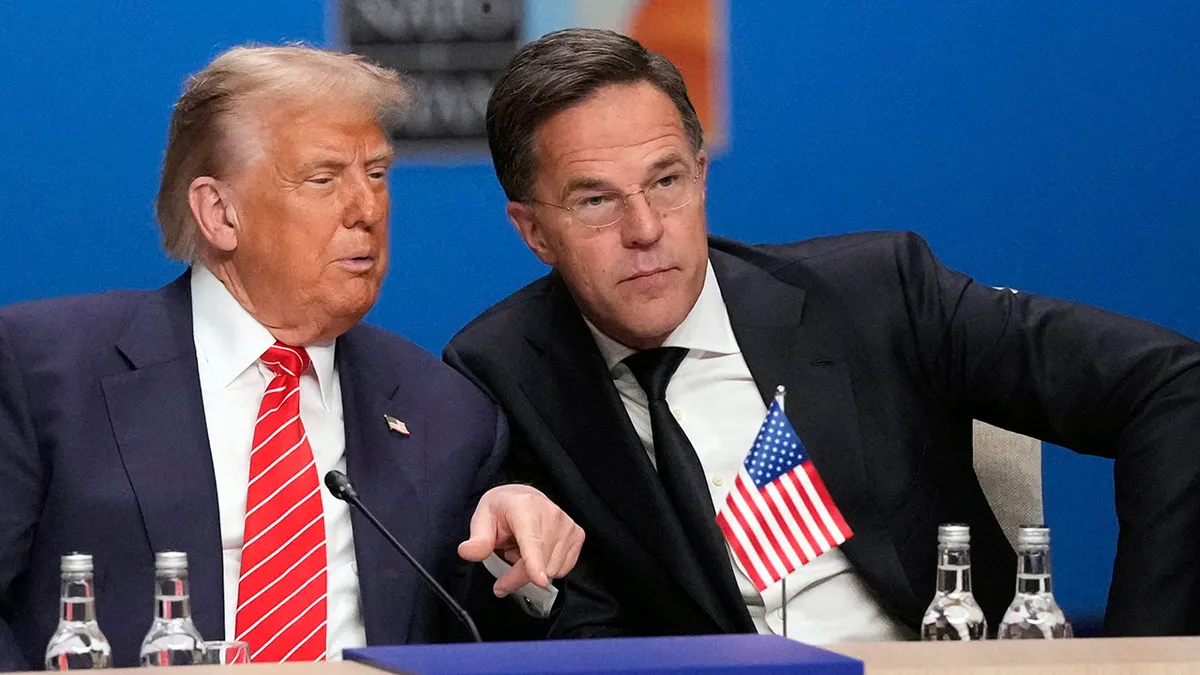
Tensions between former U.S. President Donald Trump and NATO regarding the Iranian issue are escalating, with these tensions beginning to affect the situation in Ukraine. As European leaders like Dutch Prime Minister Mark Rutte and British Labour Party leader Keir Starmer seek to contain this growing crisis, the question remains about how these disputes will impact European and global security.
Recently, Trump criticized NATO for what he deemed insufficient military support for Ukraine in the face of the Russian invasion. He pointed out that NATO allies should be more resolute in supporting Kyiv, especially in light of the increasing Iranian threats.
Details of the Dispute
The current disagreements particularly concern NATO's military strategy towards Iran and Ukraine. Trump believes that focusing on Iran should be a priority, while NATO is concentrating on enhancing support for Ukraine. This divergence in priorities reflects divisions within the alliance, which could affect its effectiveness in responding to international crises.
In this context, Rutte and Starmer are striving to enhance cooperation among European nations to address shared security challenges. They emphasized the importance of collective action in facing threats, whether from Iran or Russia. They also pointed out the necessity of strengthening European defense capabilities independently of the United States.
Background & Context
Historically, relations between the United States and its NATO allies have sometimes been tense, especially regarding military strategies. As tensions in the Middle East escalate, it has become essential to reassess how NATO deals with multiple threats. These dynamics have affected the alliance's ability to make quick and effective decisions.
Iran, considered one of the most significant threats in the region, may have far-reaching implications for European security. Tehran seeks to enhance its influence in the Middle East, complicating the security situation in the region. On the other hand, the Russian invasion of Ukraine has redirected international attention towards Europe, increasing the importance of coordination among allies.
Impact & Consequences
The disagreements between Trump and NATO are expected to have negative implications for European security. The greater the divisions within the alliance, the higher the risks faced by member states. This could lead to a decline in trust among allies, potentially weakening NATO's ability to confront threats.
These disagreements may also affect military support for Ukraine, as some countries may hesitate to provide assistance amid the lack of clarity regarding NATO's overall strategy. This could give Russia an opportunity to strengthen its position in the region, further complicating the Ukrainian conflict.
Regional Significance
These developments are particularly significant for the Arab region, as any escalation in tensions between Iran and NATO could impact regional security. Iran plays a pivotal role in many conflicts in the region, and any changes in NATO's strategies could lead to a reshaping of regional alliances.
Moreover, the ongoing tensions between the United States and Iran could affect oil prices and financial markets, reflecting on Arab economies that heavily rely on oil exports.
In conclusion, the situations in Ukraine and Iran remain under scrutiny as European leaders seek effective solutions to the growing challenges. With ongoing disputes, the future of European and global security remains uncertain.