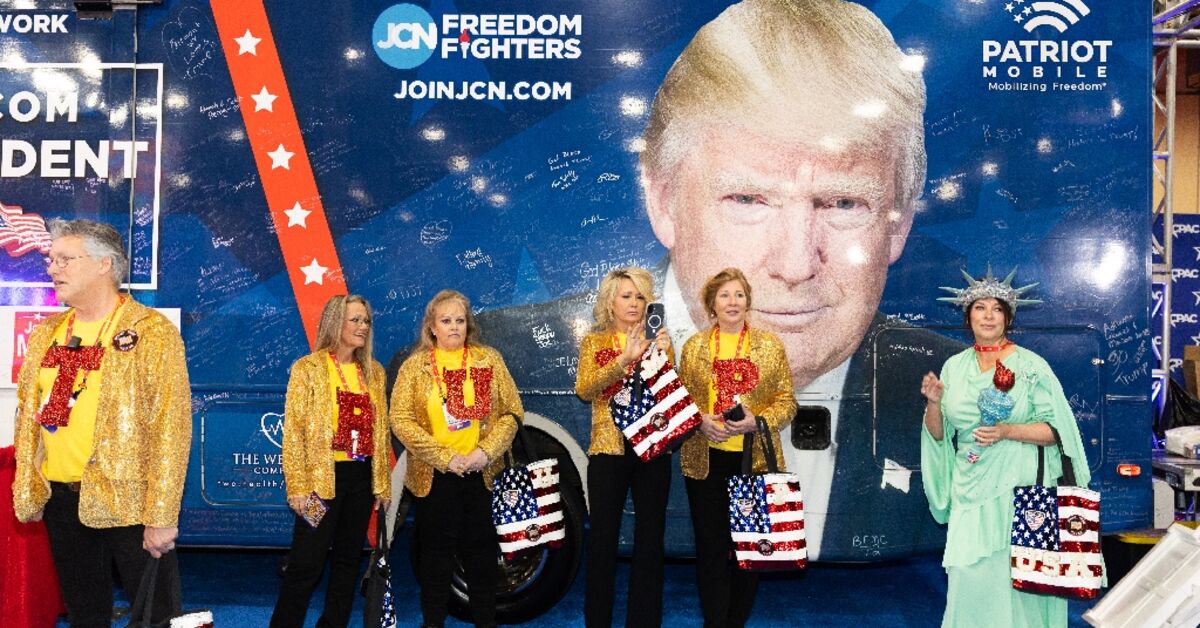
As U.S. military pressure on Iran escalates, supporters of President Donald Trump are embracing a new perspective on the 'America First' principle. Many of them argue that U.S. airstrikes on Iran do not contradict this principle but rather extend it naturally. This shift in viewpoint emerged during the opening of the Conservative Political Action Conference (CPAC) in suburban Dallas, where the topic was extensively discussed.
During the conference, attendees discussed how these military operations reflect the strength of the United States on the international stage, asserting that enhancing U.S. national security sometimes necessitates the use of military force. Some speakers pointed out that this policy reflects Trump's commitment to protecting American interests abroad, even if it means employing military force.
Details of the Event
These developments come at a sensitive time, as tensions between the United States and Iran have increased in recent years. The relationship between the two countries has seen a notable escalation since Trump's withdrawal from the Iranian nuclear deal in 2018. Since then, the U.S. has imposed strict economic sanctions on Iran, exacerbating the situation in the region.
Although the 'America First' principle was initially seen as a call to avoid foreign military interventions, many of Trump's supporters believe that the current military escalation is part of a broader strategy aimed at safeguarding American interests. Some analysts have noted that this shift in opinion reflects a change in how foreign policy is understood under the Trump administration.
Context and Background
Historically, the 'America First' principle represented a call to focus on domestic issues and avoid entanglement in foreign wars. However, recent events suggest a shift in this concept. The last few years have witnessed an increase in military conflicts in the Middle East, prompting many Americans to question their country's role in these conflicts.
Iran is considered one of the hot spots in U.S. foreign policy, where economic and security interests intertwine complexly. The escalation of the conflict with Iran has led to a reevaluation of many political stances, as some of Trump's supporters have begun to endorse the use of military force as a means to protect American interests.
Impact and Consequences
This shift in opinion could have significant implications for U.S. foreign policy. If the Trump administration continues to adopt a more aggressive stance toward Iran, it could lead to an escalation of military conflict in the region. This, in turn, may affect U.S. relations with its allies in the Middle East, who might feel concerned about the repercussions of this escalation.
Moreover, this shift could provoke mixed reactions within the United States itself, as some Americans may oppose the use of military force as a means of resolving conflicts. This could lead to a greater divide in public opinion regarding U.S. foreign policy, potentially impacting the outcomes of upcoming elections.
Impact on the Arab Region
The Arab region is a crucial part of the U.S.-Iranian conflict, with many Arab countries directly affected by rising tensions. Any military escalation between the United States and Iran could destabilize the region, impacting the national security of Arab states.
Additionally, the escalation of the conflict could increase tensions among various factions in the region, negatively affecting peace and stability efforts. Therefore, observers in the Arab world are closely monitoring these developments, as they may have far-reaching implications for the future of the region.
In conclusion, the escalation of the conflict between the United States and Iran represents a turning point in U.S. foreign policy, as some of Trump's supporters embrace a new perspective on the 'America First' principle. As these developments continue, the question remains open regarding how they will affect the region and the world.