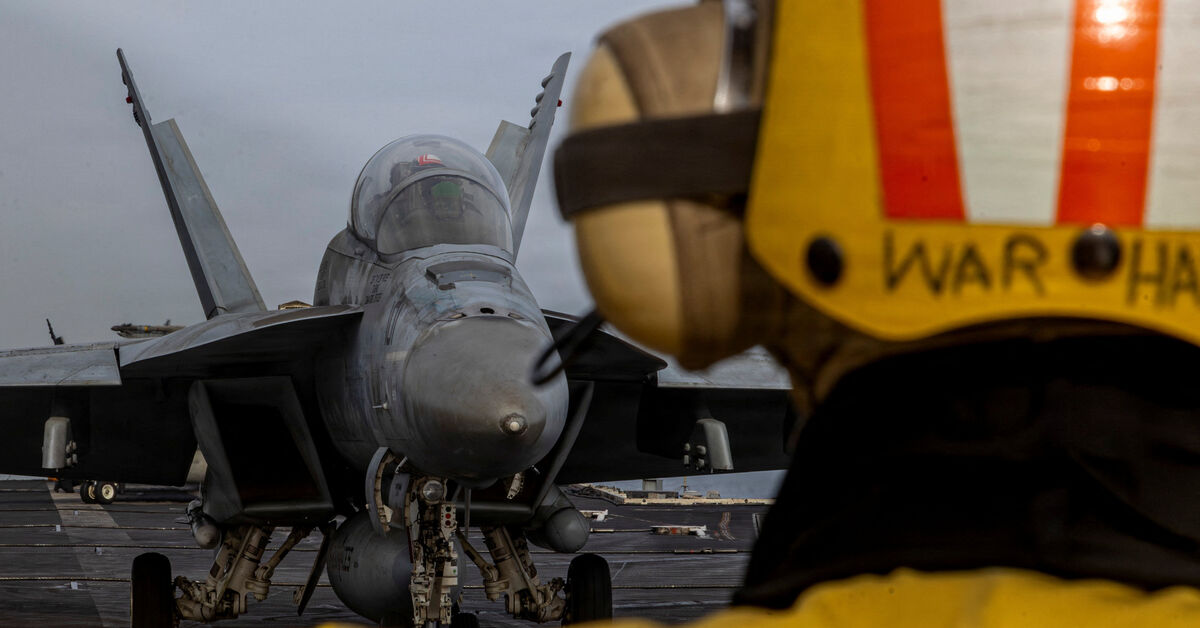
In a rapidly evolving situation in the Gulf region, US President Donald Trump has reiterated the necessity of keeping the strategic Strait of Hormuz open, warning Iran of dire consequences if it fails to meet his demands. This warning comes as Iranian and American forces persist in their search for a missing American pilot from two warplanes that went down in the area.
Trump's statements were made amid rising tensions between the United States and Iran, with recent days witnessing joint strikes by American and Israeli forces on Iranian targets. Trump has set a deadline for Iran to reach an agreement that would resolve the ongoing dispute, indicating that time is running out.
Details of the Event
On Saturday, April 5, Trump issued new warnings to Iran, demanding that it open the Strait of Hormuz, which is considered one of the most crucial waterways in the world. This warning comes at a sensitive time, as fears of military escalation grow, potentially affecting maritime navigation and driving up global oil prices.
Simultaneously, American and Iranian forces continue their search for the missing pilot, reflecting the level of tension in the region. The two aircraft were downed under mysterious circumstances, complicating the military situation further.
Background & Context
Historically, the Strait of Hormuz has witnessed numerous military crises, serving as a vital transit point for approximately 20% of the world's oil. The region has experienced escalating tensions since the United States withdrew from the Iranian nuclear deal in 2018, leading to increased economic sanctions on Iran.
The US-Israeli alliance against Iran is not new, as both parties seek to counter Iran's growing influence in the Middle East, particularly in Iraq, Syria, and Lebanon. These policies have led to a continuous escalation of military and political tensions in the region.
Impact & Consequences
The current escalation could have serious implications for regional and international security. Should any military escalation occur, it could directly impact global oil prices, leading to increased energy costs worldwide.
Moreover, the continuation of tensions may exacerbate humanitarian crises in the region, as many countries suffer from economic and social issues due to ongoing conflicts. Any escalation could also pave the way for greater military interventions by major powers, further complicating the regional landscape.
Regional Significance
Given the current situation, neighboring Arab countries, such as Saudi Arabia and the UAE, are closely monitoring developments. Any military escalation could affect the stability of these nations and increase the risks of regional conflicts.
The situation in Iraq and Syria could also be directly impacted, as American and Iranian forces are heavily present there. Any escalation is likely to heighten tensions among armed factions in these countries, potentially worsening existing humanitarian crises.
In conclusion, the situation in the Gulf remains tense, with growing fears of military escalation that could affect regional and international security. It is crucial for all involved parties to remain committed to dialogue and diplomacy to avoid any escalation that could lead to severe consequences.