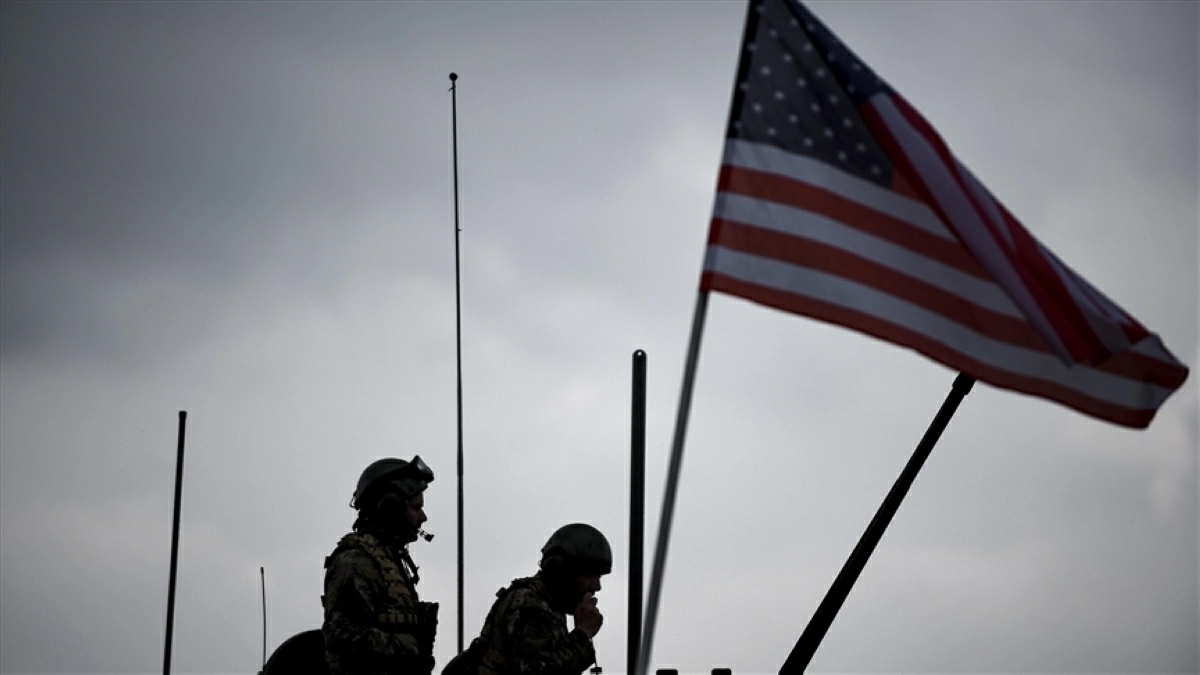
In a new military development, US Secretary of Defense Pete Hegseth announced his visit to the Middle East over the weekend, where US and Israeli forces continue to carry out airstrikes against Iranian targets. Hegseth explained that he spent several hours at the US Central Command, where he met with soldiers involved in what he described as "Operation Urgent Fury." Although he did not disclose the locations he visited for security reasons, his statements indicate a notable military escalation in the region.
During a joint press conference with Chairman of the Joint Chiefs of Staff, General Dan Kine, Hegseth emphasized that "US firepower is increasing, while Iran's capabilities are declining." He noted that the United States executed 200 airstrikes in a single night, reflecting the level of military escalation occurring in the region.
Details of the Event
These statements come at a sensitive time, as tensions between the United States and Iran are escalating. Hegseth pointed out that military options for the United States are increasing, raising questions about the strategic dimensions of these operations. He also urged Iran to move towards a diplomatic agreement, indicating that there is room for a peaceful solution despite the military escalation.
"Operation Urgent Fury" is part of a broader strategy aimed at undermining Iranian influence in the region, where the United States collaborates with its allies in the Middle East, particularly Israel, to confront the threats posed by Iran. In recent days, a number of airstrikes targeting Iranian sites have been carried out, further heightening tensions in the region.
Background & Context
Historically, US-Iranian relations have experienced increasing tensions since the United States withdrew from the Iranian nuclear deal in 2018. Since then, the United States has imposed strict economic sanctions on Iran, significantly impacting its economy. In this context, Iran seeks to enhance its regional influence by supporting armed groups in Iraq, Syria, and Lebanon, which raises concerns for both the United States and Israel.
Recent events in the region, including attacks on oil facilities in Saudi Arabia, have further intensified tensions, prompting the United States to bolster its military presence in the Arabian Gulf. These dynamics make it challenging to reach a peaceful resolution, as fears of a larger escalation that could lead to open conflict are increasing.
Impact & Consequences
Increased military pressure on Iran could lead to unpredictable reactions, both from the Iranian government and its allies in the region. If pressures continue, Iran may escalate its military operations in Iraq and Syria, potentially worsening security conditions in the area. Furthermore, military escalation could affect oil prices and global financial markets, increasing economic concerns.
On the other hand, this escalation may provoke reactions from other countries in the region, as some Arab nations may feel alarmed by rising military tensions, prompting them to reassess their strategic alliances. There are also fears that this situation could lead to a comprehensive military conflict in the region, significantly impacting both regional and international security.
Regional Significance
The military developments in the Middle East are particularly significant for Arab countries, as they pose a threat to security and stability in the region. Under these circumstances, Arab nations may find themselves compelled to take clear positions regarding the US-Iranian escalation, which could affect their relations with major powers.
The situation may also open the door for more dialogue between Arab nations and Iran, as some countries may seek to mediate the conflict to avoid military escalation. Ultimately, there remains hope that wisdom will prevail and that diplomatic solutions will be reached to ensure security and stability in the region.