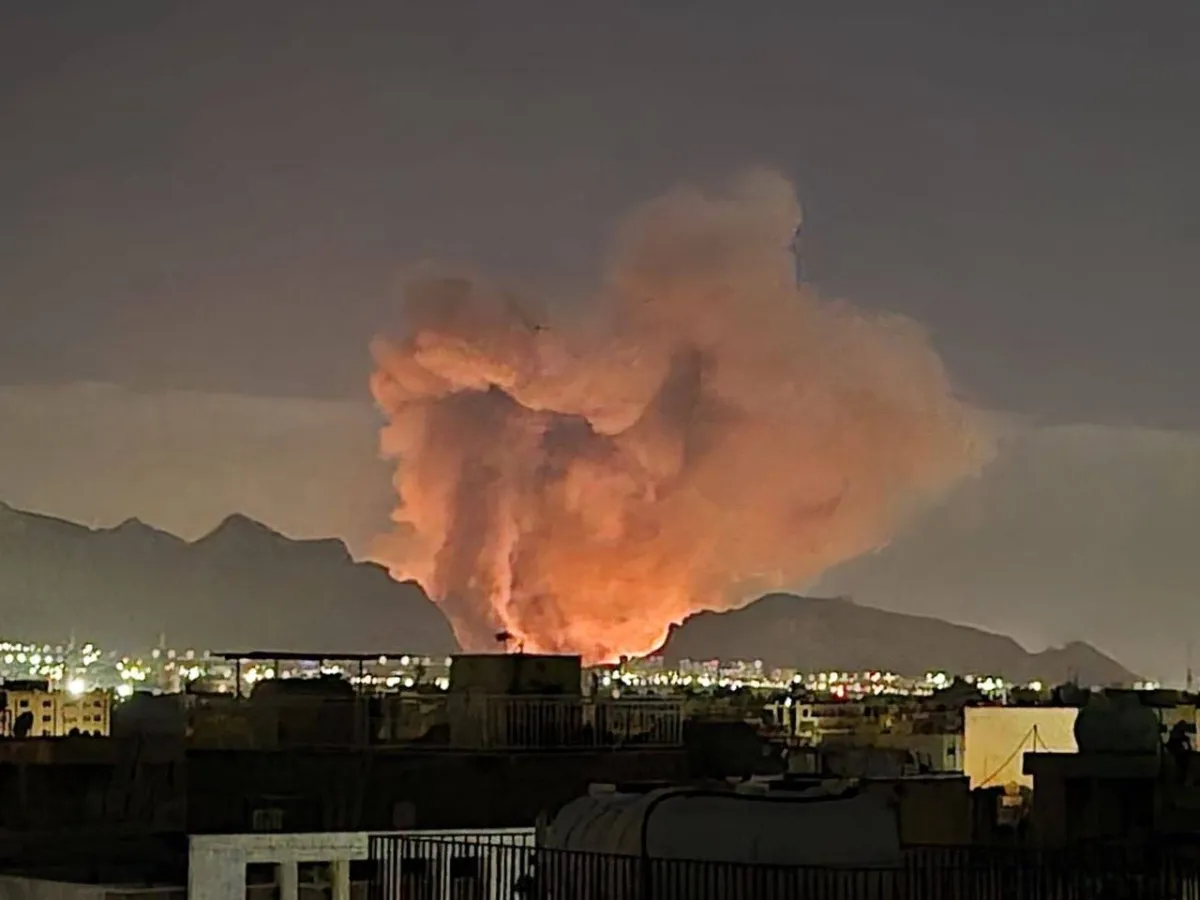
Tensions have surged in the Strait of Hormuz after President Donald Trump emphasized the need to reopen the strait for navigation, coinciding with increased military pressure on Iran from the United States and Israel. This escalation comes amid a new wave of airstrikes targeting military facilities in Tehran and Isfahan, intensifying regional tensions.
Trump, who adopts a hardline policy towards Iran, asserted that he is not yet ready to abandon his efforts to compel Tehran to reopen the strait, despite suggesting that this task could be left to other countries that rely more on Gulf oil. In an interview with CBS News, Trump stated that other nations should "intervene and deal with the matter," reflecting his tough stance towards European allies whom he criticized for not participating in the pressure on Iran.
Details of the Event
The American escalation coincided with intensive airstrikes on Iran, as US and Israeli strikes targeted Tehran in the early morning hours. At the same time, Trump indicated that countries affected by rising fuel prices should "go and get their oil themselves," reflecting his unwillingness to shoulder the burden alone.
US Secretary of Defense Pete Hegseth emphasized the need for allies like Britain to intervene to reopen the Strait of Hormuz, noting that this issue is not solely about the US Navy. The US military also announced the presence of the amphibious assault ship USS Tripoli in the Indian Ocean, carrying approximately 1,800 Marines, indicating the United States' readiness to escalate its military presence in the region.
Background & Context
Historically, the Strait of Hormuz is a vital point for maritime navigation, through which about 20% of the world's oil passes. The region has witnessed ongoing tensions between Iran and the United States since Washington's withdrawal from the Iranian nuclear deal in 2018. Since then, mutual attacks between the two sides have escalated, exacerbating security conditions in the region.
In recent years, Israel has intensified its military operations against Iranian facilities, targeting Tehran's military capabilities, particularly those related to its nuclear program. Recent reports have indicated that the Israeli military has conducted over 230 strikes inside Iran, reflecting its strategy of targeting the military infrastructure of the Iranian regime.
Impact & Consequences
The military escalation in the region carries serious implications for regional and international security. Increased military pressure could lead to rapid reactions from the Iranian side, potentially dragging the region into a broader conflict. Additionally, continued attacks on Iranian facilities may exacerbate humanitarian and economic crises within Iran, increasing instability in the region.
Moreover, rising tensions in the Strait of Hormuz could impact global oil prices, as any disruption to navigation in this vital strait could lead to significant price increases, adversely affecting the global economy.
Regional Significance
Arab countries are directly affected by the escalating tensions in the Strait of Hormuz, as many of these nations rely on Iranian oil. Any military escalation could also lead to an influx of refugees into neighboring countries, increasing the economic and social burdens on these nations.
In conclusion, the situation in the region remains complex, with overlapping political and military interests making it difficult to predict the course of events. Effective diplomacy from all parties involved is required to avoid escalating tensions and reach peaceful solutions.