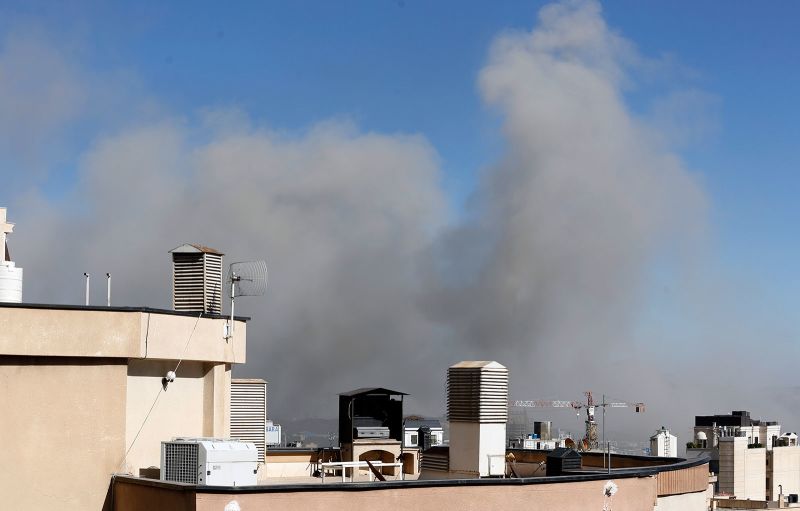
The US-Israeli war on Iran has entered its second month, expanding its impact across the region and the world. The repercussions are increasingly felt in energy markets and trade, amid uncertainty regarding President Donald Trump's intentions.
Conditions in the region are worsening as tensions continue to escalate between the United States and Israel on one side, and Iran on the other. Reports indicate that military operations and political tensions could lead to unexpected outcomes, heightening concerns in global markets.
Details of the Conflict
The US-Israeli war on Iran began in the context of rising geopolitical tensions, as the United States seeks to diminish Iran's influence in the region. Reports have shown that military operations primarily target Iranian nuclear and military facilities, intensifying the conflict.
Despite international pressures, Iran continues to develop its nuclear program, complicating the situation further. At the same time, the United States is reinforcing its military presence in the region, increasing the likelihood of escalation.
Background & Context
The roots of the conflict trace back many years of tensions between Iran and the United States, with their relations deteriorating significantly since the US withdrawal from the nuclear agreement in 2018. Since then, the US administration has pursued a maximum pressure policy on Iran, exacerbating the situation.
This war intertwines with other conflicts in the region, such as the disputes in Syria and Yemen, where Iran plays a significant role in supporting its allies. Therefore, any escalation in this conflict could impact regional stability as a whole.
Impact & Consequences
Concerns are growing that the war could lead to catastrophic outcomes, not only at the regional level but also globally. Estimates suggest that escalating tensions could significantly raise oil prices, affecting the global economy.
Moreover, the continuation of the conflict may lead to an influx of refugees and increased social tensions in neighboring countries, complicating humanitarian conditions in the region.
Regional Significance
The US-Israeli war on Iran directly affects Arab countries, with rising fears that the region could turn into an open battlefield. Some Arab nations have expressed concern over escalating tensions, as they strive to maintain their internal stability.
Calls for dialogue and negotiation are increasing as a means to avoid escalation, with many experts considering diplomatic solutions the best option to avert disaster.
In conclusion, the US-Israeli war on Iran remains a complex issue requiring significant international attention. As tensions continue to escalate, there is hope that the international community can find peaceful solutions to restore stability in the region.