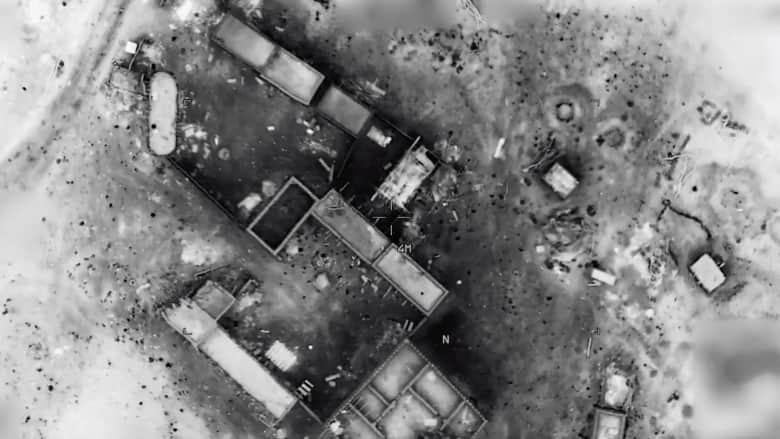
Concerns are growing over a potential U.S. military escalation against Iran, as reports indicate that the 'final strike' will not be a single operation but a series of rapid and interconnected steps aimed at crippling Iran's military capabilities in a short timeframe. These developments occur at a time when tensions between Washington and Tehran are on the rise, raising questions about the strategic dimensions of this scenario.
Potential steps that the United States may take include precision strikes against Iranian military facilities, as well as targeting ballistic missile sites. These operations may also involve targeting the logistical support networks that Iran relies on to carry out its military operations in the region.
Details of the Event
These moves come amid increasing Iranian military activities, including the development of ballistic missile programs and the bolstering of its presence in conflict areas such as Iraq and Syria. U.S. intelligence reports have indicated that Iran may be capable of executing complex military operations if attacked, complicating any U.S. military action.
In this context, U.S. military sources have confirmed that any operation against Iran will require careful coordination among various branches of the U.S. armed forces, including the Air Force and Navy, to ensure that the desired objectives are achieved with minimal losses.
Background & Context
Historically, U.S.-Iranian relations have seen increasing tensions since the Islamic Revolution in 1979, with the United States taking several steps against Tehran, including imposing economic and military sanctions. In recent years, these tensions have notably escalated, especially after the U.S. withdrawal from the Iranian nuclear deal in 2018.
Today, Iran is considered one of the foremost security challenges facing the United States in the Middle East, as Tehran seeks to expand its regional influence by supporting armed groups in Iraq, Syria, and Lebanon. This influence strengthens its position in any future negotiations, making it difficult for Washington to take military action without careful calculations.
Impact & Consequences
If the U.S. military scenario against Iran is executed, it could lead to severe repercussions for regional and international security. Iran is likely to respond to any attack by targeting U.S. interests and allies in the region, which could lead to widespread military escalation.
Moreover, any military escalation could negatively impact global oil prices, as Iran is a key player in the energy market. In the event of armed conflict, oil supplies could be significantly affected, leading to rising prices and increased economic pressures on consuming countries.
Regional Significance
Neighboring Arab countries to Iran, such as Iraq, Saudi Arabia, and the UAE, find themselves in a sensitive position should military escalation occur. These countries may feel compelled to take cautious stances, as any escalation could affect their stability and security.
Furthermore, escalation could lead to increased sectarian tensions in the region, as extremist groups may exploit these situations to enhance their influence. Therefore, any military action against Iran must be viewed in a broader context that includes the political and social dimensions in the region.
The rising discourse surrounding potential U.S. military options against Iran opens the door to numerous possible scenarios that could significantly impact regional and international security. Decision-makers in Washington must carefully consider the potential consequences of any military action, taking into account the political complexities in the region.