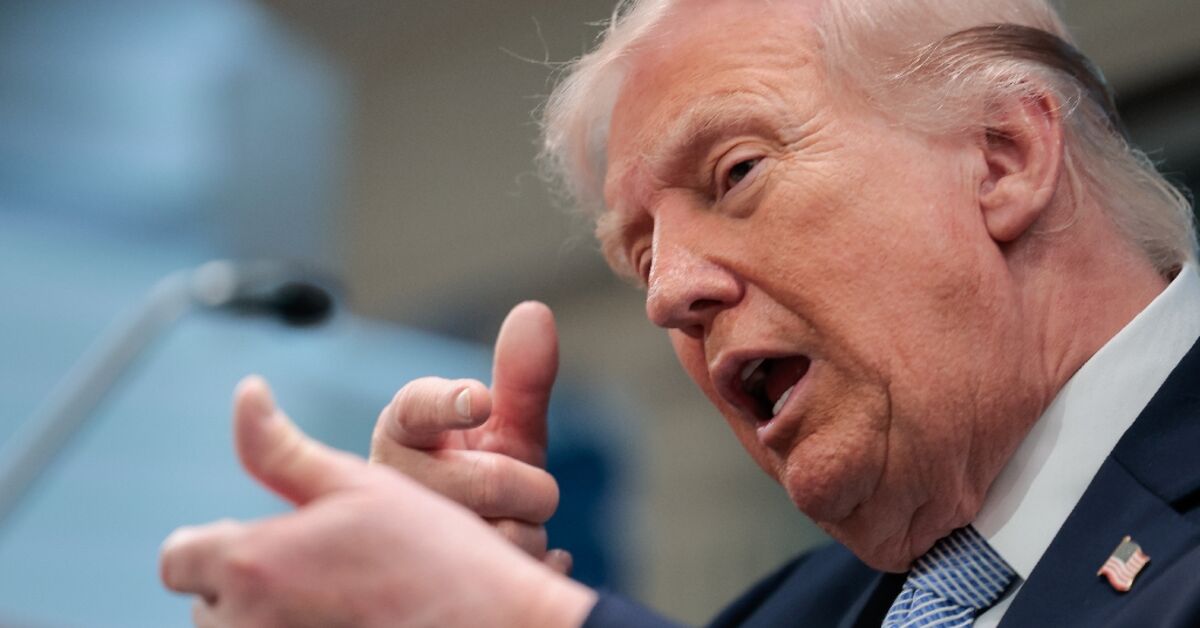
The recent statements from President Donald Trump have sparked growing international concern, as he warned that a 'complete civilization will perish' if Iran does not respond to his military demands. These threats came during a press conference, where Trump emphasized that the United States is prepared to take stringent military actions against the Islamic Republic.
In this context, U.S. Vice President JD Vance added that Washington possesses 'new tools' that could be used against Tehran, further intensifying tensions in the region. These remarks raise questions about the intentions of the U.S. administration and whether it will move towards actual military escalation.
Details of the Threats
These threats come at a sensitive time, as fears of escalating conflict between the United States and Iran are on the rise. Trump, who has consistently taken a hardline stance against Iran, appears to be pressuring Tehran to comply with Washington's demands regarding its nuclear program and regional behavior. These statements reflect Trump's strategy of using threats as a means to pressure his adversaries.
The U.S. statements come at a time when the region is experiencing increasing tensions, as Iran continues to develop its nuclear program, raising concerns within the international community. Simultaneously, the United States is seeking to strengthen its alliances with Arab nations to counter Iranian influence in the region.
Background & Context
Historically, relations between the United States and Iran have been strained since the Islamic Revolution in 1979. These relations have witnessed numerous crises, including attacks on U.S. embassies and the imposition of economic sanctions. In recent years, tensions have notably escalated following the U.S. withdrawal from the Iranian nuclear deal in 2018, leading to an uptick in military activities in the region.
Iran is considered a key player in the Middle East, supporting armed groups in Iraq, Syria, and Lebanon. This support complicates relations between Iran and the United States, making it difficult to reach diplomatic solutions.
Impact & Consequences
The U.S. threats against Iran carry serious implications for regional and international security. Should any military action be taken, it could significantly escalate the conflict, threatening the stability of the entire region. Additionally, any escalation could impact oil prices and global financial markets, as the Arabian Gulf is a vital center for oil production.
Furthermore, these threats may provoke reactions from Iran's allies, increasing the likelihood of armed conflict. In this context, the international community must be cautious of escalation and seek diplomatic solutions to avoid catastrophe.
Regional Significance
The growing fears of military escalation could have profound effects on regional and international stability. The situation requires careful monitoring, as the potential for conflict could disrupt not only the Middle East but also global economic systems.
In conclusion, the current dynamics between the U.S. and Iran necessitate a focus on diplomatic avenues to prevent a crisis that could have far-reaching consequences.