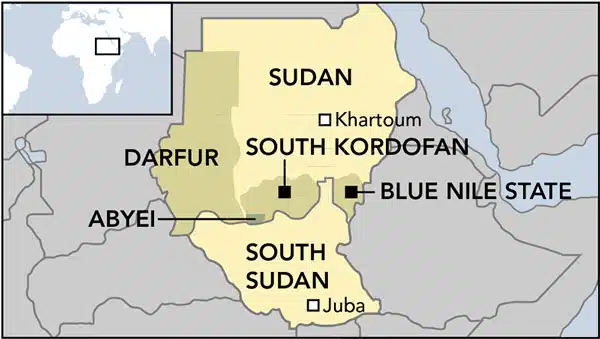
The Blue Nile Emergency Room in Sudan has warned of a rapidly deteriorating humanitarian situation in Kurmuk County, where a large wave of displacement has occurred in recent days due to escalating military operations and declining safety levels for civilians.
According to the United Nations Office for the Coordination of Humanitarian Affairs (OCHA), the number of displaced persons who have arrived in Kurmuk city has exceeded 5,000, highlighting the worsening humanitarian crisis in the region. These events come at a time when the region is suffering from ongoing conflicts, increasing the suffering of civilians seeking safety.
Details of the Event
Kurmk County is witnessing an escalation in military operations between government forces and armed groups, leading to a deterioration of security conditions. Reports indicate that many civilians have been forced to leave their homes to escape the fighting, resulting in overcrowding in the city's shelters.
Concerns are growing over the outbreak of diseases and shortages of food and clean water, as the humanitarian conditions in the shelters do not meet the needs of the displaced. Humanitarian organizations are working to provide assistance, but logistical challenges hinder their efforts.
Background & Context
The Blue Nile region is one of the areas that has experienced long-standing conflicts, where political and ethnic factors have intertwined to fuel the dispute. Since the outbreak of conflict in 2011, the region has suffered from instability, exacerbating humanitarian conditions.
Historically, the Blue Nile has been a theater of conflicts between the government and armed groups, with each party seeking control over natural resources. These conflicts have contributed to the spread of poverty and unemployment, increasing the suffering of the population.
Impact & Consequences
The repercussions of displacement in Kurmuk extend beyond the region, as they can affect stability in other areas of Sudan. The increasing number of displaced persons may exacerbate humanitarian crises in the country, necessitating an urgent response from the international community.
The deteriorating conditions in the Blue Nile require immediate humanitarian intervention, as the continuation of the conflict could lead to the outbreak of epidemics and increased mortality rates among civilians. Additionally, the deterioration of security conditions may hinder relief efforts and increase the suffering of the displaced.
Regional Significance
The situation in the Blue Nile is part of a broader regional landscape, as conflicts in Sudan affect stability in neighboring countries. Humanitarian crises may lead to a flow of refugees into neighboring states, increasing pressure on resources and services in those countries.
The continuation of the conflict in the Blue Nile may contribute to the exacerbation of political and economic crises in the region, necessitating greater international attention to resolve the conflict and improve humanitarian conditions.