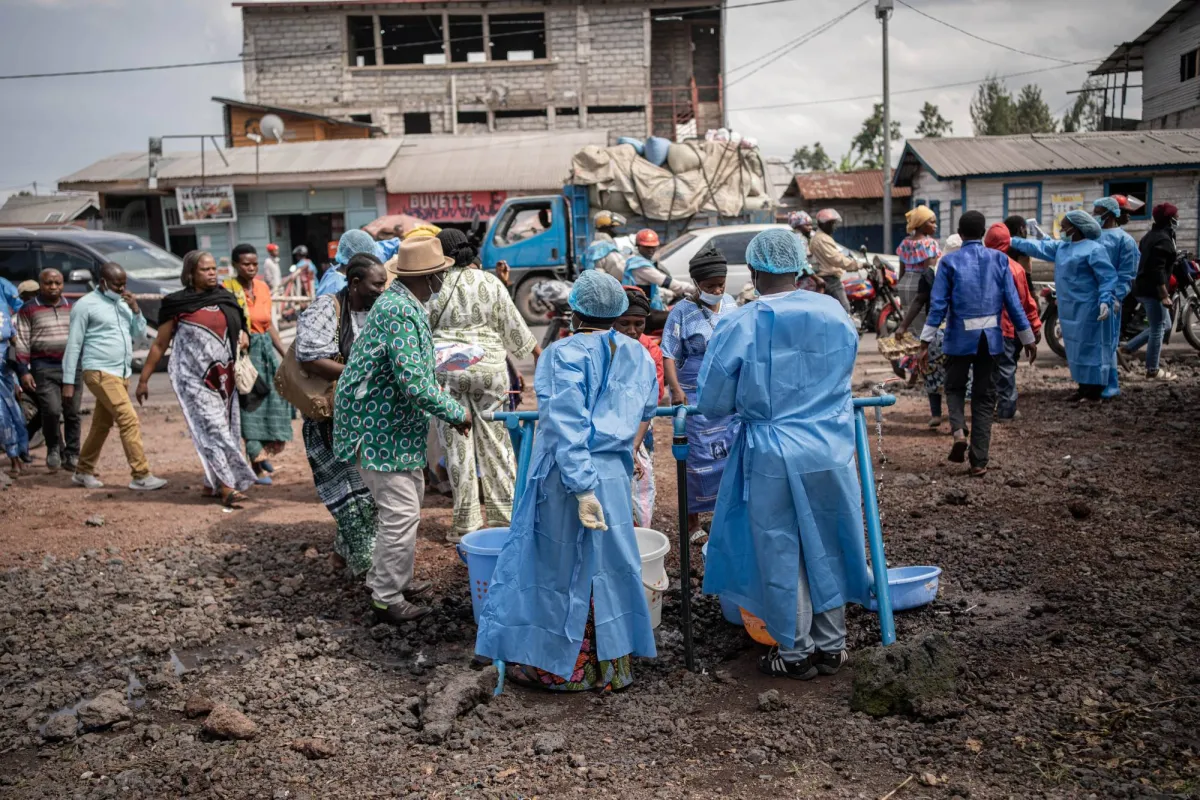
The Director-General of the World Health Organization, Tedros Adhanom Ghebreyesus, has warned that the ongoing conflict in Eastern Democratic Republic of Congo greatly complicates efforts to contain the deadly Ebola outbreak. Ghebreyesus stated via the platform 'X' that the region is facing a disaster characterized by a collision between disease and conflict, with the Ebola outbreak in Ituri Province overwhelming response capabilities.
In a related context, the administration of former U.S. President Donald Trump announced its intention to open a quarantine facility in Kenya to transfer American citizens infected with the Ebola virus instead of bringing them back to the United States. This decision comes at a time when the World Health Organization is reporting an Ebola outbreak in the Democratic Republic of Congo, with 10 confirmed deaths and 220 suspected deaths alongside 900 infections since mid-May.
Details of the Situation
Reports indicate that the Trump administration plans to send public health officials to Kenya to operate the new facility, which will be designated for Americans who need to leave Congo quickly and undergo quarantine. This approach has drawn criticism, as previously, infected individuals were returned to the United States for treatment in specialized medical units.
Meanwhile, Uganda has temporarily closed its borders with the Democratic Republic of Congo due to the escalating Ebola outbreak. Officials from the Ugandan Ministry of Health noted that this measure is a precautionary step to protect the country from the spread of the virus.
Background & Context
Historically, the Democratic Republic of Congo has experienced several outbreaks of the Ebola virus, with this strain, known as the Bundibugyo strain, being one of the most dangerous. Currently, there is no approved vaccine or treatment for this strain, complicating efforts to control the virus.
Since mid-May, the World Health Organization has reported an Ebola outbreak in Congo, with estimates suggesting that the actual spread of the virus may be much larger than recorded. Eastern Congo suffers from insecurity due to ongoing conflicts, hindering humanitarian response efforts.
Impact & Consequences
The ongoing clashes in Eastern Congo are causing mass displacement of populations, increasing the risk of virus spread. Health workers face significant difficulties in tracking cases and their contacts due to repeated attacks on health facilities.
Ghebreyesus has called on all warring parties to implement an immediate ceasefire, emphasizing the need to prioritize human survival over any other considerations. Safe and sustainable access to medical teams is vital for containing this outbreak.
Regional Significance
Outbreaks like Ebola pose a threat not only to the affected countries but also to neighboring nations. The Ebola outbreak in Congo could heighten health concerns in the Arab region, especially with increasing travel and trade.
These events serve as a reminder of the importance of international cooperation in combating epidemics, as Arab countries must enhance their health strategies to address any potential threats.