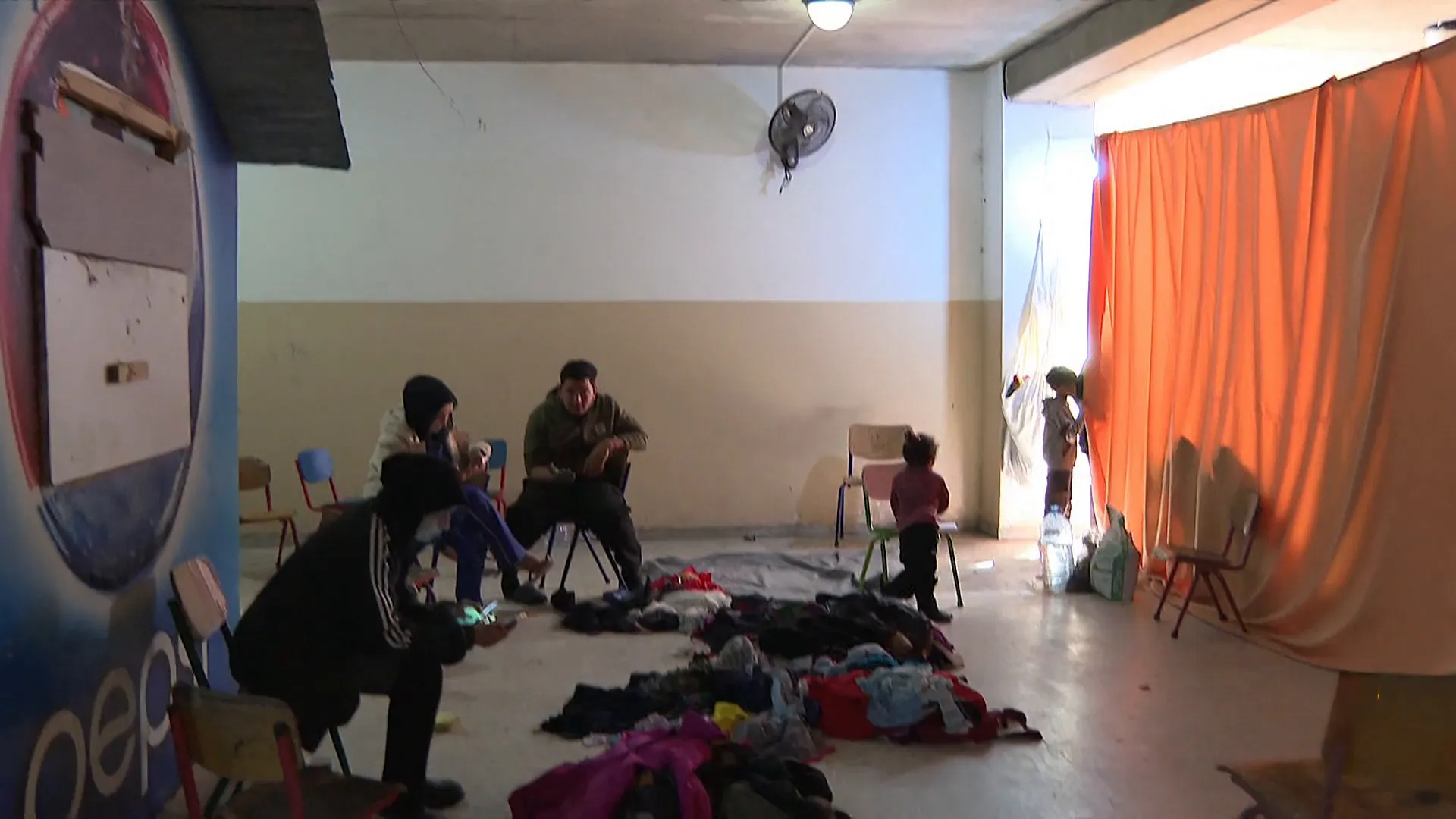
The Lebanese capital, Beirut, is grappling with a dire humanitarian crisis, as hundreds of thousands of displaced individuals have been forced to leave their homes in the Bekaa Valley, the southern suburbs, and southern Lebanon due to Israeli airstrikes.
According to official figures, the number of displaced persons has surpassed 1.2 million, meaning that approximately 20% of the country's population is now homeless. More than 670 schools and government facilities in Beirut have been converted into emergency shelters.
Details of the Situation
Al Jazeera correspondent Nasiba Moussa reported that these shelters have reached their maximum capacity, with classrooms overcrowded with entire families lacking basic privacy. These centers are suffering from inadequate sanitation services and a severe shortage of health and food supplies, according to UN sources.
Overcrowding is not limited to the shelters; it extends to public squares and surrounding streets, where some families are forced to sleep in the open. In this context, the organization "Doctors Without Borders" has launched 15 mobile clinics providing primary care and medical consultations in the most crowded shelters.
Background & Context
The Israeli war on Lebanon has expanded, as Washington and Tel Aviv began an assault on Tehran on February 28, resulting in thousands of casualties. Despite efforts by Lebanese and international NGOs such as "UNICEF" and "UNRWA branches," the assistance provided is still considered "a drop in the ocean of needs," as described by local activists.
There is an urgent need today for essential relief materials, such as mattresses, blankets, and infant formula, in addition to medical supplies. Concerns are growing over the spread of skin and infectious diseases due to a lack of water and sanitation facilities in the overcrowded centers.
Impact & Consequences
This mass displacement is a result of Israel expanding its targeting to include the southern governorates of Nabatieh and villages in the Bekaa Valley. Israeli airstrikes do not only target military sites but also densely populated residential neighborhoods, prompting mass flight among the residents.
The UN Refugee Agency has confirmed that the number of displaced persons is increasing daily, noting that thousands of families, including children and the elderly, are in the heart of the capital without safe shelter. The situation requires urgent humanitarian intervention to provide necessary protection and assistance.
Regional Significance
Compounding the tragedy is Lebanon's historic economic collapse since 2019, severely limiting the state's ability to respond to the crisis. As Israeli military operations continue, observers fear that this "temporary displacement" may turn into a long-term crisis.
At the end of March, the Israeli army intensified its targeting of bridges over the Litani River, isolating southern regions from one another. Hezbollah also launched an attack on a military site in northern Israel in response to ongoing Israeli assaults.