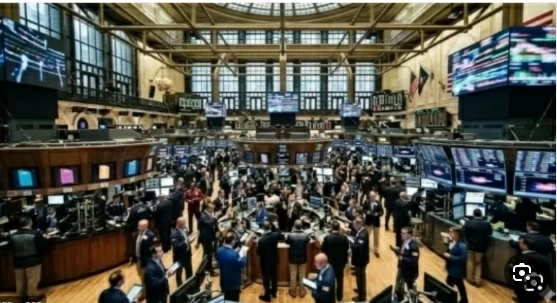
Global stock markets are experiencing heightened tension due to the ongoing conflict between the United States, Israel, and Iran. Despite hopes for a diplomatic breakthrough, negotiations have yet to yield any progress, intensifying market pressures.
President Donald Trump has set a deadline for reaching an agreement with Iran, which is 8 PM Eastern Time today, adding to the uncertainty in the markets. This situation has led to a prevailing risk-off sentiment, contributing to rising oil prices and pushing the European energy sector up by 0.8%.
Market Reactions Ahead of Deadline
Wall Street indices fell ahead of the deadline set by Trump for Iran, as investors assessed statements from both sides for any indications clarifying the course of the conflict. Major indices on Wall Street opened lower, with the Dow Jones Industrial Average dropping by 74.9 points or 0.16% to 46,744.76 points. The S&P 500 index also fell by 9.9 points or 0.15% to 6,601.93 points, while the Nasdaq Composite decreased by 69.2 points or 0.31% to 21,927.087 points.
In Europe, stocks remained stable today, as investors stayed vigilant amid escalating tensions in the Middle East and the approaching deadline set by Trump. The Stoxx 600 European index rose by 0.1% to 597.24 points, while major European exchanges showed stability or slight increases, with the German DAX index declining by 0.1%, and the London FTSE 100 index rising by 0.1%.
Background & Context
The current tensions have roots in the escalating conflicts in the Middle East, where regional and international interests intertwine complexly. Since the end of February, tensions between the United States and Iran have intensified, directly impacting global financial markets. These events have influenced investor expectations, making them more cautious in their investment decisions.
The Middle East is a focal point for numerous political and economic crises, with major powers playing a significant role in shaping the course of events. Instability in this region has substantial implications for the global economy, particularly in energy and financial markets.
Impact & Consequences
The current tensions significantly affect financial markets, as investors tend to reduce risks. This has led to rising oil prices, which impacts energy costs worldwide. Additionally, the uncertainty is causing a decline in investments in emerging markets, which could adversely affect economic growth in those countries.
As the deadline set by Trump approaches, pressure on the markets is increasing, potentially leading to significant price volatility. Any new developments in negotiations or statements from either side could result in rapid changes in market direction.
Regional Significance
The current events are particularly significant for the Arab region, as any escalation in tensions could lead to substantial economic and political repercussions. The stability of financial markets in the region heavily depends on the situation in the Middle East, especially concerning Iran.
Arab countries are striving for economic stability, but ongoing tensions may hinder these efforts. Any escalation in the conflict could lead to increased oil prices, affecting the economies of energy-importing nations.
In conclusion, markets remain under pressure from escalating tensions, necessitating close monitoring of developments by investors. The hope for a diplomatic breakthrough persists, but the challenges are considerable.