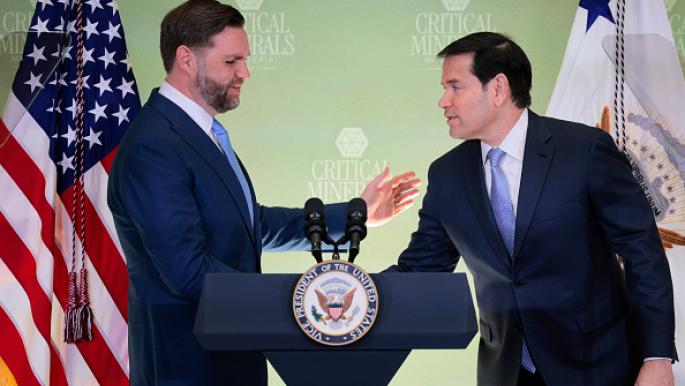
The political challenges facing former U.S. President Donald Trump's administration are intensifying amid rising tensions in Iran, with serious repercussions looming that could impact his political legacy. In this context, both Vice President JD Vance and Secretary of State Marco Rubio are under increasing pressure, complicating the determination of who will succeed Trump in the future.
The ongoing Iran conflict serves as a true test of American leadership, as fears grow that these conflicts could destabilize the region, negatively affecting Trump's reputation and that of his aides. As tensions escalate, many are questioning how this will influence their political futures.
Details of the Situation
Recently, Iran has witnessed a surge in tensions, with growing fears of a military conflict that could alter the balance of power in the region. This comes at a sensitive time for the Trump administration, which has been seeking to bolster its influence in the Middle East. As events unfold, both Vance and Rubio are facing new challenges regarding how to address these crises.
JD Vance, who serves as Vice President, is a prominent figure in the Trump administration, having played a key role in various foreign policies. Meanwhile, Marco Rubio, the Secretary of State, is one of the leading political figures who may seek to succeed Trump, increasing the significance of their positions amid these crises.
Background & Context
Historically, U.S.-Iran relations have been strained, marked by numerous crises and conflicts. Since taking office, Trump’s administration has taken bold steps against Iran, including the U.S. withdrawal from the nuclear agreement. These policies have significantly impacted relations between the two countries, exacerbating tensions.
In recent years, the region has experienced multiple conflicts, making it difficult for the U.S. to maintain stability. These circumstances complicate Vance and Rubio's ability to formulate effective strategies for dealing with Iran, further complicating the political landscape.
Impact & Consequences
The repercussions of the Iranian conflict extend beyond the region, potentially affecting U.S. relations with its allies in the Middle East. If tensions continue, it could lead to shifts in U.S. foreign policy, impacting upcoming elections.
Moreover, the Trump administration's failure to manage these crises could result in a loss of public support, enhancing the prospects of political rivals. In this context, both Vance and Rubio find themselves in a precarious position, needing to make critical decisions that could influence their political futures.
Regional Significance
The situation in Iran directly impacts Arab countries, as Iran is a key player in many regional conflicts. The escalation of tensions could destabilize countries like Iraq, Syria, and Lebanon, raising concerns about the outbreak of new conflicts.
In this context, Arab nations must be prepared to address the repercussions of these crises, as they may affect security and stability in the region. Additionally, these circumstances could open the door for new powers to intervene in regional affairs.
In conclusion, the current situation in Iran poses a significant challenge for the Trump administration and its aides, who must effectively navigate the repercussions of these crises. Under these circumstances, the most pressing question remains: who will succeed Trump amidst these escalating challenges?