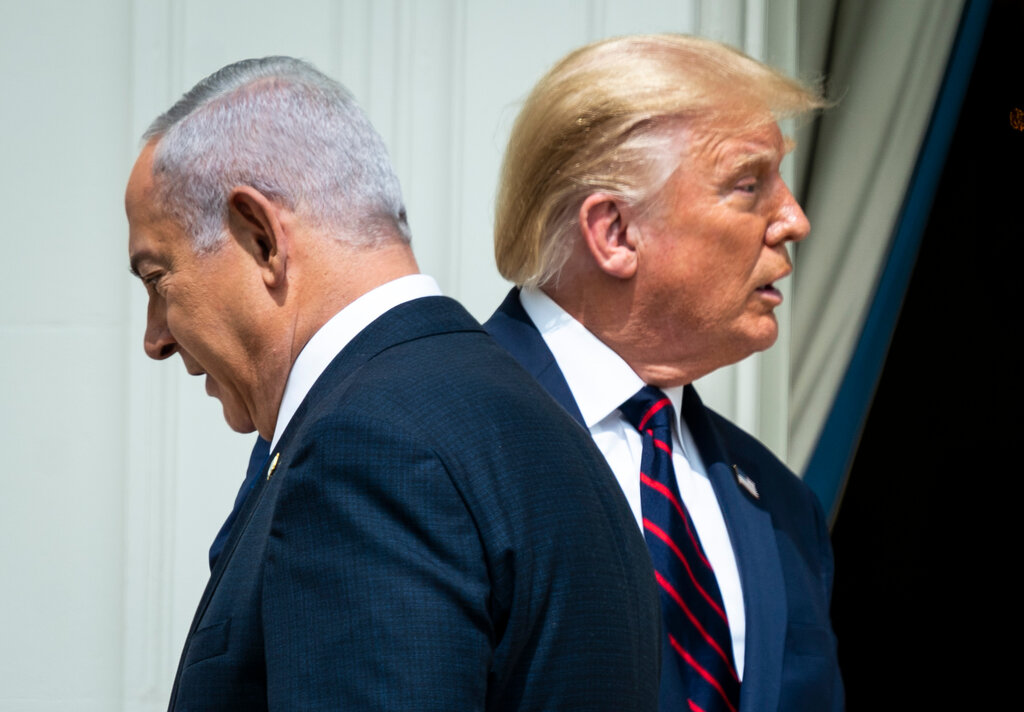
Fears are mounting regarding the escalation of tensions in the Middle East, as both Israeli Prime Minister Benjamin Netanyahu and former U.S. President Donald Trump face political crises that could lead to an all-out war. These developments come at a sensitive time, as both leaders seek to bolster their positions amid growing internal and external pressures.
The reasons behind these crises are manifold, starting with the political challenges Netanyahu faces within Israel, where protests against his government are escalating, alongside legal pressures surrounding him. On the other hand, Trump is grappling with legal and political challenges in the United States, prompting him to divert attention away from his domestic issues through an escalation in foreign policy.
Event Details
Reports indicate that Netanyahu is attempting to strengthen his position in the face of increasing opposition, believing that military escalation against Palestinians or even other countries in the region could serve as a means to unify internal ranks. Conversely, Trump aims to exploit the situation in the Middle East to enhance his popularity among his electoral base, considering that any success in foreign policy could bolster his chances of returning to the White House.
This approach from both leaders could lead to unprecedented military escalation, as calls within Israel for military operations against Gaza are increasing, while Trump seeks to strengthen alliances with Gulf states to confront Iran. These dynamics could ignite tensions in the region, threatening security and stability.
Background & Context
Historically, the region has witnessed numerous political and military crises resulting from the interplay of international and local interests. The relationship between the United States and Israel is one of the most prominent of these, always attracting significant attention from decision-makers in Washington. In recent years, this relationship has faced tensions due to Netanyahu's policies, which some observers believe increase the likelihood of military escalation.
On the other hand, Trump, who served as President of the United States from 2017 to 2021, adopted an unconditional support policy for Israel, which heightened tensions in the region. As U.S. elections approach, Trump is looking to re-enter the political arena by leveraging international crises.
Impact & Consequences
If the situation continues as it is, the consequences will be dire for the entire region. Military escalation could lead to new conflicts, exacerbating civilian suffering and deepening humanitarian crises. Additionally, any escalation could negatively impact relations between Arab states and Israel, reverting conditions back to a state of conflict.
Moreover, escalation could affect the global economy, especially amid the current crises facing many countries. Any military operations could disrupt trade and energy flows, increasing economic pressures on affected nations.
Regional Significance
Arab countries find themselves in a sensitive position, needing to navigate the repercussions of any military escalation in the region. Some nations may feel compelled to take hardline stances, increasing divisions within the Arab world. Furthermore, any escalation could hinder peace efforts in the region, rolling back progress.
In conclusion, the situation in the Middle East remains complex, with political crises intertwining with military tensions. The international community must urgently intervene to prevent the situation from exploding and work towards peaceful solutions that enhance stability in the region.