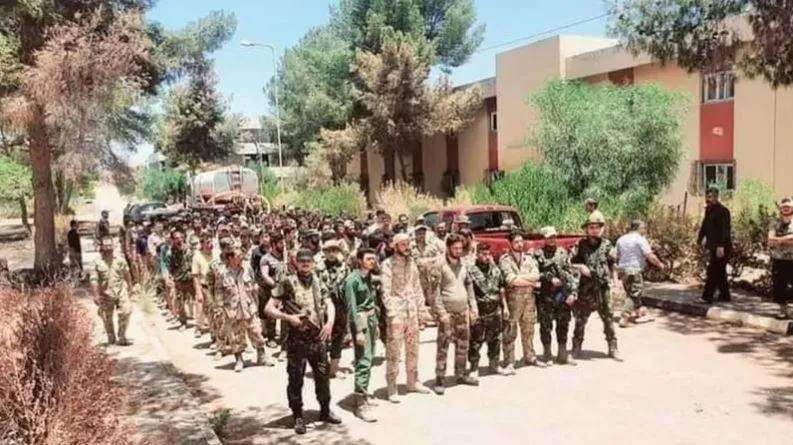
The crisis of mercenaries and foreign fighters in Libya is escalating, making this phenomenon one of the most significant security challenges facing the country. Libya is not only a destination for the stabilization of Syrian fighters and others but is also considered a transit point and operational base affecting regional conflicts, particularly in Sudan.
International reports, including a draft report from the United Nations Expert Panel, emphasize the increasing role of foreign fighters in Libya, reflecting the interconnectedness between the Libyan situation and regional crises. Experts believe that Libya has become an active hub for the movement of foreign fighters, contributing to a broader conflict involving supply chains and military alliances across borders.
Details of the Situation
Despite the signing of a ceasefire agreement in Geneva in 2020, which stipulated the withdrawal of all foreign forces and mercenaries by January 2021, foreign presence in Libya remains ongoing. This situation reflects the inability to implement the agreement, complicating the internal power dynamics within the country.
Reports indicate that over 7,000 Syrian fighters are present in western Libya, particularly in the capital, Tripoli, where they are engaged in armed battles. Approximately 3,000 of them have fled to North Africa and Europe, but many remain in strategic locations such as the Al-Takbali camp and Salah al-Din camp.
Background & Context
The roots of the presence of foreign mercenaries in Libya date back to 2019 when Turkey sent Syrian fighters to support the former Government of National Accord against the Libyan National Army's offensive. Since then, the situation of these fighters has not changed significantly, as they have become part of the Libyan security landscape.
The presence of mercenaries is not limited to western Libya; it also extends to the east and south of the country, where they are observed in strategic locations under the control of the Libyan National Army. Experts point out that the presence of these mercenaries is not a temporary phenomenon but has persisted for years, with some having settled for over five years.
Impact & Consequences
The implications of the presence of mercenaries in Libya extend beyond national borders, as Libyan territory is used as a launch point for transporting fighters to other conflict zones, such as Sudan. UN reports have documented the transit of fighters from Colombia through Libya on their way to the Rapid Support Forces in Sudan, further complicating the regional security situation.
This phenomenon poses a significant challenge to the international community, as efforts to address the issue of mercenaries have not yielded tangible results on the ground. Analysts have noted that the continued presence of mercenaries reflects a lack of genuine international will to resolve the Libyan crisis.
Regional Significance
The mercenary crisis in Libya directly affects security and stability in the Arab region. The presence of these fighters exacerbates chaos and complicates regional conflicts, threatening the stability of neighboring countries. Furthermore, the continuation of this phenomenon could lead to worsening humanitarian crises in the region.
In conclusion, the crisis of mercenaries and foreign fighters in Libya remains one of the most pressing challenges facing the country, necessitating genuine international efforts to find effective solutions that contribute to restoring security and stability.