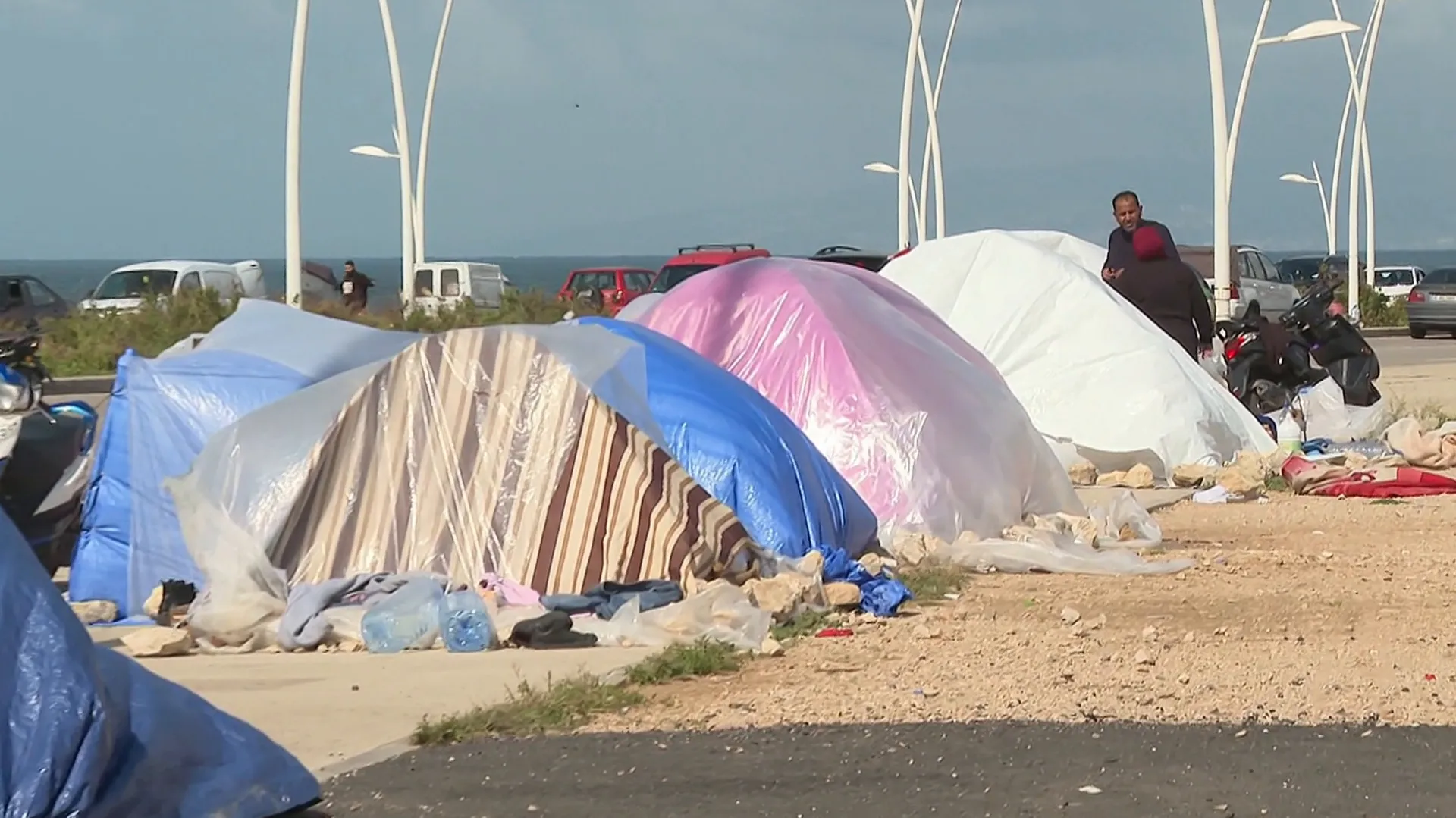
The suffering of displaced individuals in Lebanon is escalating as Israeli attacks enter their fifth week, forcing many to endure harsh conditions amid a lack of humanitarian aid and deteriorating weather. Many displaced people have had to set up tents in the streets, making them vulnerable to rain leaks and lacking protection and heating.
Under these circumstances, Al Jazeera correspondent Maysa Al-Fatnasi in Beirut has reported on the tragic conditions faced by the displaced, where many suffer from a severe shortage of food and winter clothing, exacerbating their daily struggles. Heavy rains and strong winds further complicate their lives, as they find no shelter to protect them from the climatic fluctuations.
Details of the Situation
Since the onset of the Israeli attacks, many Lebanese areas have been bombarded, leading to the displacement of thousands of families. As the number of displaced individuals increases, so does the need for humanitarian assistance. However, despite the efforts made, aid continues to arrive inadequately, leaving the displaced in a state of despair.
Reports of health issues among the displaced are rising, especially among children and the elderly, due to poor health conditions and a lack of medical care. Additionally, many humanitarian organizations face difficulties in reaching the displaced due to deteriorating security conditions.
Background & Context
Historically, Lebanon has witnessed numerous humanitarian crises due to armed conflicts, but the current situation is among the most challenging. Repeated Israeli attacks on Lebanon since 2006 have led to the destruction of infrastructure and an increase in the number of displaced individuals. With each escalation, the suffering of the Lebanese people renews, raising concerns within the international community.
It is noteworthy that Lebanon currently hosts over 1.5 million Syrian refugees, further straining local resources. These conditions make it difficult for the Lebanese government to provide adequate support to the new displaced individuals, exacerbating the humanitarian crisis.
Impact & Consequences
The humanitarian situation in Lebanon affects regional stability, as it could exacerbate social and economic crises. The increasing number of displaced individuals may lead to heightened tensions between local communities, threatening civil peace.
Moreover, instability in Lebanon could impact relations with neighboring countries, especially amid the political and economic crises plaguing the region. The international community is called upon to provide urgent support for the displaced in Lebanon, as ignoring this crisis could lead to serious repercussions for regional security.
Regional Significance
The crisis of displaced individuals in Lebanon is part of a larger crisis affecting the Arab region, where armed conflicts and humanitarian crises are on the rise in many countries. These conditions necessitate a collective effort from Arab and international communities to provide support and assistance to the displaced.
Furthermore, the humanitarian crises in Lebanon, Syria, and Palestine highlight the urgent need for comprehensive political solutions that ensure the rights of peoples and achieve lasting peace in the region. Supporting the displaced in Lebanon is a step towards achieving regional stability.
In conclusion, the humanitarian situation in Lebanon remains alarming, requiring an urgent response from the international community to assist the displaced and alleviate their suffering. The hope for improving conditions relies on the solidarity of humanitarian and political efforts.