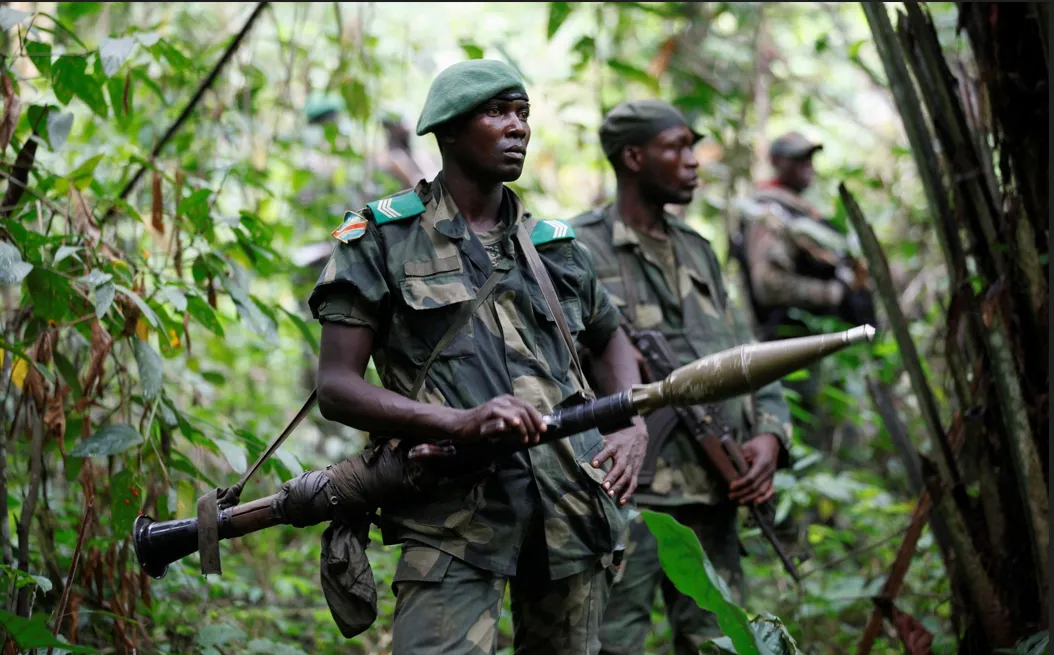
The eastern Democratic Republic of Congo has witnessed a surge in violence since the beginning of 2026, as rebel groups, including the March 23 Movement and the Allied Democratic Forces, continue to execute horrific attacks on civilians. These events come amidst attempts by international mediators to revive ceasefire agreements that have proven to be fragile, reflecting the complexities of the situation in the region.
Reports indicate that rebels suspected of belonging to the Allied Democratic Forces attacked several sites between March 9 and 15, resulting in the deaths of at least 50 people, including 35 civilians in the Mutchatcha gold mine and 15 in Babiswa. In addition to the killings, these attacks led to property destruction and looting, causing hundreds of families to be displaced from their homes.
In the context of this escalating crisis, the United Nations Office for the Coordination of Humanitarian Affairs (OCHA) expressed concern about the increasing impact of ongoing violence on civilian life, noting that displacement areas have become overcrowded, far beyond their capacity to accommodate refugees.
An analysis of the situation among key actors reveals a complex crisis rooted in several structural factors, including the proliferation of armed groups, intertwined regional agendas, and strained relations with Rwanda. Politicians and analysts on African affairs note that the situation is worsening due to competition for natural resources and the collapse of governmental authority.
Despite efforts by the United States and Qatar to bring about calm, official spokespersons emphasize that current agreements remain limited in scope and insufficient to address the underlying issue. Qatari delegates participated in a global meeting to review previously signed agreements in Qatar, but these have not yielded the desired results, making the continuation of the cycle of violence more likely.
In his statements, expert Mohammed Tursheen indicated that the horizon for ending this crisis remains distant in the absence of radical changes. Current efforts do not seem capable of returning the situation to stability, while analysts call for serious political settlements that include all concerned parties.
It is noteworthy that eastern Congo represents a hotspot on the African continent, recording some of the highest displacement rates in the world due to its conflicts. History has shown that these conflicts often transcend borders, impacting neighboring countries, necessitating a comprehensive and urgent regional response.
It has become clear that the continuity of violence will negatively affect regional security in East Africa and complicate the humanitarian crisis further, making it essential for all Arab countries to participate in providing humanitarian support and coordinating with the international community to activate solutions.