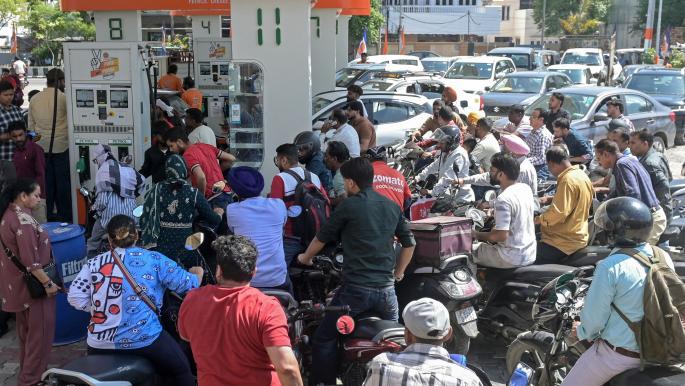
The global economic repercussions are increasing as the war on Iran enters its second month, with growing concerns about negative impacts on economic growth and the prices of goods and services. Many manufacturers and service providers have expressed their worries about the deteriorating economic conditions, reflecting a prevailing sense of pessimism in global markets.
As military operations continue, bleak expectations regarding economic performance across various sectors are on the rise. Recent economic reports indicate that many companies are struggling to adapt to changing conditions, leading to a decline in production levels and an increase in operating costs.
Details of the Conflict
The war on Iran began at a time when global economies were already suffering from the repercussions of the COVID-19 pandemic, which caused significant disruptions in supply chains. As the conflict escalated, oil prices began to rise, negatively impacting transportation and production costs across many sectors. Data has shown that oil prices have surpassed record levels, increasing pressure on both consumers and businesses.
Furthermore, the geopolitical tensions resulting from the conflict have led to increased uncertainty in financial markets, prompting investors to adopt more cautious positions. Consequently, many global stock exchanges have experienced sharp fluctuations, with stock indices in several countries declining.
Background & Context
Historically, Iran has been a focal point for numerous regional and international conflicts, playing a pivotal role in global energy markets. As tensions escalate, concerns grow that the conflict may extend to include other countries in the region, potentially exacerbating economic crises. Recent years have seen multiple economic crises stemming from conflicts, highlighting the importance of stability in the region.
Iran is considered one of the largest oil producers in the world, and any disruption in its production or exports can significantly impact global oil prices. Markets have previously witnessed how conflicts in the Middle East have led to sharp increases in oil prices, affecting global economies.
Impact & Consequences
International financial institutions predict that the war on Iran will lead to a slowdown in economic growth in many countries, particularly those reliant on energy. Experts have pointed out that developing countries may be the most affected, as they struggle with limited capacity to withstand economic shocks.
Additionally, rising prices of essential commodities could lead to increased inflation, placing further pressure on households and businesses. Studies have shown that rising prices can result in a decline in consumption, negatively impacting economic growth.
Regional Significance
For Arab countries, the repercussions of the war on Iran may be complex. While some nations may benefit from rising oil prices, others could face significant economic challenges due to increased costs of goods and services. Regional tensions may also lead to heightened instability in the area, affecting investments and economic growth.
In light of these circumstances, Arab nations must take proactive measures to mitigate the effects of the conflict, including enhancing regional economic cooperation and developing strategies to adapt to changes in global markets.
In conclusion, the global economic situation remains under increasing pressure due to the war on Iran, necessitating that countries and manufacturers prepare to face new challenges that may impact future economic growth and stability.