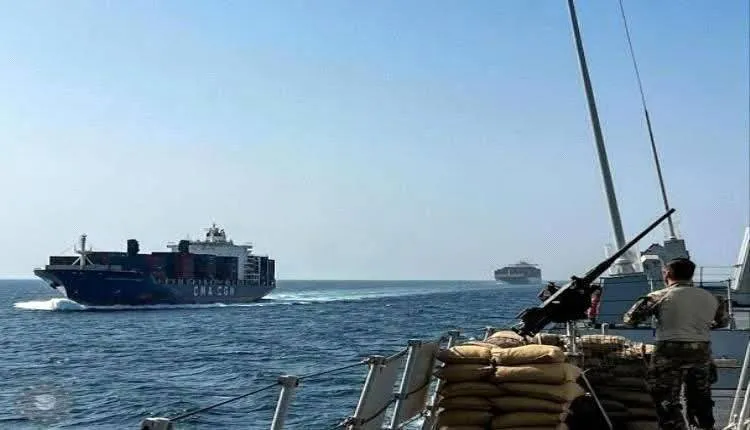
The Houthi group has announced its engagement in the war in defense of the Iranian regime, plunging the Yemeni capital, Sana'a, and other cities under its control into a state of tension and anxiety. This escalation directly impacts the daily lives of millions of residents who face open-ended scenarios fraught with complex security and economic possibilities.
In Sana'a, signs of anxiety manifest in the details of daily life. Streets are less crowded during the daytime, and market activity has seen a noticeable decline, with many residents preferring to stay close to their homes. Although there has not yet been a widespread wave of displacement, local testimonies indicate individual movements of families beginning to leave neighborhoods near sensitive sites.
Details of the Incident
The Houthi group launched two batches of missiles towards Israel, as part of what it calls support for Iran, while the latter announced the interception of two missiles fired from Yemen without causing any damage. This escalation comes at a time when Yemen is experiencing dire humanitarian conditions, with millions living under the weight of economic crises and ongoing war.
Residents in Sana'a fear that the Houthis' involvement in defending Iran will lead to further suffering, especially since millions of Yemenis have been living in deteriorating conditions for years due to the coup, war, and the continued policies of corruption and looting by the Houthis. The capital's residents have expressed their rejection of these movements, which they believe could provoke new military strikes targeting what remains of vital infrastructure, indifferent to the suffering.
Context and Background
These developments occur amid rising regional tensions between Iran, the United States, and Israel, as the Houthis seek to strengthen their position within an Iran-led axis. International reports have noted that the timing of the Houthis' entry into the confrontation carries political implications, as it aims to bolster Iran's negotiating position by opening an additional front that increases pressure on the United States and its allies.
Despite the Houthis adopting their initial attacks with missiles and drones towards Israel, these operations are described as having limited military impact, as their pattern had previously been tested during the war in the Gaza Strip. Analysts believe that the aim is not to create a battlefield shift but to affirm their presence within what is known as the "Resistance Axis."
Consequences and Impact
Estimates from Yemeni officials and analysts indicate that the recent Houthi attacks, despite their symbolism, represent only a façade for more dangerous movements that grant Tehran a sensitive negotiating card. If the Houthis continue to escalate, this could lead to military reactions from the United States or Israel, potentially placing Sana'a and other cities under their control on a list of possible targets.
Many observers agree that linking the Yemeni crisis to the current regional war due to Houthi intervention will give it a new trajectory, but they differ in its nature and details. While many fear the repercussions of the Houthis' adventures, others anticipate that all their actions will hasten the end of their influence.
Impact on the Arab Region
Concerns are growing that the Houthi escalation could exacerbate humanitarian conditions in Yemen, where residents live under the weight of economic and social crises. Additionally, the Houthis' involvement in the war may open the door for new military interventions by regional and international powers, further complicating the situation in the region.
In conclusion, the situation in Yemen remains complex, with military, political, and humanitarian dimensions intertwining, necessitating close monitoring by the international community to ensure that conditions do not worsen beyond their current state.