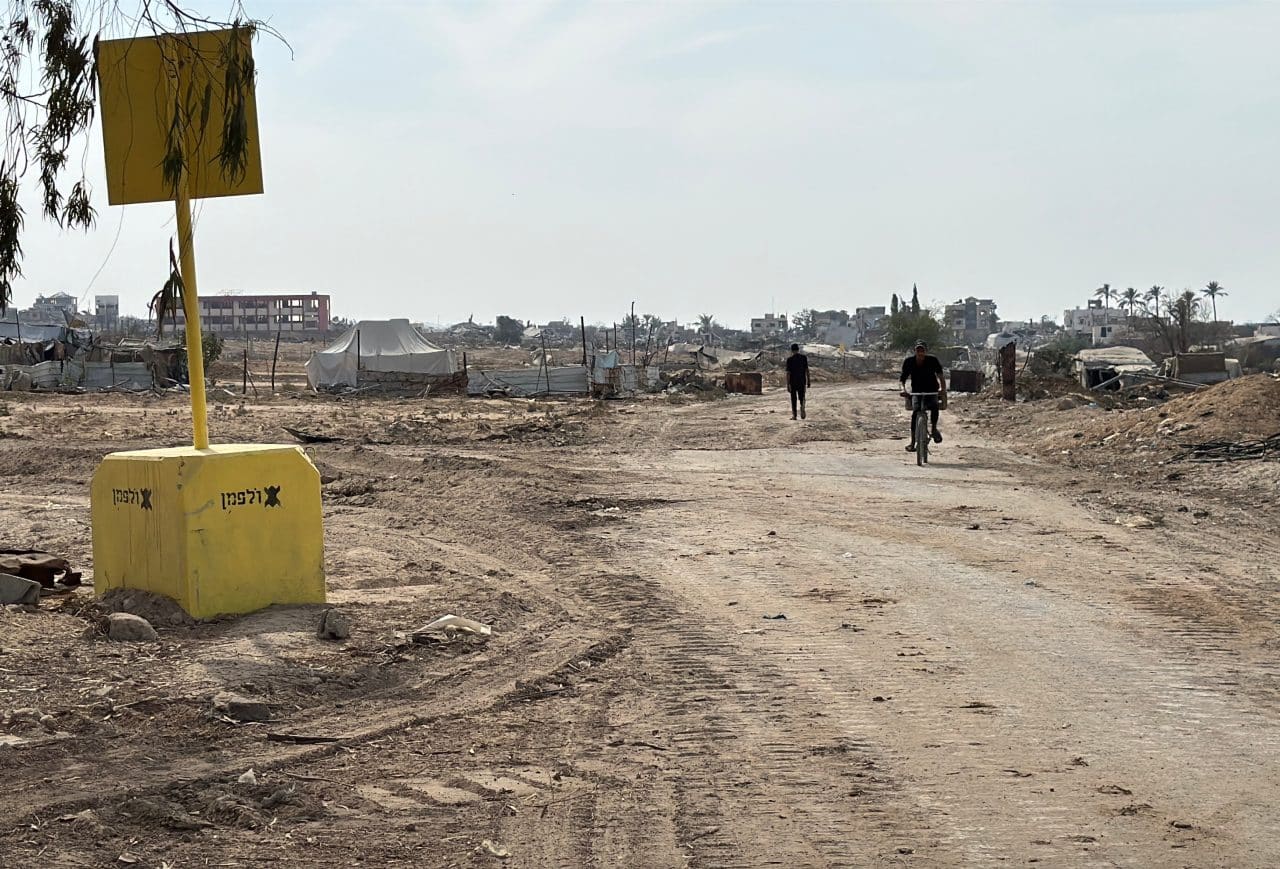
Five months after former President Donald Trump's controversial plan to end the war in Gaza was announced, the 'Yellow Line' has been established as a temporary boundary between Israeli and Palestinian forces. However, reports indicate that the gap between this plan and the reality on the ground is widening, as the Israeli army continues to modify this line to make it more permanent.
The Yellow Line, which was supposed to be a transitional phase towards the withdrawal of Israeli forces from the sector, has become a focal point for controversy and debate. While it was seen as a step towards peace, the reality on the ground reflects a completely different picture.
Details of the Event
Local sources reported that the Israeli army has begun transforming the Yellow Line into a permanent border, complicating the situation in the region. This shift comes at a sensitive time, as tensions between the two sides are escalating, and any hope for achieving peace seems to be fading.
The Yellow Line, which was defined under Trump's plan, was supposed to contribute to reducing violence and facilitating the peace process. However, on the ground, things appear to be moving in the opposite direction, as Israeli forces continue to bolster their presence in the areas surrounding this line.
Background & Context
Historically, the Gaza Strip has witnessed numerous conflicts and disputes, being considered a major flashpoint in the Israeli-Palestinian conflict. Since 2007, Hamas has controlled the sector, leading to a suffocating Israeli blockade that has significantly impacted the lives of civilian populations.
Trump's plan, known as the 'Deal of the Century,' aimed to reshape the political landscape in the region but faced strong opposition from Palestinians and many Arab countries. The Yellow Line was part of this plan, but the actual implementation on the ground has proven to be more complex than anticipated.
Impact & Consequences
Transforming the Yellow Line into a permanent border could exacerbate the humanitarian situation in Gaza, where residents are suffering from severe shortages of basic resources. This trend may heighten tensions and lead to a new escalation in the conflict, threatening to ignite a new round of violence.
Moreover, this shift could affect relations between Israel and Arab countries, as some nations may find themselves compelled to reassess their positions towards Israel amid rising tensions. The potential impact on the peace process in the region would be profound, as any hope for reaching a lasting agreement seems to be dwindling.
Regional Significance
Changes in the Gaza Strip do not only affect the Palestinians but have wide-ranging implications for the entire Arab region. The escalating tensions in Gaza could reflect on neighboring countries, increasing instability in the Middle East.
Any escalation in the conflict may lead to a flow of refugees into neighboring countries, adding to the economic and social burdens on these nations. International reactions may vary, with some countries intervening in attempts to mediate, while others may adopt more hardline stances.
In conclusion, the situation in the Gaza Strip appears to be heading towards further complexity, as the gap between political plans and the reality on the ground widens. With the Israeli army continuing to modify the Yellow Line, hope for achieving peace remains elusive, raising concerns about the future of the region.