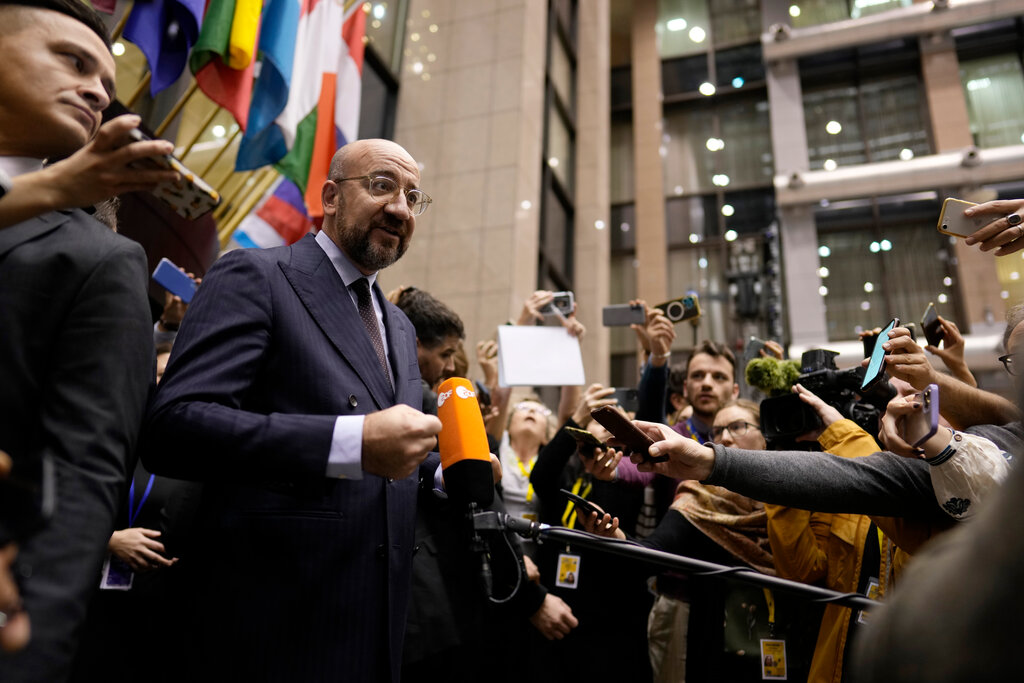
The European Union has announced an allocation of an additional €80 million to Ukraine, sourced from profits generated by frozen Russian assets. This announcement was made during the visit of Josep Borrell, the EU's High Representative for Foreign Affairs and Security Policy, to the Ukrainian capital, Kyiv. Borrell confirmed that the 20th package of sanctions against Russia is ready for implementation, noting that the EU will work to tighten sanctions further, especially against what is known as the "ghost Russian fleet."
This move comes at a critical time for Ukraine, which is facing an escalation in the conflict with Russia. Kyiv is seeking to bolster its defensive and economic capabilities in the face of ongoing challenges. This European support reflects the EU's commitment to assist Ukraine in its pursuit of freedom and independence.
Details of the Announcement
During a joint press conference with the Ukrainian Foreign Minister, Borrell stated that the new financial support will be used to enhance humanitarian and relief efforts in Ukraine. He also indicated that the new sanctions aim to tighten the noose on the Russian economy and prevent any attempts to manipulate global markets.
This support is part of the EU's ongoing efforts to assist Ukraine since the beginning of the conflict in 2022. Billions of euros have been allocated to support the Ukrainian economy, in addition to providing military and technical assistance.
Background & Context
Since the onset of the Russian-Ukrainian conflict, the European Union has taken serious steps to address the security and economic challenges arising from this conflict. It has imposed strict sanctions on Russia, including asset freezes and trade restrictions. These sanctions have proven effective in weakening the Russian economy, but challenges remain.
Historically, relations between Russia and the West have seen increasing tensions since Russia's annexation of Crimea in 2014. Since then, Ukraine has become a battleground for conflict between Western powers and Russia, leading to an escalation of military and economic disputes.
Impact & Consequences
This financial support is expected to have a significant impact on the situation in Ukraine, as it will help enhance the capabilities of the Ukrainian army and provide essential needs for civilians. Additionally, tightening sanctions on Russia may lead to further pressure on the Russian economy, which could affect Moscow's ability to continue the conflict.
Moreover, these steps could escalate tensions between Russia and the West, increasing the likelihood of further conflicts in the region. It is crucial for European nations to remain united in their stance towards Russia to ensure regional stability.
Regional Significance
Considering the potential impact of this conflict on the Arab region, it is clear that the economic and political crises in Ukraine and Russia could affect global energy markets. Many Arab countries rely on energy imports, and any changes in prices could impact their economies.
Furthermore, escalating tensions in Europe could affect regional stability, requiring Arab nations to adopt strategic positions to address any potential repercussions. In this context, Arab countries should enhance cooperation among themselves to face common challenges.