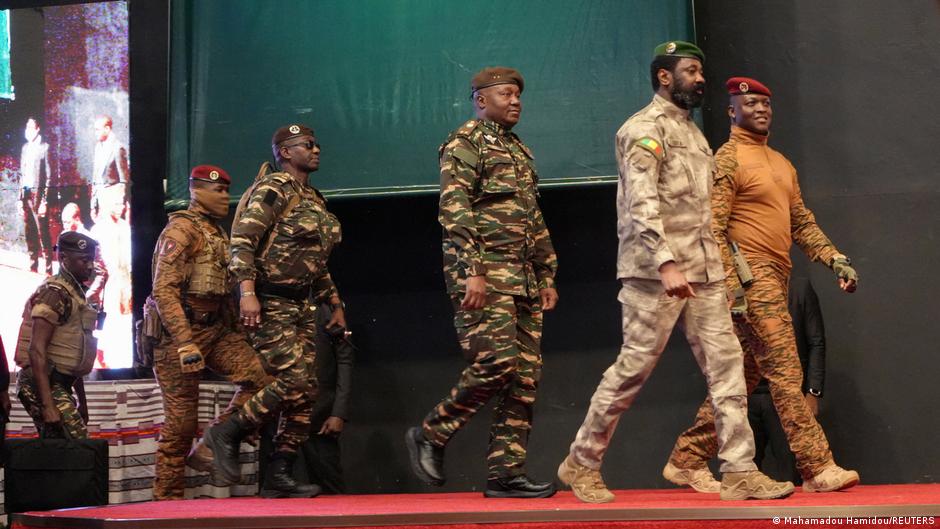
Amid rising tensions and military coups in the African Sahel region, the European Union is looking to reassess its strategy in the area. The coups that occurred between 2020 and 2023 in Mali, Burkina Faso, and Niger have led to radical changes in foreign policy, resulting in a gradual withdrawal of European influence, while Russia, China, and the United States have increased their presence in the region.
Reports indicate that these shifts have not led to greater stability; rather, they have exacerbated jihadist violence and cross-border tensions. In this context, the German Institute for International and Security Affairs released a study titled "EU Policy in the Sahel: Back to Square One," emphasizing the need for the EU to develop a new strategy to address these challenges.
Details of Recent Developments
As part of its efforts, Josep Borrell, the EU's High Representative for Foreign Affairs and Security Policy, visited Ghana, where he signed a security partnership agreement with the Ghanaian government. The agreement includes the provision of defense equipment such as motorcycles, vehicles, drones, and anti-drone systems, under a European program launched with a budget of 50 million euros (approximately 57 million dollars).
Borrell emphasized that security is not limited to military means alone; addressing the root causes of instability, particularly economic issues, is essential. Under the "Global Gateway" initiative, the EU announced a new investment package worth 290 million euros to support Nigeria, Africa's largest economy, focusing on expanding broadband networks, local drug production, agriculture, and migration programs.
Background & Context
Historically, France has been the dominant power in the Sahel, with other EU countries following its lead. As French influence wanes, European nations are struggling to engage with the new reality. Experts have pointed out that the EU lacks a clear strategy for dealing with the Sahel, as the development cooperation fund aimed at supporting the three countries in the region with 195 million euros has been frozen due to French resistance.
Europe aims to build balanced partnerships with African nations, hoping to become a preferred partner for Africa by creating local value chains. However, the success of these efforts in the Sahel remains uncertain, as alternative approaches, such as the practical strategy adopted by the United States, have proven more effective in dealing with military governments in the region.
Impact & Consequences
Studies suggest that the EU needs to resume diplomatic and social dialogue with military governments in the Sahel after a period of tension and distrust. If these efforts bear fruit, selective cooperation in specific areas may be possible. Strengthening stability in the Sahel is not only in the interest of African nations but also of Europe, as the challenges faced by neighboring countries will inevitably affect Europe in the future.
There are also major migration routes from sub-Saharan Africa through Sahel countries, making it essential for European nations to take effective steps to address these issues. If African countries can achieve stability and growth, this will reduce migratory pressure towards Europe, as people are reluctant to leave their homes unless absolutely necessary.
Regional Significance
The Arab region is directly affected by changes occurring in the African Sahel, as stability in this area can positively reflect on regional security. Additionally, cooperation between Arab and African countries in security and development can contribute to enhancing stability in both regions. Understanding the political and economic dynamics in the African Sahel is vital for Arab countries, especially in light of the common challenges they face.
In conclusion, the European Union appears to be at a stage of reevaluating its strategies in the African Sahel, seeking to enhance security and development in the region. However, the greatest challenge remains how to achieve this amid increasing competition from other major powers.