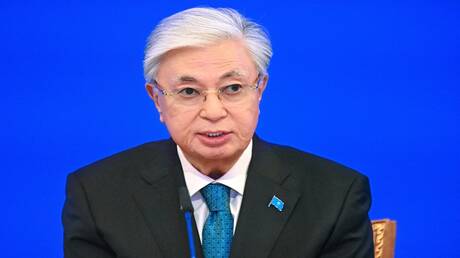
Kazakhstan's President Kassym-Jomart Tokayev announced that the member states of the Eurasian Economic Union have managed to ensure economic growth despite the geopolitical crises affecting the world. These statements came at a time when the region and the world are experiencing unprecedented political and economic fluctuations.
Tokayev pointed out that cooperation among the member states of the union has played a significant role in achieving this growth, as trade relations have been strengthened and joint projects developed. He also clarified that these countries have been able to face challenges through effective and flexible strategies.
Details of the Event
In his remarks, Tokayev explained that the Eurasian Economic Union, which includes Kazakhstan, Russia, Belarus, Armenia, and Kyrgyzstan, has taken concrete steps to enhance economic cooperation. Data has shown that these countries have achieved growth in their gross domestic product, reflecting the success of the economic policies in place.
He noted that geopolitical challenges, including regional conflicts and global economic crises, have not prevented these countries from achieving their economic goals. On the contrary, these challenges have served as a catalyst for enhancing cooperation and integration among the member states.
Background & Context
The Eurasian Economic Union was established in 2015 with the aim of enhancing economic cooperation among its member states. Since then, these countries have faced numerous crises, including economic sanctions and regional conflicts. However, the union has managed to maintain its economic stability by promoting intra-trade and developing infrastructure.
Historically, Kazakhstan has played a pivotal role in this union, being one of the largest economies in the region. Wise economic policies have contributed to its position as a key supporter of regional cooperation.
Impact & Consequences
The results of economic growth in the member states of the union are a positive indicator of their ability to adapt to challenges. This success may encourage more countries to join the union or enhance cooperation with these nations. Additionally, economic stability in the region could contribute to strengthening political security and stability.
Moreover, the success of these countries in achieving growth amid crises may serve as a model for other nations facing similar challenges. This could lead to enhanced economic and political ties among countries in the region.
Regional Significance
The experience of the Eurasian Economic Union is particularly significant for Arab countries, which face similar economic and political challenges. Arab nations can benefit from successful experiences in economic cooperation and regional integration.
Furthermore, strengthening economic relations between Arab countries and the union states could open new avenues for cooperation in various fields, such as trade, investment, and energy. This collaboration could contribute to achieving sustainable development in the region.
In conclusion, Tokayev's statements reflect the importance of economic cooperation in facing geopolitical challenges. The success of the Eurasian Economic Union in achieving economic growth serves as a model and demonstrates the ability of countries to adapt to changing circumstances.