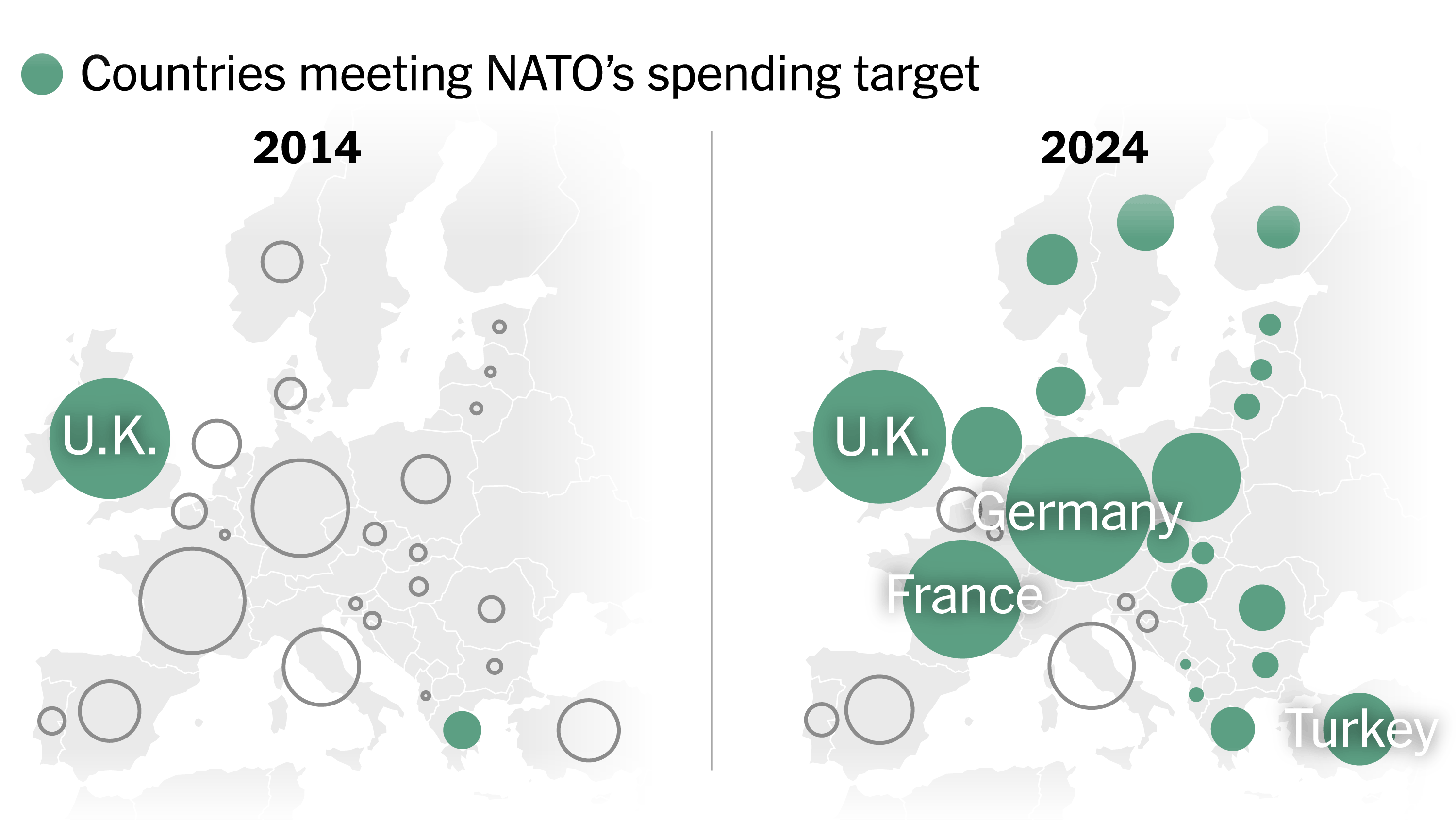
Europe is currently experiencing an unprecedented crisis regarding military spending, finding itself forced to choose between bolstering its military defenses and ensuring the welfare of its citizens. This crisis arises in the context of the ongoing war on Iran, initiated by the United States and Israel, which has increased pressure on European governments.
The New York Times noted that the European situation can be summarized by the equation of "guns versus butter," where the financial and political stability of the old continent is threatened by the current U.S. administration under Trump, along with the economic and military repercussions of the war on Iran.
Details of the Situation
For decades, European countries have invested in improving the living standards of their citizens by providing social safety nets, healthcare, and pensions. Europe has relied on the United States to secure its military aspect, but with Trump back in power and the war on Iran erupting, it has become essential for European nations to increase their military spending, leading to pressures on national budgets and threatening political stability.
Europeans have sensed the danger posed by the war on Iran, finding themselves in a spectator's position, unable to influence the course of the conflict or pressure the U.S. administration to call for a ceasefire. This lack of strategic independence stems from decades of underinvestment in defense, despite calls from many former U.S. presidents for Europe to meet spending targets within NATO.
Context and Background
Historically, Europe enjoyed a period of relative stability after World War II, focusing on building strong welfare societies. However, current geopolitical changes, including rising tensions in the Middle East, are placing new pressures on these systems. As the need to enhance defensive capabilities increases, European countries face demographic and economic challenges, with the continent experiencing rapid population aging.
These challenges require an increase in social spending to meet the needs of the aging population, adding an additional burden on governments. To balance military spending and welfare, European nations may have to raise taxes, which could weigh heavily on citizens and lead to a reduction in the benefits and services they have come to expect.
Consequences and Impact
European governments, including France and Germany, are facing a difficult dilemma in trying to balance military spending with social stability. Under current circumstances, this equation seems to favor opposition parties, as far-right and populist groups have managed to attract voters by promising to protect social spending.
This dilemma has been exacerbated by the immediate economic effects of the war on Iran, which has disrupted tanker movements through the Strait of Hormuz and raised global oil prices. At the same time, voters are demanding more social welfare, placing governments in a difficult position if they decide to cut taxes or increase support to mitigate the impacts of rising oil prices.
Impact on the Arab Region
These developments in Europe are particularly significant for the Arab region, as they reflect the current geopolitical tensions and the effects of the war on Iran on regional security and stability. Additionally, increased European military spending could lead to changes in military and political alliances in the region, affecting regional dynamics.
In conclusion, the dilemma of "guns versus welfare" remains a significant challenge for Europe, as European leaders must make tough decisions in the face of complex economic and political conditions. Europe's response to these challenges will determine its future stability and security in the coming years.