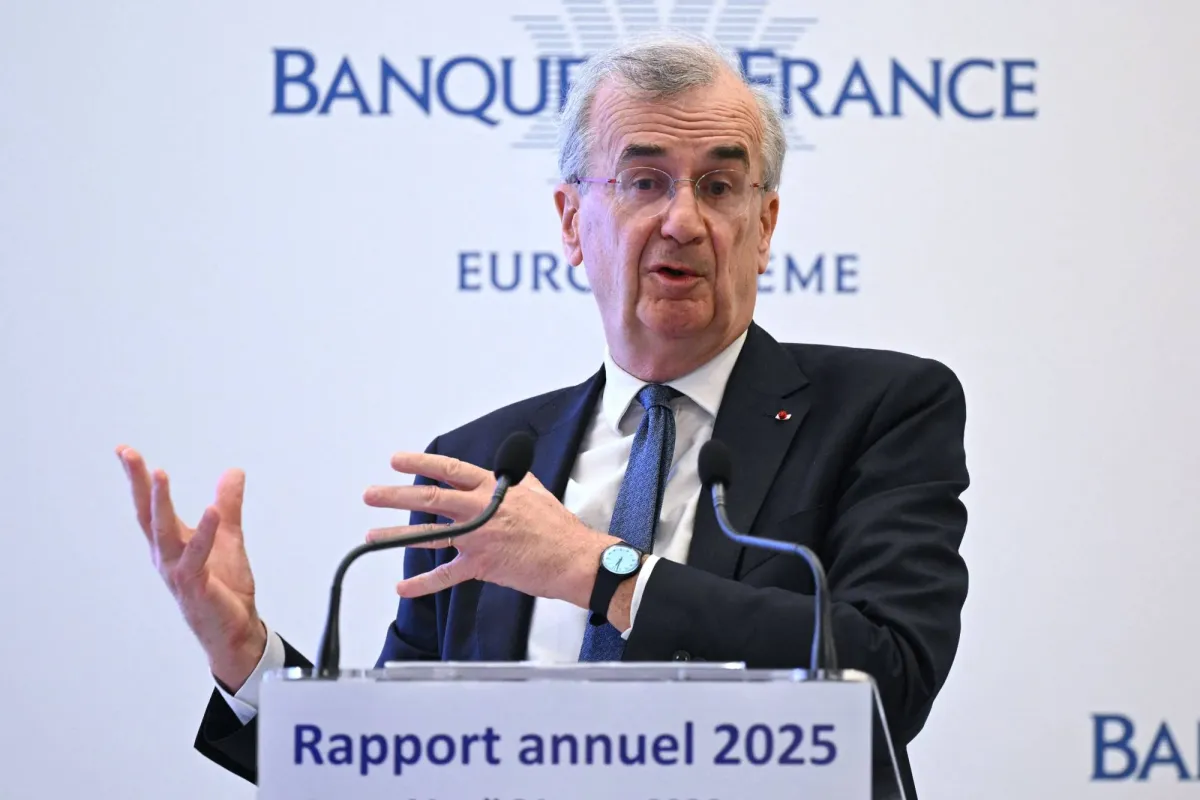
François Villeroy de Galhau, the Governor of the French Central Bank, confirmed that the European Central Bank is prepared to act if necessary, noting that discussions about the timing of interest rate hikes are still premature. This statement came during an interview with the Italian newspaper "La Stampa," where he indicated that the bank is focused on curbing the widening scope of inflation caused by rising energy prices, especially following the escalation of situations in the Middle East.
Villeroy explained that the U.S.-Israeli war on Iran has led to a sharp increase in energy prices, prompting monetary policymakers to consider the possibility of raising interest rates to prevent this rise from impacting the prices of other goods and services. He emphasized that the European Central Bank is closely monitoring the situation to determine whether there is a need to raise interest rates and under what circumstances.
Details of the Event
Villeroy reported that some policymakers consider raising the interest rate in April as a viable option, while others believe it is necessary to wait before taking this step due to the lack of supporting evidence at present. He also acknowledged that the war has negatively impacted inflation expectations, indicating that the bank cannot prevent a short-term shock, but its main task is to ensure that the immediate rise in prices does not transition into a broader inflationary wave.
He pointed out that the European Central Bank's negative scenarios regarding inflation may overestimate the impact, as they do not take into account any potential response from the bank. According to financial markets, interest rates are expected to see three increases this year, with the first increase anticipated to be priced in by June.
Context and Background
These statements come at a sensitive time, as the European economy faces significant challenges due to rising energy prices and geopolitical tensions. These factors have notably impacted inflation in the Eurozone, prompting the European Central Bank to take proactive steps to address these challenges.
In this context, Philip Lane, the Chief Economist at the European Central Bank, confirmed that the bank will not hesitate to make its monetary decisions, but it will not adjust its policy proactively in response to the impact of the war in the Middle East on inflation. He explained that the current situation differs from that of 2022, when the economy was experiencing strong effects from reopening after the pandemic.
Implications and Effects
Raising interest rates is considered a step that could affect economic growth in the Eurozone, as it may lead to increased borrowing costs and a decline in investments. However, some experts believe that this step may be necessary to control rising inflation, which could have negative effects on consumers' purchasing power.
Moreover, geopolitical tensions in the Middle East, particularly the U.S.-Israeli war on Iran, may affect the stability of financial markets, complicating the economic situation in the region. Thus, the European Central Bank faces significant challenges in making its monetary decisions under these changing conditions.
Impact on the Arab Region
The economic developments in the Eurozone directly affect Arab countries, especially those reliant on oil exports. Rising interest rates in Europe may lead to a decline in oil demand, which would impact global oil prices and consequently affect the economies of exporting Arab nations.
Additionally, tensions in the Middle East could lead to increased instability in markets, negatively affecting foreign investments in the region. Therefore, monitoring the developments in the European Central Bank's monetary policy is crucial for Arab countries to understand how it impacts their economies.
In conclusion, the economic situation in the Eurozone remains under observation as the European Central Bank seeks to make decisions that align with current conditions to ensure price stability and economic growth.