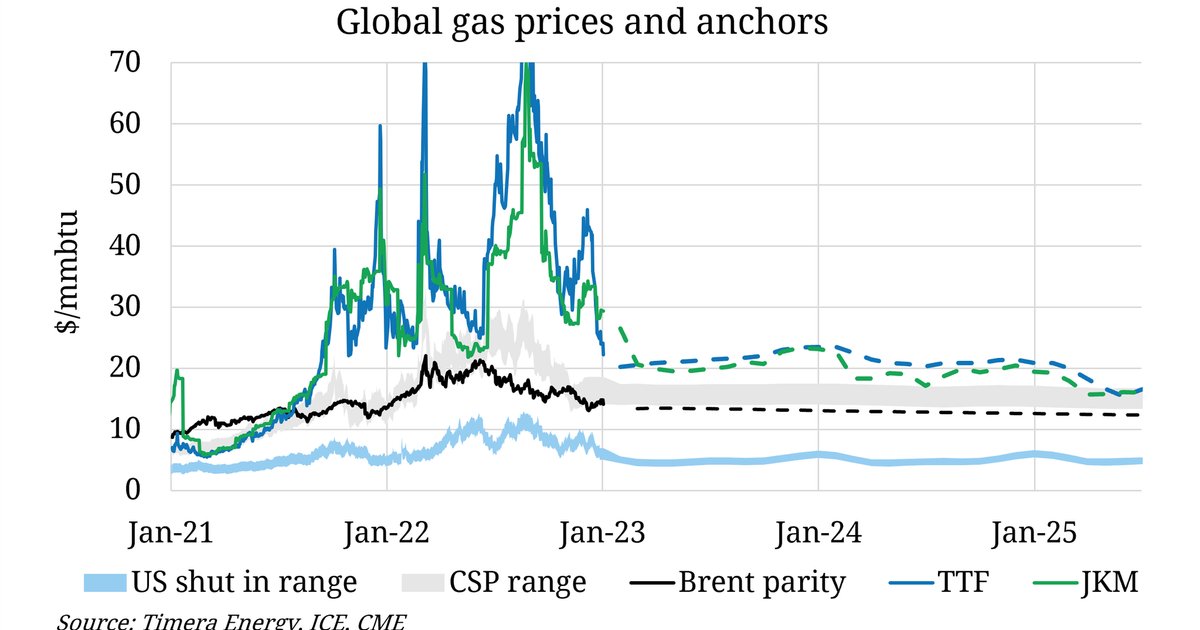
European gas prices witnessed a significant drop of 20% at the market opening, reflecting ongoing changes in supply and demand dynamics. This decline comes at a sensitive time as economic challenges in the region increase, raising questions about its impact on consumption and future prices.
This price drop is attributed to fluctuations in supply and demand, as European markets have seen an increase in liquefied natural gas supplies, alongside a decrease in demand due to mild weather conditions. These combined factors have led to a notable decrease in prices, which may help alleviate pressures on consumers and industries reliant on gas.
Details of the Event
Gas prices in Europe are influenced by multiple factors, including geopolitical conditions, weather, and storage levels. Recently, European markets have experienced an increase in storage levels, contributing to sufficient supplies to meet demand. Additionally, geopolitical tensions in certain regions have affected supply stability, making markets more sensitive to changes.
This price decline could have positive effects on the European economy, potentially leading to reduced energy costs for businesses and consumers. However, the market should be closely monitored, as any sudden changes in demand or supply could lead to new price fluctuations.
Background & Context
Over the past years, gas prices in Europe have experienced significant volatility due to various factors, including geopolitical crises, climate changes, and technological advancements in the energy sector. Recently, there has been a growing trend towards using natural gas as an alternative to fossil fuels, increasing demand for gas in many European countries.
Moreover, shifts in energy policies in some European nations, such as the transition towards renewable energy sources, have also impacted the gas market. These transitions require European countries to adapt to market changes, increasing the importance of monitoring prices and future trends.
Impact & Consequences
The decline in gas prices could positively affect the European economy, as it may lead to reduced production costs in various industries. This could contribute to economic growth, especially amid the challenging economic conditions faced by many European nations.
However, European countries must be prepared for any future price fluctuations, as the market remains susceptible to sudden changes. It is crucial for nations to adopt effective strategies to address these changes, including enhancing energy efficiency and diversifying supply sources.
Regional Significance
The decline in European gas prices has potential implications for the Arab region, as many Arab countries rely on gas exports as a key part of their economies. This decline may lead to reduced revenues from gas exports, impacting national budgets in some countries.
Nevertheless, this drop could provide an opportunity for Arab nations to reassess their energy strategies and enhance regional cooperation in renewable energy and clean technology. This could assist in achieving sustainable development goals in the region.
In conclusion, amid ongoing changes in the gas market, it remains essential to closely monitor developments, as prices may be affected by various factors. European and Arab nations should work together to face challenges and seize available opportunities.