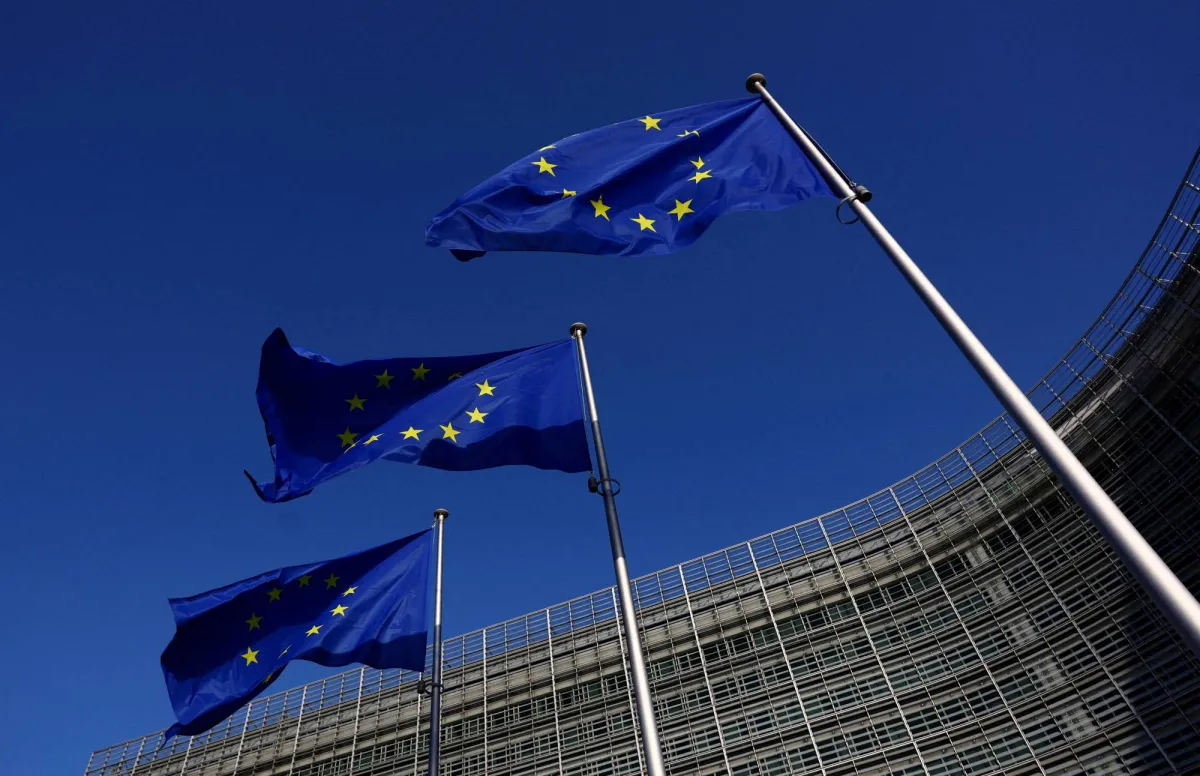
The European Commission announced on Tuesday the initiation of a broad investigation concerning the French government's plans to support the construction and operation of six new generation nuclear reactors. This investigation is part of efforts to ensure that these plans do not conflict with EU laws.
According to the statement issued by the Commission, these reactors aim to expand existing nuclear power plants in Penly, Gravelines, and Blayais, in a project estimated to cost around €72.8 billion (equivalent to $83.7 billion).
Details of the Investigation
The French government aims to cover 60% of the construction costs through supported loans, in addition to ensuring stable revenues for a period of 40 years. A mechanism for risk-sharing has also been proposed in case of natural disasters or changes in French national legislation. The state-owned company Électricité de France (EDF) will be responsible for operating these reactors.
The European investigation seeks to ensure that this government support package does not conflict with the bloc's laws and to evaluate its appropriateness and proportionality, as well as its potential implications for competition in the energy sector.
Background & Context
Nuclear energy is a crucial part of France's energy strategy, as the country is among the leaders in this field. However, government support for nuclear energy projects is subject to strict scrutiny by the European Commission, which aims to maintain a level playing field among member states.
In recent years, France has faced significant challenges in the energy sector, including rising energy costs and the need to transition to more sustainable energy sources. These plans come as the French government seeks to enhance its competitiveness in the European market.
Impact & Consequences
If the support plans are approved, it could enhance France's ability to achieve greater energy independence and contribute to reducing reliance on external energy sources. However, the investigation may disrupt these plans and affect the project's timeline.
Concerns are growing that government support for nuclear energy projects could exacerbate the gap between wealthy and less wealthy countries in the EU, potentially sparking widespread debate about fairness in resource distribution.
Regional Significance
Nuclear energy is a controversial topic in many Arab countries, where some nations are seeking to develop their nuclear programs for peaceful purposes. Developments in France could influence nuclear policies in the region, especially amid global trends toward clean energy.
Moreover, France's success in implementing these projects could encourage other countries to explore nuclear energy as a sustainable option, potentially transforming the energy landscape in the region.
In conclusion, this investigation highlights the importance of European oversight on government support for energy projects and underscores the challenges faced by member states in balancing energy development with maintaining fair competition.