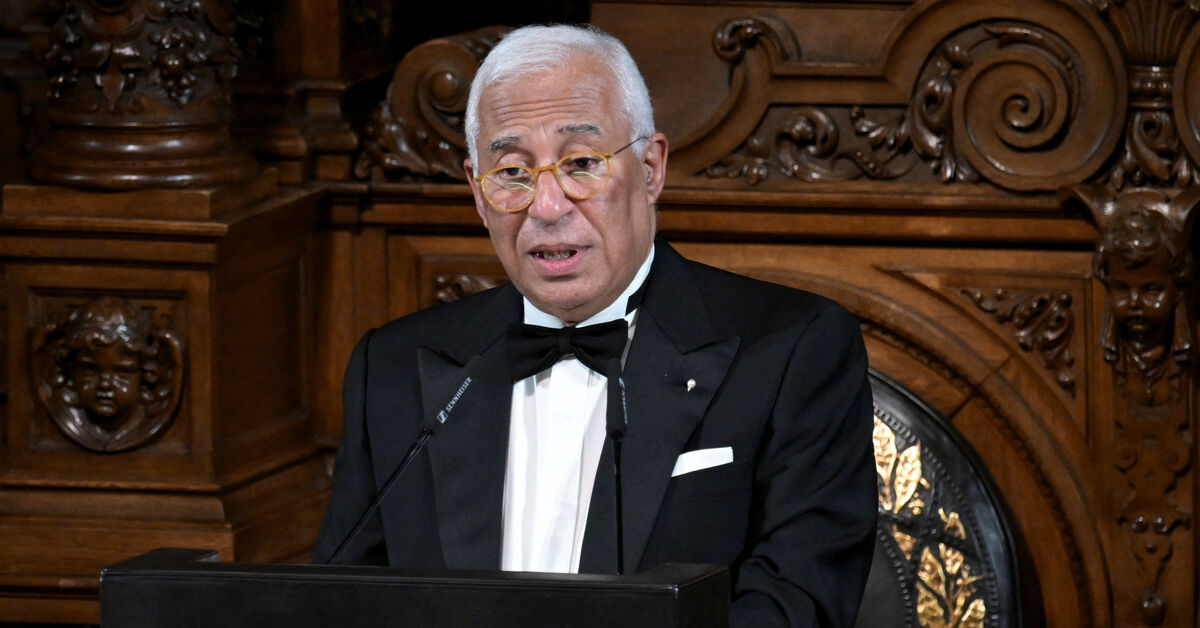
European Council President Antonio Costa conducted a phone call with Pakistani Prime Minister Shehbaz Sharif, addressing the deteriorating situation in Iran and the ongoing war there. Costa noted that the conversation was fruitful, as he listened to Sharif's assessment of the war in Iran, along with the outcomes of recent consultations held among the foreign ministers of Egypt, Saudi Arabia, Pakistan, and Turkey in Islamabad.
In a tweet on the platform X, Costa confirmed that the European Union is deeply concerned about the continuation of the war in Iran, highlighting its increasing global impacts.
Details of the Discussion
This dialogue comes at a sensitive time when Iran is experiencing a rise in internal conflict, affecting regional stability. Costa showed particular interest in Sharif's evaluation of the situation, reflecting Pakistan's importance as a key supporter in the region.
The consultations held in Islamabad among the foreign ministers addressed several issues related to regional security and cooperation among Islamic countries to face common challenges. The discussions centered on how to enhance coordination among these nations to tackle the multiple crises plaguing the region.
Background & Context
Historically, Iran has faced numerous political and economic crises, which have significantly worsened in recent years. The war in Iran is not merely an internal conflict; it has extensive regional and international implications. Events in Iran affect relations between Arab countries and Iran, complicating the situation in the region.
Moreover, the situation in Iran has a direct impact on global oil prices, as Iran is one of the largest oil producers in the world. Any escalation in the conflict could lead to increased instability in energy markets, affecting the global economy as a whole.
Impact & Consequences
Concerns are growing that the continuation of the war in Iran could exacerbate humanitarian crises and increase the number of displaced persons, necessitating urgent international response. The situation may also affect regional security, as other countries may seek to intervene or bolster their military presence in the area.
The European concern over the ongoing conflict reflects an increasing awareness of the importance of stability in Iran, not only for regional security but also for global economic stability. The European Union could play a pivotal role in attempting to mediate between the involved parties to achieve peace.
Regional Significance
For Arab countries, the continuation of the conflict in Iran may enhance the state of instability in the region. Relations between Iran and Arab nations, particularly Saudi Arabia and Egypt, could be significantly affected, increasing existing tensions. Additionally, any escalation in the conflict may lead to negative repercussions on the national security of Arab states.
Ultimately, hope rests on international and regional efforts to achieve peace in Iran, as these steps are essential to ensure the stability and security of the region. Dialogue and cooperation among nations are the only ways to navigate these complex crises.