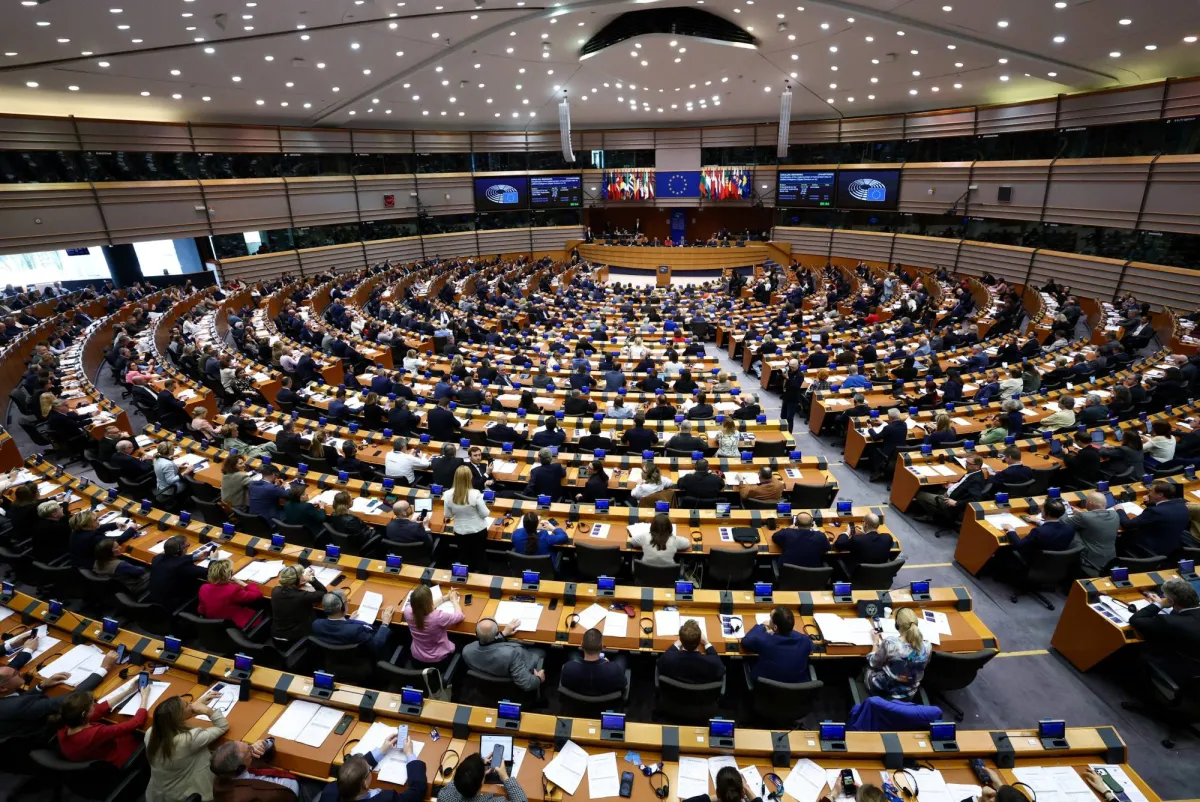
On Thursday, the European Parliament approved the tariff agreement negotiated by the European Union with U.S. President Donald Trump, incorporating stringent safeguards. This move is part of Europe's strategy to protect its trade relations with the United States at a time when it seeks to expand its global trade partnerships.
Brussels and Washington had reached an agreement last summer, setting tariffs at 15% on most European goods, according to Agence France-Presse. However, Trump's tariff policy for 2025, which included hefty tariffs on steel, aluminum, and auto parts, prompted the European Union, comprising 27 countries, to strengthen its trade relations with the rest of the world. Since then, the EU has signed agreements with countries from South America to Australia, and it continues to seek more.
Details of the Agreement
Despite enhancing trade relations with other countries, the EU has not abandoned its relationship with its largest trading partner, the United States, where their trade exchanges amount to 1.6 trillion euros (approximately 1.9 trillion dollars). A significant majority of European lawmakers agreed to reduce European tariffs on certain U.S. imports as a first step toward implementing the 2025 agreement, with additional safeguards included.
During a parliamentary session prior to the vote, Valdis Dombrovskis, the EU's chief economic officer, stated that the vote represents an important procedural step and a political signal of the EU's commitment to its promises. However, he noted that the agreement still requires further negotiation with EU countries before final implementation, although Brussels hopes that discussions will proceed swiftly.
Background & Context
The green light for the agreement came after months of delays, as lawmakers resisted approving it due to transatlantic tensions over Greenland, and it was postponed again after the U.S. Supreme Court's decision to overturn many of the tariffs imposed by Trump. Things improved after the European Commission announced its commitment to the agreement despite U.S. decisions, urging lawmakers to follow suit after receiving reassurances from Washington.
However, Trump responded with a new tariff regime, prompting European lawmakers to tighten the existing agreement by including multiple safeguards, such as the automatic termination of EU tariff reductions in March 2028, and linking reductions on steel and aluminum tariffs to similar cuts from the U.S. side.
Impact & Consequences
Kathleen Van Brempt, a Member of the European Parliament, expressed her concerns during the discussion that further pressures might come from Trump, stressing the need not to grant any exemptions or blank checks. She added that the EU's vulnerability to the repercussions of wars and other shocks has led the President of the European Commission, Ursula von der Leyen, to prioritize diversifying trade partners to reduce over-reliance on the U.S. and China.
These efforts began with the signing of a long-awaited agreement with the Mercosur bloc in South America in January, followed by another agreement with India, and just this week, a stalled agreement with Australia was signed.
Regional Significance
These developments come at a sensitive time for the Arab region, where Arab countries are seeking to strengthen their trade relations with major powers, including the United States. This agreement may influence the strategies of Arab countries in dealing with global trade tensions and underscore the importance of diversifying trade partnerships.
In conclusion, this step reflects the challenges Europe faces under U.S. trade policies and highlights the need for flexible strategies that ensure the continuity of trade relations with the United States while simultaneously seeking to strengthen partnerships with other countries.