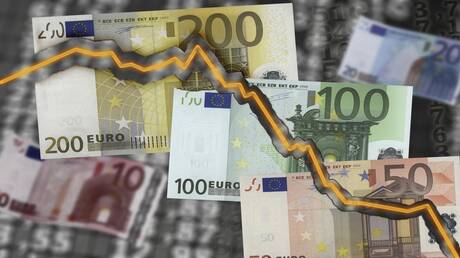
European stocks have dropped today, with the Stoxx 600 index, which aggregates major companies' shares across the continent, reaching its lowest level in the past four months. This decline is accompanied by a sharp drop in the defense sector, reflecting the increasing tensions in the Middle East.
This decline signals significant investor concerns as they evaluate the current economic situation and the impact of conflicts on prices. Market analysis indicates that fears of rising inflation could lead to a slowdown in economic growth, increasing pressures on an already challenged European economy.
Details of the Event
The European markets are directly affected by the ongoing conflict in the Middle East, as stocks began to sharply decline following the announcement of a new escalation in the struggle. The defense sector, which represents a substantial portion of government spending, has seen a noticeable drop, with shares of prominent companies specializing in weaponry and military equipment experiencing significant declines. This downturn in such a vital sector alerts investors to the impact of regional conflicts on global markets.
Additionally, the DAX index in Germany and the CAC 40 index in France have also exhibited clear declines, reflecting deteriorating confidence in European markets. Investors are expressing concerns over the implications of current events on their investment performance, leading to a state of general unease in the market.
Background & Context
Global financial markets are witnessing rapid changes due to geopolitical events. In recent years, European stock markets have been under continuous pressure from shifting economic policies and military tensions in various regions, particularly in the Middle East.
Over the past decade, Europe has experienced numerous crises, ranging from the refugee crisis to trade and strategic conflicts. This recent downturn may be a foreseeable outcome of greater concerns surrounding investments in an environment characterized by uncertainty. The current crisis is not the first to impact the markets, but it brings new challenges related to energy prices and essential commodities.
Impact & Consequences
The drop in European stocks as a result of geopolitical interferences and the ongoing conflict in the Middle East serves as a frightening indicator of the potential escalation of inflationary pressure. Such a situation could jeopardize investment in the most conflict-affected sectors, reflecting negatively on economic growth.
Major financial institutions expect this decline to lead to a contraction in investments, which may, in turn, cause increases in unemployment rates. Simultaneously, companies reliant on manufacturing may find themselves in a precarious position due to rising production costs and declining demand.
Regional Significance
The European markets' sensitivity to developments in the Middle East makes them more interconnected with regional events, as the potential inflationary pressures could have adverse repercussions on the Arab economy. Arab investors are expected to grow increasingly concerned about the impact of the current situation on their investments in Europe.
The fragile state of the European economy implies that Arab countries with strong trade relations with Europe may suffer negative repercussions. This is where commodity prices could rise, which may adversely affect import and export activities between the two regions.
Ultimately, there is an urgent need for effective strategies from governments to mitigate the effects of these sharp developments. The situation must be closely monitored, as it could determine the future fate of financial markets in both the Arab world and Europe in the near future.