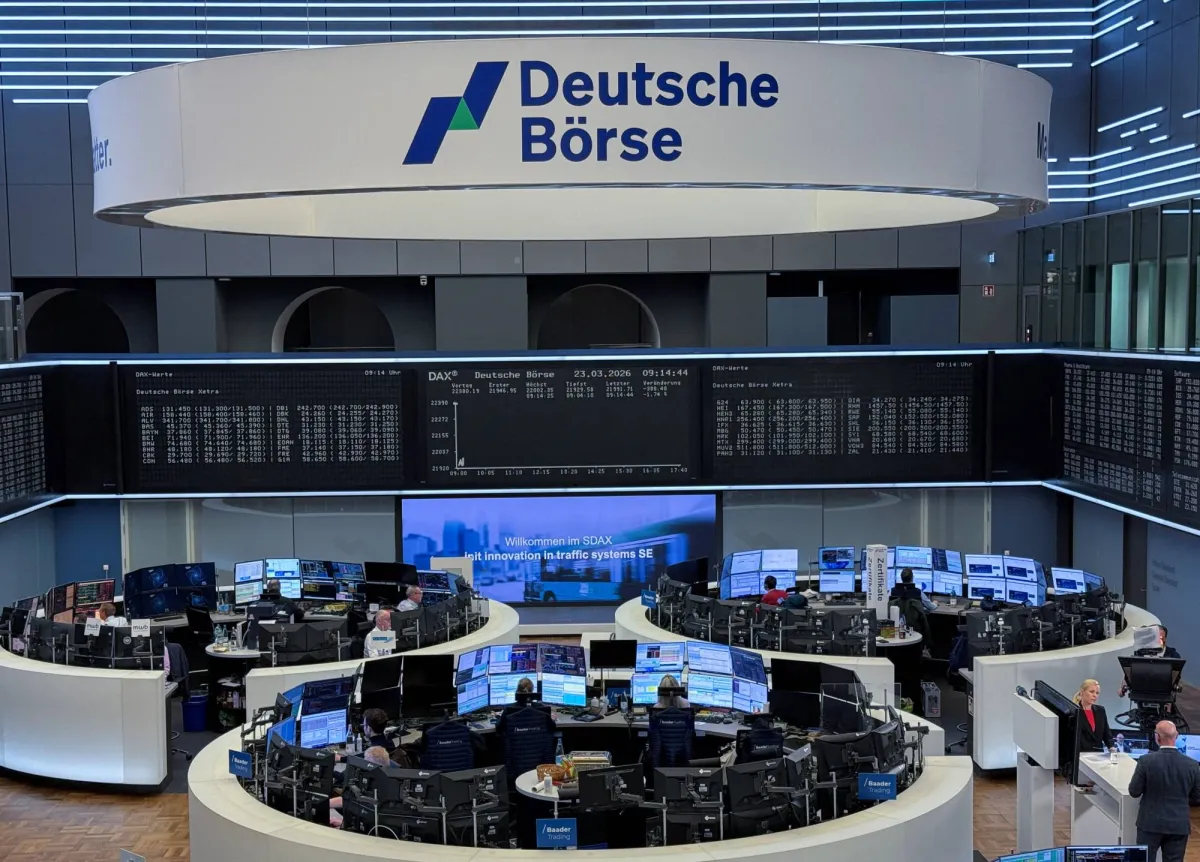
European stocks rose on Tuesday, driven by strong growth in the media and banking sectors, while investors remain watchful for Iran's timeline to reopen the Strait of Hormuz.
The Stoxx 600 index recorded an increase of 0.6%, reaching 600.33 points by 08:54 GMT, marking its highest level in nearly 3 weeks as trading resumed after the long European Easter holiday. Regional indices also performed positively, with London's FTSE 100 rising by 0.2%, while Spain's Ibex climbed by 1%.
Event Details
Matt Britzman, senior equity analyst at Hargreaves Lansdown, reported that investors are making decisions cautiously rather than fully anticipating the worst-case scenarios. He added that the current trading session could be among the most volatile since the conflict began, as any new developments could trigger sharp movements in global markets.
Markets have continued to face volatility since the outbreak of the US-Israeli-Iranian war in late February, with the Stoxx 600 index declining by more than 5% since then, amid concerns over rising inflation and its impact on investor confidence. Despite diplomatic optimism, negotiations have yet to make any progress, with US President Donald Trump setting a deadline of 20:00 EST on Tuesday for reaching an agreement.
Background & Context
By sector, the media sector saw an increase of 5.8%, with shares of Universal Music Group jumping by 12.7% following a cash and stock acquisition proposal from Pershing Square valued at approximately €55.75 billion ($64.31 billion). Major bank stocks also rose by 1.5%.
Conversely, shares in the technology sector declined, with ASML shares falling by 3% after several US politicians proposed legislation to impose additional restrictions on exports of semiconductor manufacturing equipment to China.
Impact & Consequences
Dimitar Radev, a policymaker at the European Central Bank, warned that inflation expectations in the Eurozone could rise at a faster pace than previously anticipated, indicating that the central bank must be prepared to raise interest rates quickly if price pressures persist. Data from the London Stock Exchange suggests that traders currently expect about 3 rate hikes by the end of the year.
Regarding economic data, the Eurozone's purchasing managers' index (PMI) figures showed a sharp slowdown in private sector growth during March, due to rising energy costs and supply chain disruptions caused by the conflict in the Middle East, with overall demand declining for the first time in 8 months.
Regional Significance
Recent events indicate that global markets are significantly affected by geopolitical tensions, particularly in the Middle East. The uncertainty surrounding the reopening of the Strait of Hormuz, a vital corridor for oil supplies, could impact global oil prices and increase inflationary pressures in Arab countries.
In conclusion, markets remain under continuous pressure from ongoing events, requiring investors to make informed decisions amid current volatility.