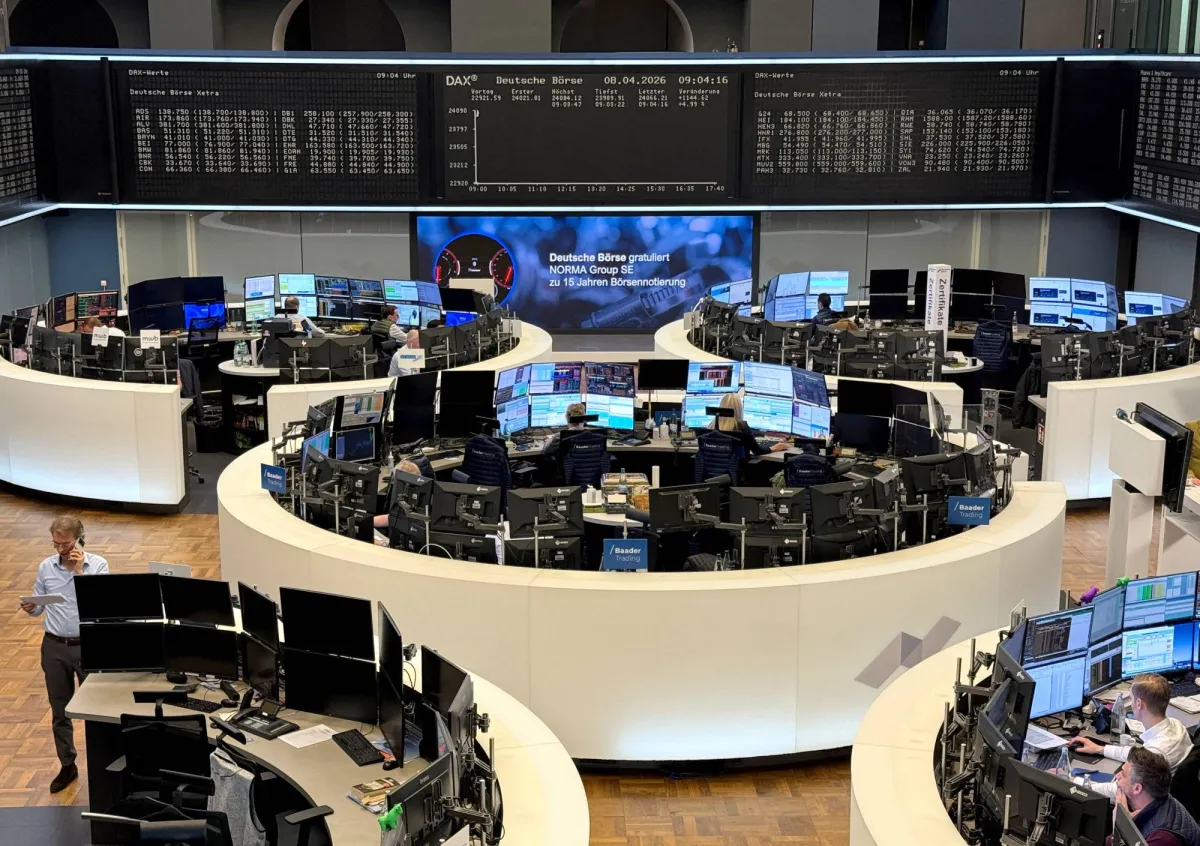
European stocks surged by more than 3% on Wednesday after the announcement of a two-week ceasefire in the Middle East, which restored confidence in global markets and raised hopes for a resumption of oil and gas flows through the Strait of Hormuz soon.
The Stoxx 600 index rose by 3.6% to 611.73 points by 07:13 GMT, on track to record its best performance of the year if the current momentum continues. Regional markets mirrored this rise, with the DAX index in Germany climbing by 4.6% and the FTSE 100 in the UK increasing by 2.3%.
Details of the Event
The market's swift reaction came after U.S. President Donald Trump agreed to a ceasefire with Iran, just under two hours before a deadline he set for Tehran to reopen the Strait of Hormuz, through which 20% of the world's oil passes, or face devastating attacks on its civilian infrastructure.
Despite the immediate relief, investors are watching closely to see if the truce will pave the way for a lasting resolution. Energy markets responded quickly as well; Brent crude futures fell by 15% to below $100 per barrel, providing some relief after weeks of rising prices.
Background & Context
European stocks had faced significant pressure since the outbreak of the U.S.-Israeli military campaign against Iran on February 28, as the continent's heavy reliance on oil imports through the partially closed Strait of Hormuz exacerbated the crisis. Sectors related to travel, industry, and banking saw growth ranging from 5% to 7%, benefiting from lower energy costs and declining bond yields, while the energy sector dropped by 4.2% amid falling crude oil prices.
Investors are now looking towards retail sales and producer price data in the Eurozone, which may provide clearer insights into the impact of recent energy market fluctuations on the economy.
Impact & Consequences
The Reserve Bank of India kept its key interest rate unchanged, warning of a potential slowdown in growth and rising inflation rates due to the repercussions of the Middle East crisis that has reshaped the economic landscape in South Asia. This decision followed the announcement from the U.S. and Iran overnight of a two-week ceasefire after more than a month of fighting, which had previously led to a sharp rise in oil prices and disrupted gas supplies to several economies worldwide.
India, which imports about 90% of its oil needs, is among the countries most vulnerable to the fallout from these disruptions. Consequently, the Indian rupee has fallen to a record low, as foreign investors withdrew nearly $19 billion between March and April so far.
Regional Significance
In this context, India is preparing to receive its first shipment of Iranian oil this week, marking the first such delivery in seven years, following the U.S. decision to temporarily lift sanctions on Iranian oil. Data showed that the shipment, transported by the supertanker Jaya, was purchased by the Indian state oil company and is en route to India's eastern coast.
Additionally, data indicates that another tanker named Jordan is also pointing to India as a destination for unloading its cargo. India has not imported any Iranian oil shipments since May 2019 due to U.S. pressures aimed at halting Iranian crude purchases. However, the supply disruptions caused by the U.S.-Israeli war have weighed heavily on the South Asian nation.
In conclusion, the question remains regarding the sustainability of the ceasefire and its impact on global markets, as investors look forward to stability in the region.