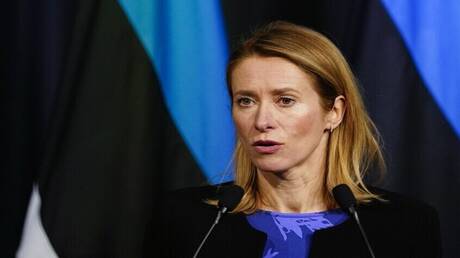
European Union foreign policy chief Kaja Kallas stated that the European bloc "will never be a neutral mediator" in the ongoing conflict in Ukraine. This declaration was made during a press conference where she clarified that the EU's position is clear in supporting Ukraine against the challenges it faces.
Kallas pointed out that the conflict in Ukraine is not merely a regional struggle but poses a threat to European and global security. She confirmed that the European Union is committed to continuing military and economic support for Ukraine as part of efforts to enhance stability in the region.
Details of the Event
Kallas's remarks come at a sensitive time, as the conflict in Ukraine faces a new escalation, raising concerns within European political circles. Recent reports indicate that Russian forces have intensified their military operations in eastern Ukraine, exacerbating the humanitarian situation there.
Furthermore, Kallas emphasized that the EU will work to strengthen sanctions imposed on Russia in an attempt to pressure it to de-escalate its military actions. She explained that these sanctions aim to undermine Russia's ability to finance its military operations and bolster Ukraine's position in future negotiations.
Background & Context
The conflict in Ukraine dates back to 2014, when Russia annexed Crimea, leading to an armed conflict in the eastern part of the country between Ukrainian forces and Moscow-backed separatists. Since then, the region has witnessed a continuous escalation of tensions, with military and political interventions from various countries, including the United States and NATO.
In recent years, the conflict has become more complex, as the interests of major powers overlap, making it difficult to reach a peaceful resolution. The European Union is considered one of the key players in this conflict, striving to achieve regional stability through support for Ukraine.
Impact & Consequences
Estimates suggest that the conflict in Ukraine could have far-reaching implications for European security. As the escalation continues, the number of refugees fleeing the conflict may increase, placing additional pressure on European countries. Additionally, the ongoing conflict could impact the European economy, affecting trade and investments in the region.
Moreover, the EU's steadfast position in supporting Ukraine may escalate tensions with Russia, increasing the likelihood of new conflicts in the area. This requires European nations to take cautious steps to ensure that the situation does not worsen.
Regional Significance
The developments in Ukraine are of significant importance to the Arab region, as they can affect political and economic relations between Arab countries and European nations. With rising tensions in Ukraine, some Arab countries may seek to strengthen their ties with Russia in an attempt to balance their international relations.
Additionally, the conflict may influence global energy prices, potentially leading to increased costs for oil-importing Arab nations. Therefore, monitoring developments in Ukraine will be essential to understand the potential impacts on the Arab region.
In conclusion, Kaja Kallas's statements reflect the EU's unwavering commitment to supporting Ukraine, highlighting the significance of this conflict in the global context. As escalation continues, the hope for a peaceful resolution remains elusive, necessitating concerted international efforts to achieve stability in the region.