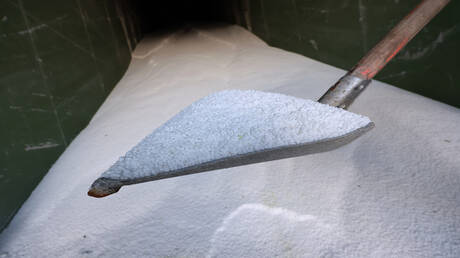
The European Council has decided to suspend tariffs on essential nitrogen fertilizers such as urea and ammonia for one year, aiming to mitigate the impacts of the conflict in Iran.
This move comes at a time when the global fertilizer market is experiencing significant fluctuations due to geopolitical crises, affecting production and distribution. The decision aims to support farmers in the European Union and ensure the stability of food prices.
Details of the Decision
The Council announced that the decision will cover essential nitrogen fertilizers, marking an important step in the context of enhancing food security in the region. Urea and ammonia are fundamental materials used in agriculture, playing a vital role in improving crop productivity.
This decision follows a series of discussions among EU member states, where the need for swift action to address the challenges facing the agricultural sector was emphasized. Officials noted that this decision will help alleviate economic pressures on farmers.
Background & Context
The fertilizer markets are significantly affected by geopolitical events, especially in the Middle East. The conflict in Iran, which extends its influence to neighboring countries, has led to rising fertilizer prices and created a state of uncertainty in the market.
The European Union is one of the largest consumers of fertilizers globally, and with the increasing demand for agricultural products, any rise in production costs could negatively impact final prices for consumers. Therefore, this decision is part of the EU's efforts to ensure market stability.
Impact & Consequences
The suspension of tariffs is expected to ease financial pressures on farmers, potentially leading to increased agricultural production and improved food security. Additionally, the decision may help reduce reliance on imports from outside the EU.
Although this decision is a positive step, there are concerns that the ongoing geopolitical crises may affect the effectiveness of these measures. Thus, EU member states must closely monitor the situation.
Regional Significance
Arab countries are among the largest consumers of fertilizers, heavily relying on agriculture. The EU's decision may impact fertilizer prices in the region, which could reflect on agricultural production costs.
If the EU succeeds in stabilizing fertilizer prices, it could have a positive effect on Arab countries facing challenges in securing their agricultural needs. This decision may also encourage enhanced cooperation between Arab nations and the EU in the agricultural sector.
In conclusion, the European Council's decision to suspend tariffs on nitrogen fertilizers is a strategic move aimed at enhancing food security in the region. As geopolitical crises continue, the greatest challenge remains ensuring market stability and guaranteeing farmers access to essential materials.