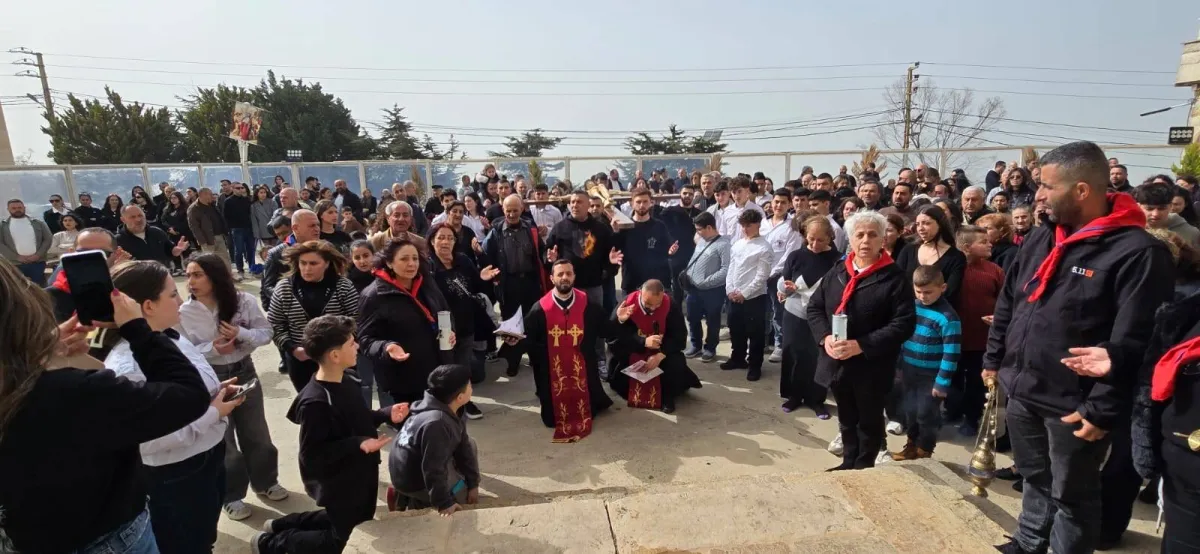
Reports circulating on Friday regarding evacuation warnings for the town of Ibl in southern Lebanon have sparked panic and concern among the town's residents and the families of nearby Christian villages. With rising security fears and disrupted supply routes, some residents have begun to leave the area.
According to the mayor of Ain Ibl, Ayoub Khreish, the evacuation was directed towards the northern part of the town, close to the city of Bint Jbeil, where fighting has intensified. He confirmed that several individuals, including pregnant women and patients, left the town accompanied by the Red Cross, while denying the existence of a complete evacuation order for the town.
Details of the Incident
The Israeli forces are attempting to penetrate the city of Bint Jbeil from multiple fronts, with recent focus on the Ain Ibl axis and the areas between Rmeish and Yaroun. This has led to a request for the evacuation of the northern part of Ain Ibl, increasing tension among the residents.
At the same time, the International Committee of the Red Cross warned against the circulation of inaccurate information regarding an agreement to facilitate evacuation from Ain Ibl to Beirut, urging people not to respond to these rumors.
Background & Context
For about a week, attention has turned to 13 towns in southern Lebanon, most of whose residents are Christians, following the Lebanese army's decision to withdraw from its deployment sites there. This withdrawal comes amid the advance of Israeli forces and an effort to avoid any direct confrontation with them, leading to the isolation of these towns and raising the voices of residents demanding humanitarian corridors to deliver food and medicine.
An official Lebanese source indicated that President Joseph Aoun is intensifying communications with Western countries to ensure the safety of residents in the steadfast areas of the south, calling for pressure on Israel to secure safe passageways.
Impact & Consequences
Concerns are growing that these developments could exacerbate the humanitarian situation in the besieged Christian villages, as most access routes have been cut off. A church source noted that the situation is very difficult, with most nearby hospitals out of service, putting the lives of many patients at risk.
It was also confirmed that the Vatican remains in contact with Washington to ensure the safety of the villagers and to secure the necessary aid for them.
Regional Significance
These events coincide with an Israeli military escalation in the region, raising widespread concern in neighboring Arab countries. The ongoing tension in southern Lebanon could have broader implications for regional security, especially given the political and sectarian divisions affecting the area.
In conclusion, hope remains pinned on international efforts to ensure the safety of civilians and provide the necessary humanitarian assistance.