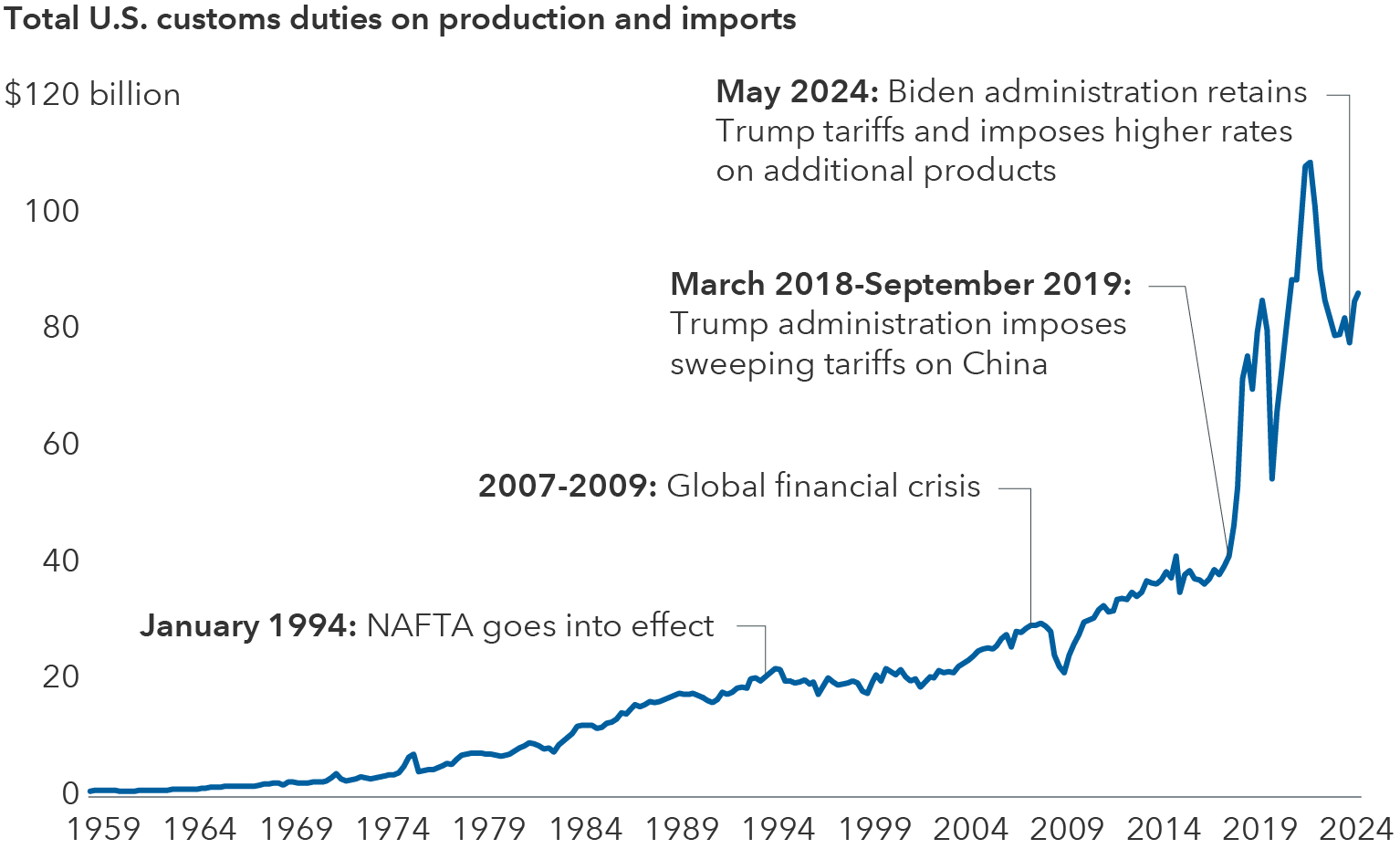
One year after the tariffs imposed by former President Donald Trump, construction and automotive companies in the US face significant challenges. These tariffs have not achieved the intended goals of reducing the federal debt as expected, raising questions about the effectiveness of these economic policies.
The tariffs imposed on a range of imported goods, including cars and construction materials, are part of Trump's strategy to boost domestic production and reduce reliance on imports. However, the results indicate negative impacts on many economic sectors.
Details of the Situation
Reports indicate that American construction companies are suffering from rising material costs due to the tariffs, leading to increased home prices. The automotive industry has also been affected, with new car prices rising, making them less competitive in global markets. This situation places additional pressure on American consumers, who are already facing economic challenges due to inflation.
Despite promises to reduce federal debt, data shows that US public debt has not decreased as expected. On the contrary, it has continued to rise, raising questions about the effectiveness of these economic policies.
Background & Context
The roots of these policies trace back to the Trump administration, where tariffs were imposed as part of the "America First" strategy. The goal of this strategy was to protect domestic industries from foreign competition, particularly from China. However, these policies have sparked widespread debate among economists, with some arguing that they could lead to counterproductive outcomes.
Over the years, the United States has witnessed significant changes in its trade policies, with previous attempts to reduce reliance on imports. However, it seems that the current tariffs have not achieved the desired objectives, raising questions about the future of these policies.
Impact & Consequences
Data shows that the tariffs have led to increased production costs, negatively affecting American companies. Small and medium-sized enterprises, which heavily rely on imported materials, are struggling to adapt to these changes. Additionally, rising prices may lead to decreased demand, impacting overall economic growth.
Moreover, these policies could exacerbate trade tensions between the United States and other countries, increasing uncertainty in global markets. Under these circumstances, there may be a need to reassess US trade policies to ensure sustainable economic growth.
Regional Significance
As the United States faces economic challenges, these policies may affect Arab countries that rely on trade with America. Rising prices of American goods could lead to reduced demand for Arab exports, negatively impacting local economies. Additionally, trade tensions may affect Arab investments in the United States, necessitating the search for alternative markets.
In conclusion, the tariffs imposed by Trump remain a contentious topic, raising questions about the effectiveness of current economic policies. The United States needs to reassess its trade strategies to ensure the achievement of desired economic goals.