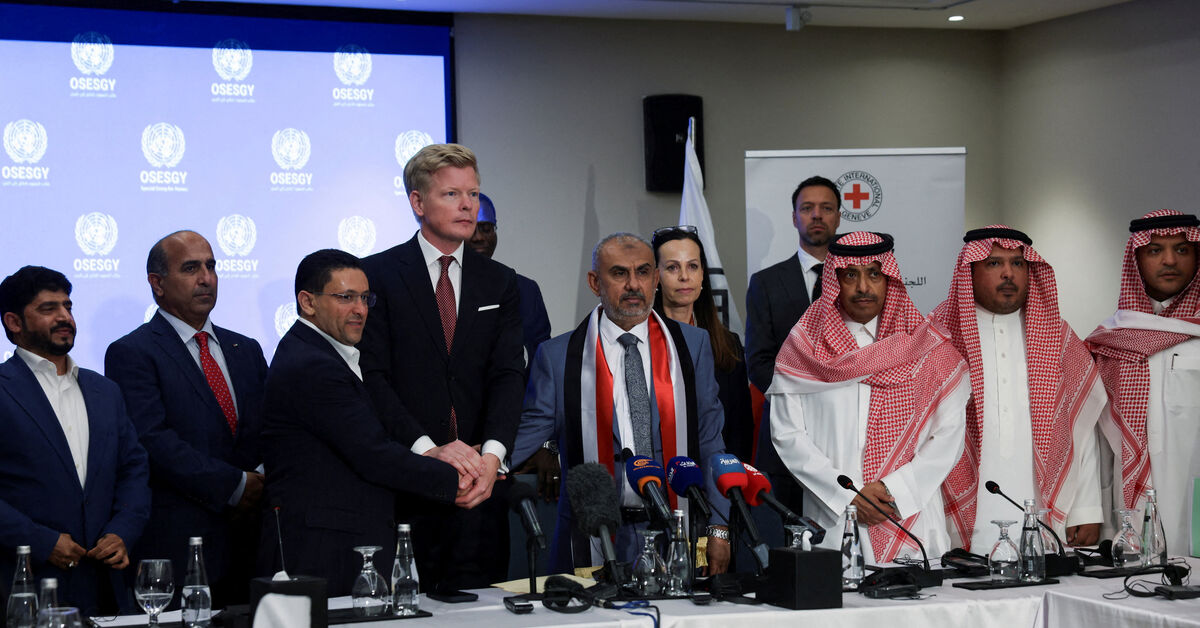
The internationally recognized Yemeni government and the Houthi group announced the exchange of over 1600 prisoners, marking the largest swap since the conflict began in Yemen. This announcement was made on Thursday, May 14, by the office of the United Nations Special Envoy to Yemen, reflecting progress in ongoing peace efforts.
This step is a significant milestone in the ongoing conflict that has persisted since 2014, which erupted after the Houthis seized control of the capital, Sanaa, leading to a Saudi-led military intervention in 2015 to support the legitimate government. This operation represents a new hope for many families who have lost loved ones during years of war.
Details of the Exchange
This exchange involves over 1600 prisoners from both sides, making it the largest since the onset of the conflict. The agreement was reached after rounds of UN-sponsored talks, with this step being part of broader efforts to end the ongoing conflict in Yemen. Observers hope that this operation will help build trust between the conflicting parties.
This move comes at a critical time, as international calls for a ceasefire and the resumption of peace talks are increasing. The UN envoy noted that this operation could pave the way for further humanitarian exchanges in the future, reflecting the parties' commitment to achieving peace.
Background & Context
The war in Yemen erupted in 2014 when the Houthis took control of the capital, Sanaa, prompting a Saudi military intervention in 2015 to support the internationally recognized government. Since then, the country has experienced one of the worst humanitarian crises in the world, with millions suffering from severe shortages of food and medicine.
Despite repeated efforts to reach a peace agreement, the conflict has persisted, exacerbating the humanitarian situation. However, this prisoner exchange represents a glimmer of hope in peace efforts, as it could lead to further positive steps toward ending the conflict.
Impact & Consequences
The prisoner exchange is an important step toward building trust between the conflicting parties and may help create an atmosphere conducive to resuming peace talks. If this operation is successful, it could encourage more humanitarian initiatives and help alleviate the suffering of civilians in Yemen.
This move may also impact the regional situation, as neighboring countries and the international community closely monitor developments in Yemen. The success of the exchange could foster further cooperation between the various parties and enhance the chances of achieving lasting peace in the region.
Regional Significance
The situation in Yemen is part of a broader landscape in the Arab region, where political and economic conflicts intersect. The success of the prisoner exchange could have a positive impact on other conflicts in the region, potentially encouraging conflicting parties in countries like Syria and Libya to take similar steps toward peace.
In conclusion, the prisoner exchange between the Yemeni government and the Houthis represents an important step toward achieving peace in Yemen and may signal the beginning of a new phase of cooperation and understanding between the conflicting parties.