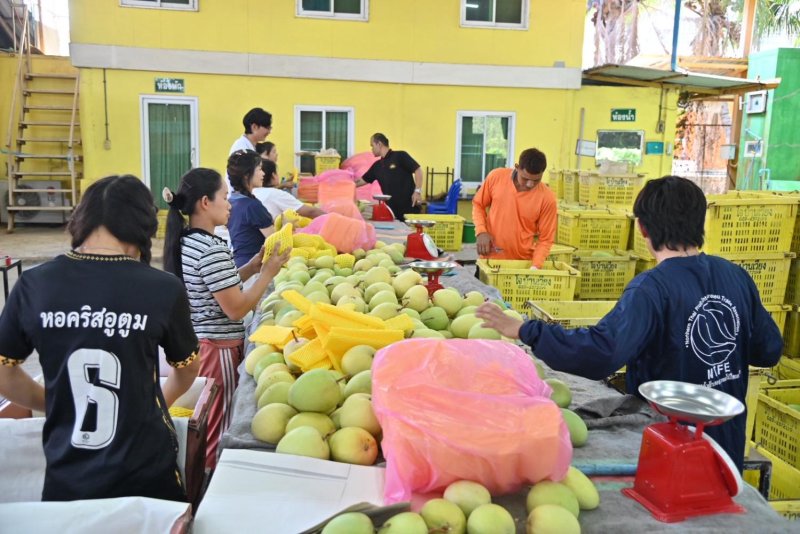
In light of the challenges associated with the expected production surplus in the upcoming harvest season, marketing professor at Chulalongkorn University, Akki Patarathanakorn, has called for the necessity of expanding fruit sales channels and developing innovative marketing strategies. He warned that reducing prices could lead to negative consequences for all parties involved.
Professor Akki pointed out that there are many available strategies, but price reduction should be the last option, likening it to launching a nuclear missile; once one party begins, others will follow, resulting in suffering for everyone.
Strategies to Address Production Surplus
To overcome the short-term issue of production surplus, Professor Akki recommended expanding sales channels, where farmers can connect directly with local restaurants or commercial centers that offer free selling spaces for agricultural products. Orchard owners can also utilize social media platforms to promote their farms and sell their products online.
He emphasized the importance of crafting engaging stories about the products, highlighting unique characteristics that distinguish them, such as geographical locations and precision farming practices.
Background & Context
Historically, many agricultural countries have faced similar challenges related to production surplus, leading to price declines and negative effects on farmers. In Thailand, fruits are one of the main sources of revenue, making the management of surplus vital for maintaining market stability.
The agricultural sector's health is crucial for the economy, and addressing surplus effectively can prevent long-term damage to farmers' livelihoods and the overall market.
Impact & Consequences
Strategies to absorb production surplus are critical, as fruit farmers can take advantage of the off-season to seek new markets and establish business relationships with processing plants and local restaurants. Professor Akki supports the transformation of local agricultural institutions into companies focused on fruit processing, contributing to the stability of fresh fruit prices.
By diversifying their approaches and exploring new avenues for sales, farmers can mitigate the impacts of surplus and ensure a more stable income throughout the year.
Regional Significance
The implications of these strategies extend beyond individual farmers, affecting the entire agricultural landscape in Thailand. As the country relies heavily on fruit exports, managing surplus effectively can enhance Thailand's reputation in the global market.
Closing this gap in production and sales will not only benefit farmers but also strengthen the economy by ensuring that agricultural products remain competitive and appealing to consumers.