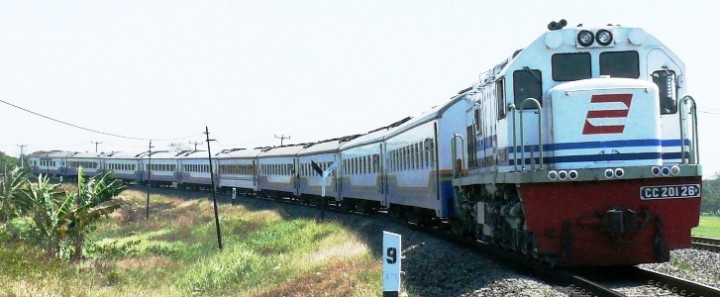
The Indonesian railway company (PT Kereta Api Indonesia) reported that price reductions on train tickets, along with the work-from-anywhere policy, were key factors in achieving a balanced distribution of post-Eid al-Adha travel in the Bandung area. According to data, passenger traffic did not experience any abnormal peaks, reflecting the success of these strategies.
In a statement, the public relations manager of KAI Daop 2 Bandung, Kuswardojo, confirmed that data up to Saturday showed stability in passenger distribution, with no sharp increases in the number of travelers on any given day. He explained that these results were due to government policies encouraging work from anywhere, allowing people to return at different times.
Event Details
During the period from March 22 to March 28, the company recorded an average of approximately 25,132 passengers daily, with the highest number of passengers on the second day of Eid al-Adha, reaching 27,244 travelers. The discounts of up to 30% on economy train tickets attracted 83,924 passengers to take advantage of these offers.
The company also launched a promotional campaign titled "Silaturahmi," offering 20% discounts on train tickets from Bandung, including popular trains such as KA Argo Wilis, Turangga, and Malabar. Additional discounts of 20% on executive train tickets provided multiple options for travelers.
Background & Context
These measures are part of the Indonesian government's efforts to improve the public transportation system and alleviate congestion at train stations, especially during holiday periods. Historically, Indonesia has faced significant challenges in managing transportation flow during holidays, often suffering from severe congestion at stations. However, the new policies aim to enhance the travel experience for citizens.
The work-from-anywhere policy, adopted by many institutions, is part of a global trend towards work flexibility, allowing employees to better organize their schedules. This policy has helped reduce pressure on transportation during peak times.
Impact & Consequences
These steps serve as a model for managing transportation during holidays, potentially having positive effects on the local economy by increasing travel activity. Additionally, price reductions may encourage more people to use public transportation instead of private cars, thereby reducing traffic congestion.
Furthermore, the success of these strategies could inspire other governments in the region to adopt similar policies to improve public transport services, enhancing citizens' ability to travel easily and comfortably.
Regional Significance
Given the challenges faced by many Arab countries in managing transportation during holidays and events, Indonesia's experience could serve as an inspiration. Many Arab nations suffer from severe congestion at transport hubs, necessitating effective strategies to mitigate this issue.
Arab countries could benefit from experiences like Indonesia's in implementing flexible work policies and offering discounts on ticket prices, which could contribute to improving the travel experience for citizens.