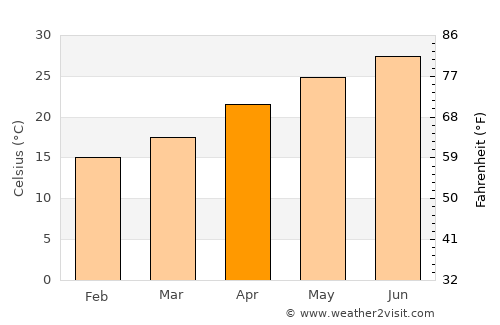
Weather forecasts indicate a significant rise in temperatures in Cairo and surrounding provinces today, Sunday, April 5, 2026. The maximum temperature in Cairo is expected to reach around 30 degrees Celsius, while temperatures in some other provinces will range between 28 and 32 degrees Celsius.
Sunny weather is expected across most areas, with a possibility of scattered clouds on the horizon. Winds are anticipated to be of moderate speed, which may help alleviate the heat during the daytime hours.
Details of the Weather Event
Data suggests that high temperatures will persist over the next few days, with this heat wave expected to continue until mid-week. In some coastal areas, such as Alexandria, temperatures may be slightly lower, reaching around 27 degrees Celsius.
Regarding humidity, levels are expected to be high in some areas, which may increase the feeling of heat. Therefore, residents are advised to take necessary precautions, such as drinking sufficient amounts of water and avoiding direct sunlight during peak hours.
Background & Context
This heat wave is part of the typical weather pattern in spring, where the country usually experiences fluctuations in temperatures. Previous years have also seen similar increases in temperatures during this time of year, raising concerns about the impacts of climate change.
It is worth noting that climate changes may lead to an increase in the frequency and intensity of heat waves, necessitating preventive measures by relevant authorities to protect citizens.
Impact & Consequences
This heat wave can affect the daily activities of residents, as some may find it difficult to engage in outdoor activities. It may also impact the agricultural sector, where crops require special care during periods of high heat.
Additionally, rising temperatures may lead to increased energy consumption, particularly in air conditioning, which could place additional pressure on the electrical grid.
Regional Significance
Heat waves are part of the weather pattern in many Arab countries, where most experience similar increases in temperatures during spring and summer. Therefore, the current forecasts may serve as an indicator of what citizens in neighboring countries can expect.
These weather conditions require a concerted effort between governments and local communities to educate citizens on how to cope with high temperatures and provide necessary support to the most vulnerable groups.