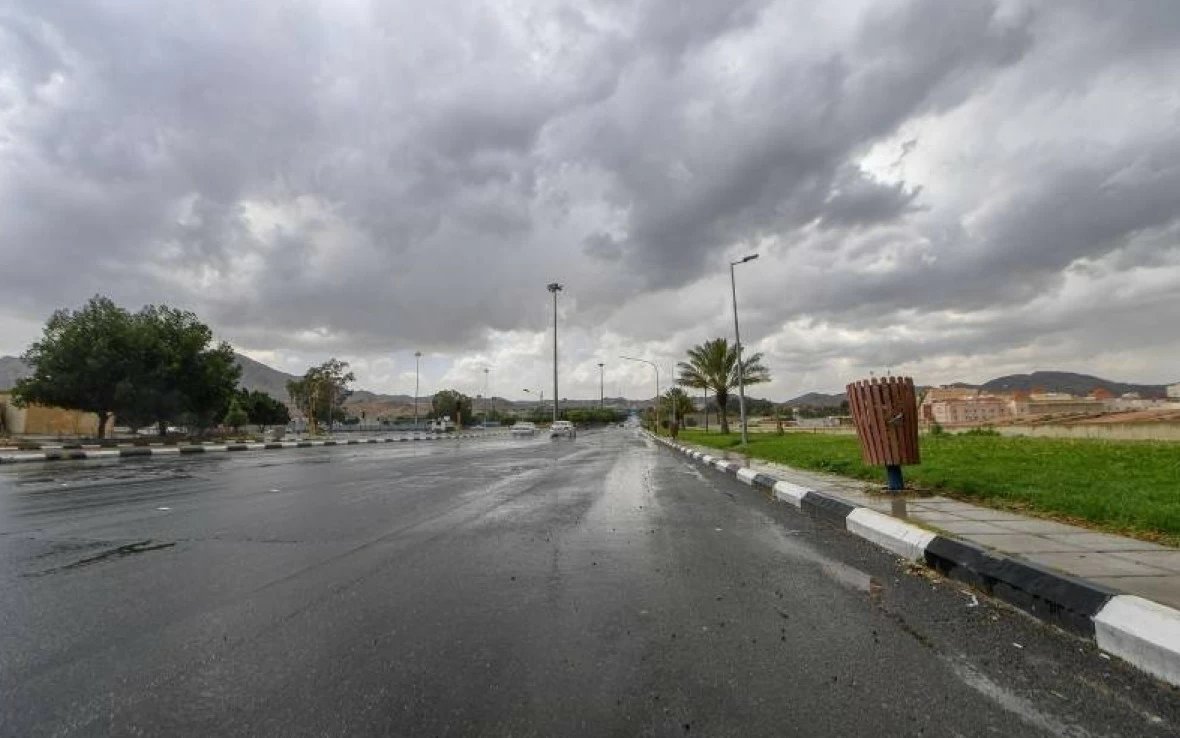
The National Center of Meteorology has predicted, God willing, thunderstorms accompanied by active winds and hail in several regions of the Kingdom of Saudi Arabia today. These regions include the Eastern Province, Riyadh, Najran, Jazan, Asir, Al-Baha, and the southern parts of Makkah.
Additionally, the impact of active winds stirring up dust and sand will continue, with a chance of light rain in parts of the Northern Borders, Al-Jawf, Tabuk, extending to parts of Madinah, Hail, and Al-Qassim.
Details of the Weather Event
In the Red Sea, the meteorological forecast indicates that surface winds will be from the southwest to northwest at speeds ranging between 10-25 km/h, potentially reaching 50 km/h, with the formation of thunderstorm clouds in the northern part. Wave heights are expected to rise from half a meter to one meter, and may reach two meters with the development of thunderstorm clouds.
The sea state is expected to be light to moderate, with the possibility of becoming turbulent due to thunderstorm activity. In the Arabian Gulf, surface winds will be from the northeast to southeast at speeds ranging between 10-26 km/h, potentially reaching 55 km/h, alongside the formation of thunderstorm clouds.
Background & Context
These forecasts are part of the erratic weather pattern experienced in the Kingdom during the spring season, where climate changes lead to increased intensity of rainfall and thunderstorms. The Kingdom has witnessed notable weather fluctuations in recent years, impacting agriculture and economic activities.
It is worth noting that these climate changes are not confined to Saudi Arabia alone, but encompass many countries in the region, necessitating precautionary measures to address their effects.
Impact & Consequences
Thunderstorms may lead to some damage to infrastructure, especially in areas with poor drainage systems. They can also affect traffic flow and cause delays in air travel.
On the other hand, these rains can contribute to improving agricultural conditions, particularly in areas that rely on rainfall as a primary water source. Therefore, balancing the risks and benefits is crucial in such circumstances.
Regional Significance
Many Arab countries are affected by climate changes, with some regions experiencing heavy rainfall while others suffer from drought. This disparity in weather conditions poses significant challenges to food security and sustainable development in the region.
A swift and effective response to these climate changes requires collaborative efforts among Arab countries, through the exchange of information and experiences, and the development of joint strategies to adapt to these challenges.
In conclusion, the weather situation in the Kingdom of Saudi Arabia remains a topic of great interest, as it directly impacts the lives of citizens and the national economy. Therefore, it is essential for everyone to stay updated with the reports and updates issued by the National Center of Meteorology.