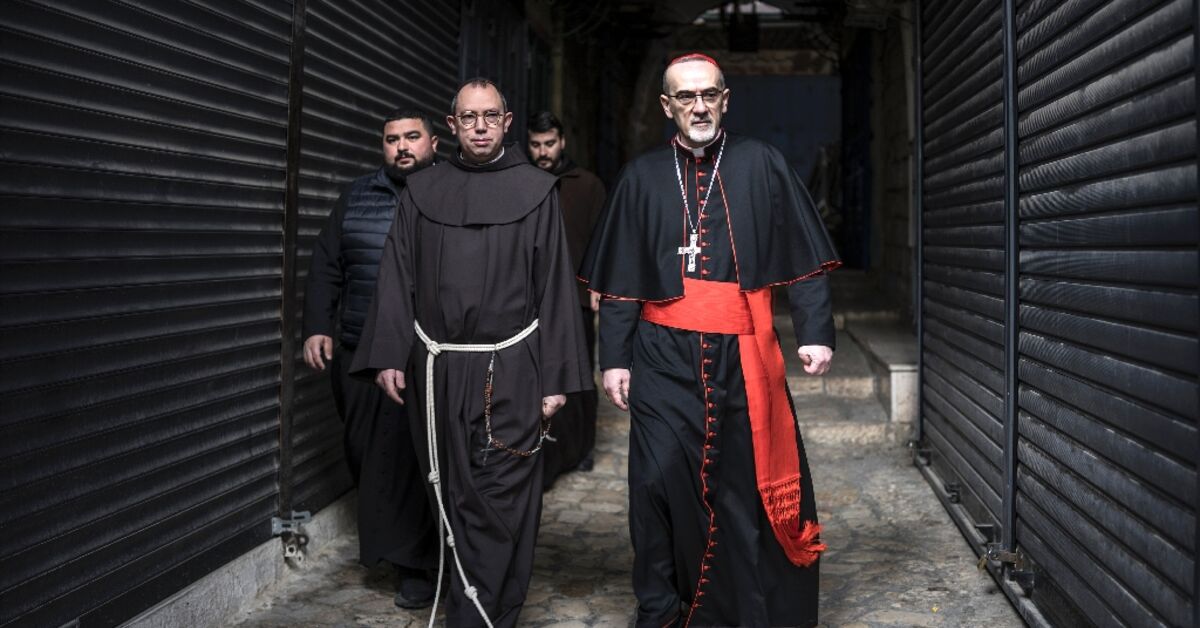
On Easter Sunday, one of the most significant religious occasions for Christians, a somber atmosphere prevailed in the narrow streets of the Old City of Jerusalem. This silence was a result of the ongoing war and the restrictions imposed on access to the Church of the Holy Sepulchre, where believers hold that Christ was crucified, buried, and resurrected. The closure of all shops in the vicinity heightened the sense of emptiness and absence.
Along the roads leading to the church, police conducted searches on a limited number of worshippers who were permitted to approach the site. These restrictions significantly impacted the celebratory atmosphere, as the Old City is typically filled with crowds of visitors and worshippers during this occasion.
Details of the Event
The Church of the Holy Sepulchre is considered one of the most prominent religious landmarks in the Christian world, attracting thousands of visitors annually. However, the current security situation has prevented worshippers from enjoying the festive atmosphere. Eyewitnesses noted that while the ambiance was solemn, the absence of crowds made it entirely different from previous years.
The restrictions on access to the church come at a sensitive time, as tensions in the region are escalating. These conditions have affected religious celebrations, leaving many worshippers feeling anxious and tense.
Background & Context
Historically, Jerusalem has witnessed numerous religious and political events that have impacted the lives of its residents. In recent years, tensions between Palestinians and Israelis have escalated, exacerbating the security situation. Easter, celebrated in spring, is seen as an opportunity for believers to gather and express their faith, but current circumstances have made this difficult.
The Church of the Holy Sepulchre symbolizes peace and tolerance, yet ongoing conflicts in the region have undermined these values. In past years, there have been attempts to promote interfaith dialogue, but recent events have shown that the path remains long.
Impact & Consequences
The impact of these restrictions on religious celebrations extends beyond the mere absence of crowds. The tense atmosphere may exacerbate conflicts, affecting stability in the region. Additionally, the lack of celebrations could negatively influence religious tourism, which is a significant source of income for the local economy.
Many international and local organizations strive to promote peace in the region, but challenges persist. The continuation of restrictions may worsen the situation, necessitating intensified efforts to achieve stability.
Regional Significance
Jerusalem is an important symbol for many Arab nations, representing a religious and cultural center. Events occurring in the city directly affect relations between Arab countries and Israel. Moreover, the situation in Jerusalem is seen as an indicator of the overall conditions in the region, making it a focal point of international attention.
In light of these circumstances, many are looking for peaceful solutions that ensure rights for all and achieve stability. The celebration of Easter in Jerusalem should be viewed as an opportunity to enhance dialogue and understanding between religions and cultures.